Laser particle size sensors, also known as laser diffraction particle analyzers, have become indispensable tools across a wide spectrum of industries. Their ability to provide rapid, accurate, and non-contact measurements of particle size distribution has revolutionized quality control, process optimization, and research and development. This article delves into the fundamental principles of these sensors, explores their diverse applications, and outlines key criteria for selecting the right instrument for specific industrial needs.
The core operating principle is based on the phenomenon of laser light scattering, specifically Fraunhofer diffraction and Mie scattering theory. A collimated laser beam is directed through a sample dispersion, which can be a dry powder aerosol or particles suspended in a liquid. As the laser light encounters particles, it scatters at angles inversely proportional to the particle size; larger particles scatter light at smaller angles relative to the incident beam, while smaller particles scatter light at larger angles. A sophisticated multi-element photodetector array, typically arranged in concentric rings, captures this angular scattering pattern. Advanced algorithms then deconvolute this light energy distribution pattern to calculate the particle size distribution, often reported as volume percentage versus particle diameter. Modern sensors are capable of measuring a dynamic range from sub-micron (e.g., 0.1 µm) to several millimeters, all within seconds.
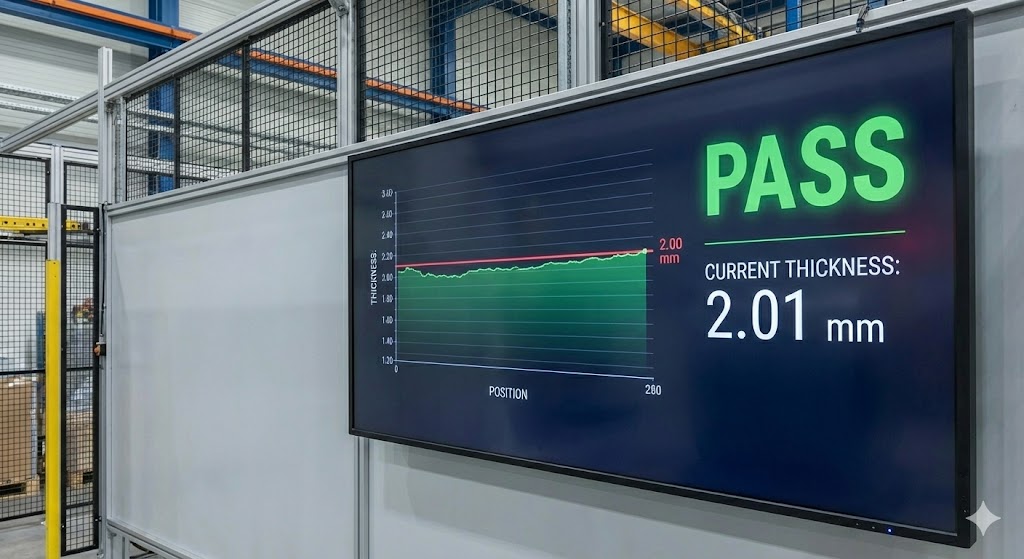
The applications for laser particle size sensors are vast and critical. In the pharmaceutical industry, they are used to monitor the milling of active pharmaceutical ingredients (APIs) and excipients, as particle size directly influences drug dissolution rates, bioavailability, and tablet compaction. In chemical manufacturing, controlling catalyst particle size is essential for reaction efficiency and yield. The food and beverage industry relies on these sensors to ensure consistent texture in products like chocolate, powdered milk, and flour, and to monitor the stability of emulsions and suspensions. In additive manufacturing (3D printing), the flowability and packing density of metal or polymer powders are governed by their particle size distribution, making sensor analysis a prerequisite for successful printing. Environmental monitoring also utilizes these sensors to analyze airborne particulate matter (PM2.5, PM10) and waterborne sediments.
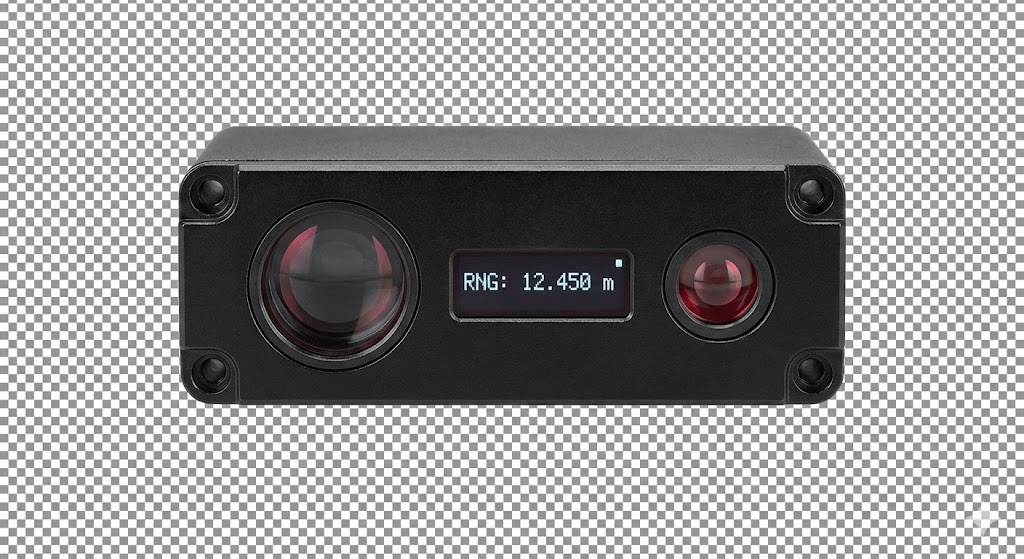
When selecting a laser particle size sensor for an industrial application, several technical and operational factors must be considered. First, the required measurement range and resolution must align with the specific particles being analyzed. The sample handling system is crucial: does the process require wet dispersion with a circulation pump, dry powder dispersion via an air venturi, or an aerosol generator? The reproducibility, accuracy, and measurement speed are key performance indicators; high-throughput production environments demand fast, reliable results. The instrument's software should offer intuitive operation, robust data management, compliance with relevant standards (like ISO 13320), and flexible reporting options. Robustness and ease of maintenance are paramount for harsh industrial environments, requiring sensors with durable construction, easy-clean optical paths, and minimal alignment sensitivity. Finally, integration capabilities with Process Analytical Technology (PAT) frameworks or plant control systems (SCADA) for real-time feedback control are increasingly important for Industry 4.0 smart manufacturing.
Despite their advantages, users must be aware of certain limitations. The accuracy of the results depends on correct optical models (Mie theory requires knowledge of the particle's refractive index) and effective sample dispersion to prevent agglomeration. Very high concentration samples can cause multiple scattering effects, necessitating proper dilution. For non-spherical particles, the reported size is an equivalent spherical diameter, which may not fully represent shape characteristics, sometimes requiring complementary techniques like image analysis.
In conclusion, laser particle size sensors are powerful analytical instruments that provide critical data for product quality and process efficiency. Their non-invasive nature, speed, and wide dynamic range make them superior to traditional sieve analysis or sedimentation methods in most contexts. A thorough understanding of their working principle, coupled with a careful evaluation of application-specific requirements against instrument specifications, enables engineers and scientists to leverage this technology effectively, driving innovation and ensuring consistency in particle-based processes across global industries.
