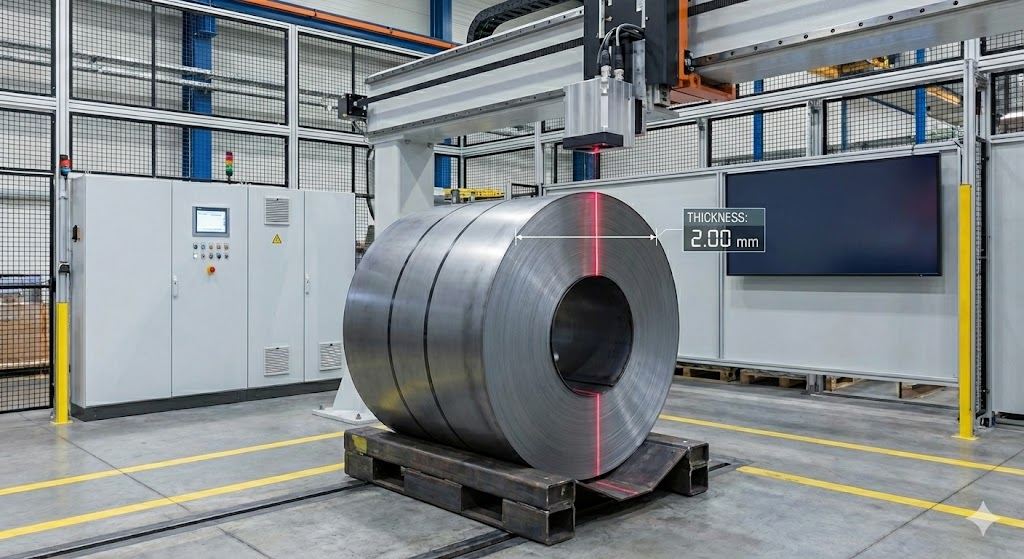
In the realm of industrial automation, laser marking machines have become indispensable for permanent, high-quality coding on various materials, from metals and plastics to ceramics and glass. At the heart of these sophisticated systems lie specialized sensors, which play a critical role in ensuring marking precision, process reliability, and overall operational efficiency. Unlike generic photoelectric or proximity sensors, sensors designed explicitly for laser marking applications must contend with unique challenges, including high-speed motion, intense ambient light interference, and the need for micron-level accuracy.
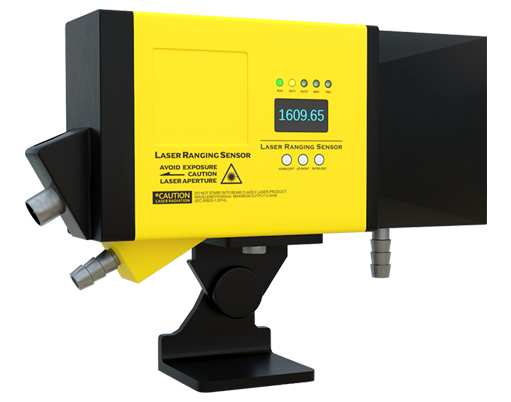
The primary function of a sensor in a laser marking system is to detect the presence, position, and sometimes the surface characteristics of the target object. This detection triggers the laser to fire at the exact correct moment and location, ensuring the mark—be it a serial number, barcode, logo, or data matrix code—is applied consistently and correctly. Key sensor types deployed include contrast sensors, distance measurement sensors (often laser-based themselves), and vision sensors or cameras integrated into vision-guided marking systems. Contrast sensors are particularly valuable for detecting marks on contrasting backgrounds or verifying the presence of a pre-existing mark. They work by emitting a light beam onto the target surface and measuring the intensity of the reflected light. A significant change in reflectance indicates an edge, a gap, or the presence of the object itself. For laser marking on uneven surfaces or where the working distance varies, precise distance measurement sensors are crucial. These sensors, frequently using triangulation or time-of-flight principles, provide real-time feedback to the marking system's controller, allowing it to dynamically adjust the laser's focal point. This maintains optimal marking quality regardless of minor variations in part placement or surface topography.
Furthermore, the integration of vision sensors has revolutionized high-end laser marking. These systems capture an image of the target, use software to locate specific features or fiducial marks, and then precisely align the laser marking path with the part's orientation. This is essential for applications like direct part marking (DPM) on automotive components or medical devices, where absolute positional accuracy is non-negotiable. The sensor's ability to communicate seamlessly with the programmable logic controller (PLC) or the marking software via standard industrial protocols like IO-Link, Ethernet/IP, or Profinet is another vital aspect. This connectivity enables not just triggering but also rich data exchange for predictive maintenance, error logging, and process optimization.
Selecting the right sensor requires careful consideration of several application-specific parameters. The sensing range must be compatible with the machine's physical layout. The response time, often in the microsecond range, must be fast enough to keep pace with high-throughput production lines without becoming a bottleneck. Environmental robustness is paramount; sensors must be housed in rugged enclosures with high IP ratings (e.g., IP67) to withstand dust, coolant mists, and mechanical vibrations common in factory settings. Additionally, immunity to the stray light emitted by the marking laser itself and other ambient light sources is a critical design feature, often achieved through specialized optical filters and modulated light signals.
In conclusion, specialized sensors are the unsung heroes of modern laser marking technology. They transform a powerful but dumb laser beam into an intelligent, responsive, and reliable industrial tool. By ensuring precise trigger timing, accurate distance measurement, and sophisticated part recognition, these sensors directly contribute to reduced waste, higher throughput, and consistent product quality. As laser marking expands into new materials and more complex applications—such as marking on curved surfaces or fragile substrates—the evolution of sensor technology will continue to be a key driver of innovation, pushing the boundaries of what is possible in industrial identification and traceability.