In the realm of industrial automation and control, proximity sensors are indispensable components, acting as the silent sentinels that detect the presence or absence of objects without physical contact. While traditional inductive proximity sensors have long been the workhorse for detecting metallic targets, the evolution of technology and diverse application demands have given rise to a critical category: non-metallic proximity sensors. These specialized devices are engineered to detect materials such as plastics, glass, wood, liquids, and even certain types of cardboard, thereby filling a significant gap in sensing capabilities.
The fundamental principle behind non-metallic proximity sensors often diverges from the electromagnetic induction used in their metallic counterparts. The most prevalent technologies employed are capacitive and ultrasonic sensing. Capacitive proximity sensors operate by generating an electrostatic field. When any object, regardless of its material composition, enters this field, it causes a detectable change in the sensor's capacitance. This change triggers the sensor's output switch. This makes capacitive sensors exceptionally versatile for detecting a vast array of non-conductive materials, powders, and liquids. Their sensitivity is often adjustable, allowing engineers to fine-tune the sensor to ignore certain background materials or containers, focusing only on the target.
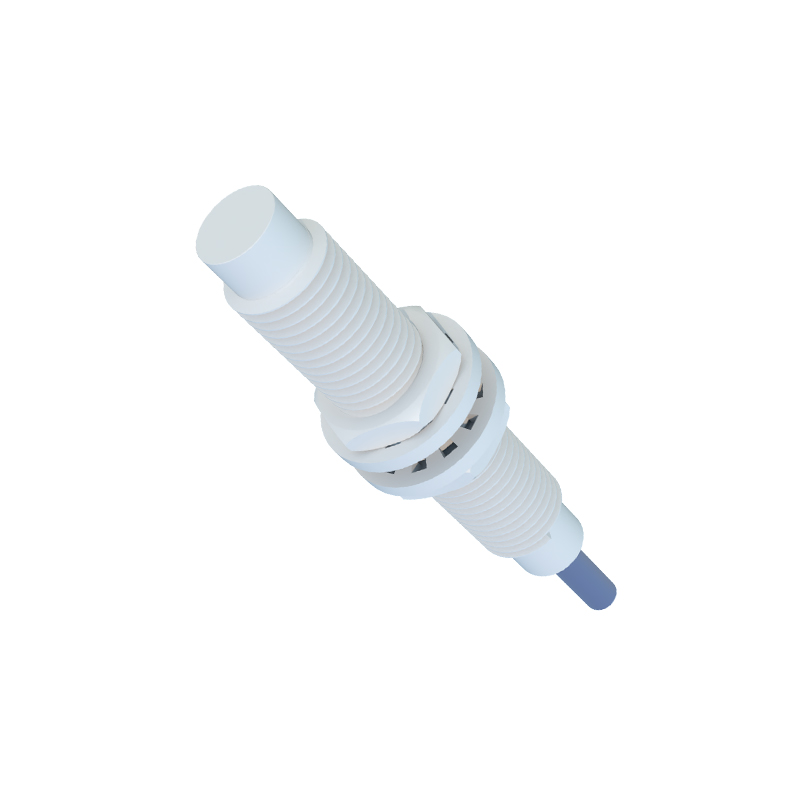
Ultrasonic proximity sensors, another key player, function by emitting high-frequency sound waves and measuring the time it takes for the echo to return. The presence of any solid or liquid object within the sensing range alters the echo pattern or time-of-flight. This technology is particularly effective for detecting transparent objects, irregularly shaped items, or materials at varying distances, and it is largely unaffected by color, transparency, or surface texture. Both capacitive and ultrasonic types offer distinct advantages in environments where inductive sensors simply cannot perform.
The industrial applications for non-metallic proximity sensors are vast and critical. In packaging lines, they reliably detect plastic bottles, glass containers, and cardboard boxes to control filling, capping, and sorting machinery. In the wood and paper industries, they monitor the presence of logs, sheets, or rolls on conveyor systems. Liquid level detection in non-metallic tanks is a common use for capacitive sensors, ensuring precise control in chemical, food, and beverage processing. Furthermore, in cleanroom environments or areas with explosive dust, sensors with non-metallic housings (often PBT or PPS) provide enhanced safety and corrosion resistance.
Selecting the appropriate non-metallic proximity sensor requires careful consideration of several parameters. The sensing range, typically shorter than inductive sensors for capacitive types, must be suited to the application. Environmental factors are paramount; sensors must be rated for specific conditions such as temperature extremes, humidity, washdowns (requiring high IP ratings like IP67 or IP69K), and exposure to chemicals. The output type (PNP/NPN, analog, IO-Link) must interface correctly with the existing programmable logic controller (PLC) system. For challenging applications involving very small targets or detection through container walls, capacitive sensors with advanced shielding and sensitivity adjustments are essential.
Installation and commissioning also demand attention. Capacitive sensors can be influenced by surrounding conductive materials, necessitating proper mounting with adequate clearance. Ultrasonic sensors may face challenges with sound-absorbing materials or highly turbulent surfaces. Regular maintenance, though minimal, involves keeping the sensing face clean from dust, moisture, or product buildup that could cause false triggering or reduced range.
The integration of smart features, such as IO-Link communication, is revolutionizing this field. Smart non-metallic proximity sensors can provide diagnostic data, remote parameter configuration, and process value monitoring (e.g., exact distance or capacitance level), enabling predictive maintenance and deeper process insights. This connectivity aligns with the broader trends of Industry 4.0, making sensing points more intelligent and data-rich.
In conclusion, non-metallic proximity sensors are not merely alternatives but essential solutions for modern, complex automation systems. Their ability to reliably interact with a world of materials beyond metal underpins efficiency, safety, and flexibility in countless industries. For engineers and system integrators, a thorough understanding of capacitive and ultrasonic technologies, coupled with a meticulous approach to selection and installation, is key to unlocking their full potential and ensuring robust, fail-safe operation in demanding industrial environments.