In the rapidly evolving landscape of industrial automation and precision measurement, wireless laser distance sensors have emerged as a transformative technology. These sophisticated devices leverage laser triangulation or time-of-flight principles to deliver non-contact, high-accuracy distance measurements, while their wireless connectivity—typically via protocols like Bluetooth, Wi-Fi, or proprietary industrial wireless networks—eliminates the constraints and hazards of traditional wired installations. The core advantage lies in their ability to provide real-time data from remote, rotating, or moving components, which is critical for applications ranging from robotics and automated guided vehicles (AGVs) to inventory management in sprawling warehouses.
The operational principle is elegantly precise. A laser diode emits a focused beam of light towards a target. The reflected light is captured by a sensitive receiver, such as a position-sensitive detector (PSD) or CMOS array. By calculating the angle of the returning beam (triangulation) or the time it takes for the light pulse to return (time-of-flight), the sensor's onboard processor computes the exact distance with resolutions often down to the sub-millimeter level. This data is then digitized and transmitted wirelessly to a central control system, programmable logic controller (PLC), or cloud-based analytics platform. The removal of physical cables not only reduces installation time and cost but also enhances system flexibility, allowing for easy reconfiguration of production lines and sensor networks.
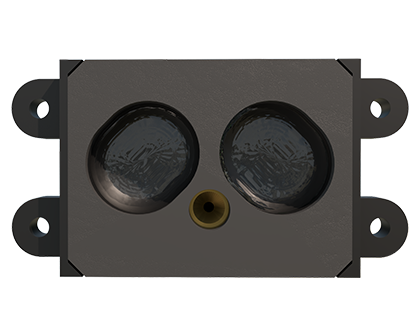
Key industries are harnessing this capability. In manufacturing, wireless laser sensors are indispensable for precise positioning of robotic arms, monitoring material thickness on production lines, and ensuring gap and flush measurements in automotive assembly. The logistics sector utilizes them for pallet profiling, warehouse drone navigation, and automated storage/retrieval system (AS/RS) positioning, where their wireless nature is a perfect fit for dynamic environments. Furthermore, in construction and civil engineering, these sensors facilitate remote monitoring of structural deformations, settlement, and alignment over large distances, improving safety and project management.
Selecting the appropriate wireless laser distance sensor requires careful consideration of several technical parameters. Measurement range, from a few centimeters to several hundred meters, must match the application. Accuracy and repeatability are paramount for quality control tasks. The choice of wireless protocol dictates the network's range, data rate, and coexistence with other equipment; industrial-grade Wi-Fi may be chosen for high-bandwidth data, while low-power Bluetooth is ideal for battery-operated sensors in energy-sensitive setups. Environmental robustness is another critical factor, with ingress protection (IP) ratings and resistance to vibrations, ambient light interference, and temperature extremes ensuring reliable operation in harsh plant conditions.
The integration of Industrial Internet of Things (IIoT) frameworks has further amplified their value. Wireless laser sensors act as intelligent edge nodes, feeding continuous streams of measurement data into predictive maintenance algorithms. By analyzing trends in distance readings, systems can predict machine wear, misalignment, or potential failures before they cause downtime. This shift from reactive to proactive maintenance represents a significant leap in operational efficiency and cost savings.
Despite their advantages, challenges such as potential signal interference in congested radio frequency environments, cybersecurity concerns for wireless data transmission, and power management for battery-powered units must be addressed through careful network design, encryption protocols, and low-power sensor design. Looking ahead, advancements in sensor miniaturization, increased battery life through energy harvesting, and the integration of artificial intelligence for onboard data processing will continue to push the boundaries of what's possible. Wireless laser distance sensors are no longer just measurement tools; they are foundational components of the smart, connected, and agile industrial ecosystems of the future, driving unprecedented levels of automation, safety, and data-driven decision-making.