In the realm of precision measurement and industrial automation, laser displacement sensors have become indispensable tools. Their ability to provide non-contact, high-accuracy, and high-speed measurements makes them critical for applications ranging from quality control and robotics to vibration analysis and thickness gauging. At the heart of their functionality lies the process of interpreting the sensor's input—the raw data generated from the interaction of the laser beam with the target object. This article delves into the technical aspects of laser displacement sensor inputs, explaining the underlying principles, signal types, and key considerations for effective implementation.
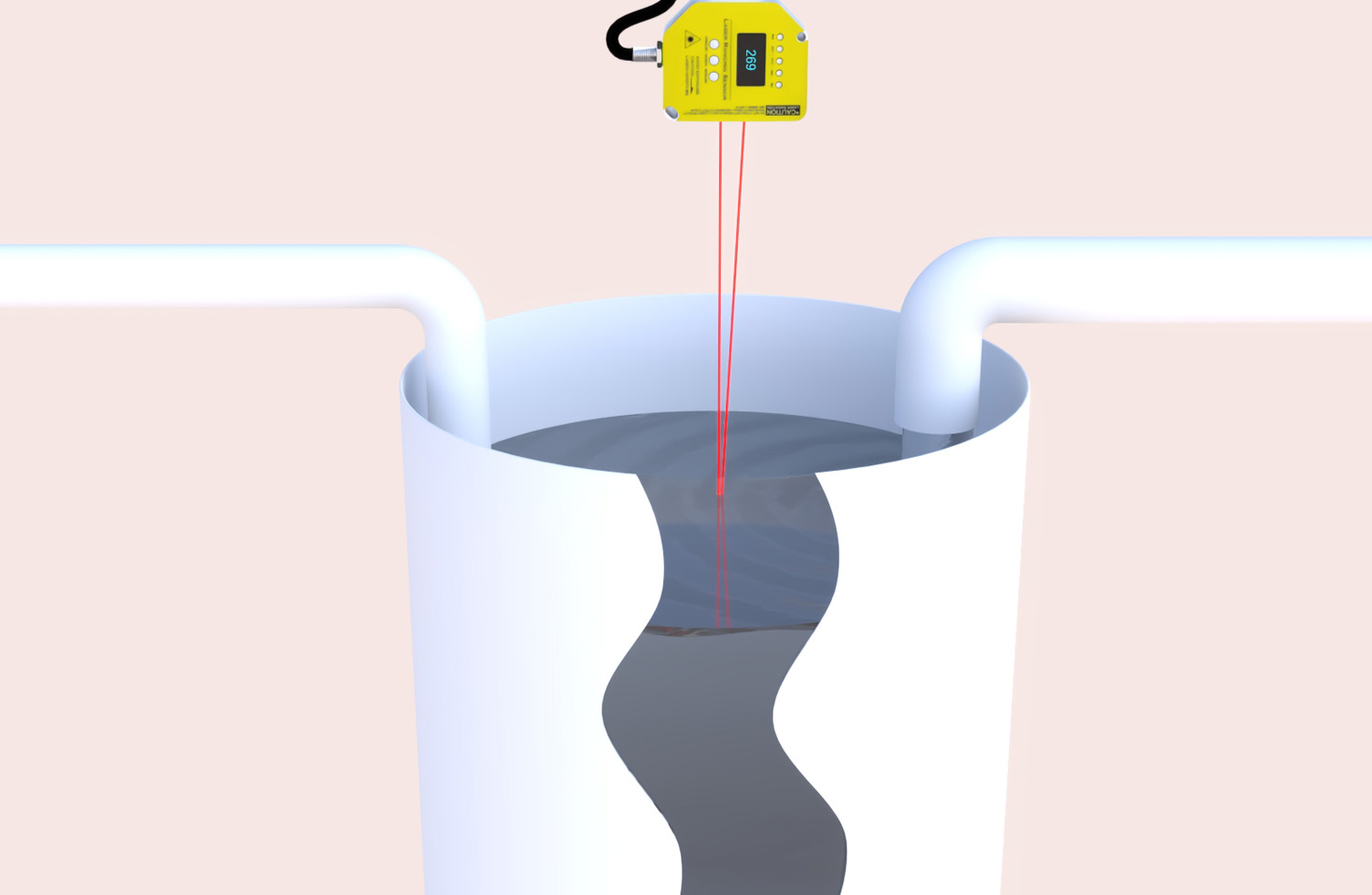
The fundamental operating principle of most laser displacement sensors is based on optical triangulation. A focused laser beam is projected onto the target surface. The reflected or scattered light is then collected by a receiving lens and focused onto a position-sensitive detector, typically a CCD or CMOS linear array or a PSD (Position Sensitive Device). The key input here is the position of the light spot on this detector. When the target distance changes, the angle of the reflected light shifts, causing the spot position on the detector to move proportionally. This analog positional data is the primary electrical input for the sensor's internal processor.
This raw analog signal is then converted into a usable digital output. However, from a system integration perspective, we must consider the sensor's inputs in terms of configuration, triggering, and synchronization. Modern laser sensors offer various input interfaces for external control. A common digital input is the Trigger or Gate Input. This is typically a TTL or transistor (NPN/PNP) signal that commands the sensor to take a single measurement. This is crucial for synchronizing measurements with moving parts on a production line or with other inspection systems. The trigger input ensures data is captured at the exact desired moment, eliminating motion blur or positional errors.
Another critical set of inputs relates to compensation and environmental factors. While not always physical electrical terminals, these are inputs the sensor's algorithm must account for. The characteristics of the target surface are a primary input variable. The sensor must be selected and configured based on whether the target is diffuse (e.g., white paper, matte paint) or specular (e.g., mirror, polished metal). Diffuse surfaces scatter light, providing a stable signal, while specular surfaces can cause saturation or signal loss if the incident angle is not optimal. The sensor's internal processing uses algorithms to normalize these variations, but the user often provides an input by selecting the appropriate sensor model or setting a "surface mode."
Furthermore, environmental light acts as an unwanted noise input. High ambient light, especially from sources with similar wavelengths to the laser, can interfere with the detector. High-end sensors incorporate optical filters and sophisticated signal processing to reject this noise. Temperature is another environmental input that affects measurement stability. Thermal drift can cause slight changes in the optical and electronic components. Many sensors include temperature sensors whose readings are used as an internal compensation input to adjust the output data accordingly, ensuring long-term accuracy.
For system communication, the sensor receives configuration inputs via digital interfaces. These include setting measurement parameters like sampling rate, output range, and filtering levels via software commands sent over RS-232, RS-485, Ethernet/IP, or PROFINET. These configuration inputs define how the sensor processes the raw optical data. For instance, setting a moving average filter input tells the sensor's processor to average a specified number of readings to smooth out high-frequency noise.
The final output of the sensor—be it analog (4-20mA, 0-10V), digital (USB, Ethernet), or serial data—is ultimately a refined representation of the initial optical input. However, understanding the chain from laser reflection to detector signal to processed data is key to troubleshooting. Common issues like unstable readings often trace back to problems with the primary input conditions: an unsuitable target surface, excessive ambient light, incorrect trigger timing, or vibration affecting the standoff distance.
In conclusion, the "input" to a laser displacement sensor is a multi-layered concept. It begins with the physical interaction of light with a target, translates into an electrical signal on a photodetector, and is modulated by external control signals and environmental factors. A deep understanding of these input mechanisms allows engineers to select the right sensor, configure it optimally, and integrate it robustly into automated systems, thereby unlocking the full potential of high-precision, non-contact metrology.