In the realm of industrial automation and process control, precision measurement and counting are paramount. Among the various technologies enabling this, laser counter sensors stand out for their exceptional accuracy, speed, and reliability. These sophisticated devices have become indispensable in manufacturing, packaging, logistics, and numerous other sectors where non-contact, high-speed object detection and counting are required.
At its core, a laser counter sensor operates on the principle of optical triangulation or time-of-flight measurement, depending on the specific type and design. A common configuration involves a laser diode that emits a focused beam of coherent light. This beam is directed towards the target object or the path where objects pass. A photodetector, positioned at a specific angle relative to the emitter, receives the reflected or interrupted light signal. When an object passes through the laser beam, it causes a detectable change—either a reflection back to the sensor or a break in the beam's path. This event is converted into an electrical pulse by the sensor's internal circuitry. A high-speed processor within the sensor counts these pulses, providing a real-time tally of objects. Advanced models incorporate background suppression technology, which allows them to ignore reflections from distant surfaces or ambient light, ensuring counts are only triggered by the intended target at a specific sensing range.
The advantages of using laser counters over traditional mechanical or other optical methods are significant. Firstly, they offer non-contact operation, eliminating wear and tear on both the sensor and the objects being counted, which is crucial for delicate items. Secondly, laser sensors provide extremely high response speeds, capable of detecting and counting objects moving at very high velocities, often in the range of several kilohertz. This makes them ideal for high-speed production lines. Thirdly, their precision is remarkable; the focused laser spot can be very small, allowing for the detection of minute objects or precise positioning on an object's surface. Furthermore, their performance is largely unaffected by the color, material (within reason, as highly absorbent materials may pose a challenge), or surface texture of the target, although specific models are optimized for different surface properties.
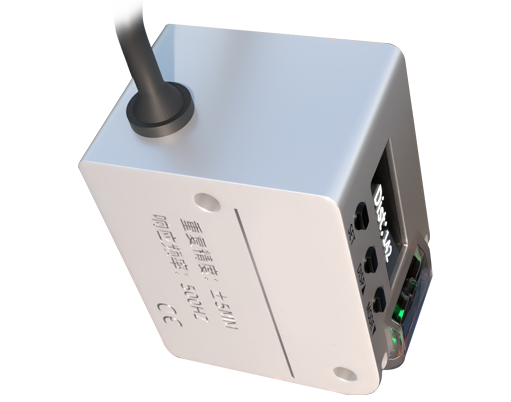
The applications for laser counter sensors are vast and varied. In pharmaceutical manufacturing, they count pills, capsules, and vials with impeccable accuracy on blister packaging lines. In the automotive industry, they are used to verify the presence of components on assembly lines, such as screws, springs, or small electronic parts. In packaging and bottling plants, they ensure the correct number of items are placed in each box or crate. They are also fundamental in document processing for counting sheets of paper, in textile mills for monitoring thread breaks, and in logistics for parcel sorting and tracking on conveyor systems. Specialized versions are used for people counting in security and retail analytics.
Selecting the right laser counter sensor for a specific application requires careful consideration of several key parameters. The sensing range is critical; it must be suitable for the installation distance to the target. The size of the laser spot should be appropriate for the object size—a smaller spot allows for higher precision but requires more precise alignment. The response time or switching frequency must exceed the maximum expected passage rate of the objects. Environmental factors cannot be ignored; sensors rated with appropriate Ingress Protection (IP) codes are necessary for dusty, humid, or washdown environments common in food processing or outdoor applications. Output type is another decision point; common options include digital outputs (PNP/NPN), analog outputs for distance measurement, or industrial communication protocols like IO-Link for advanced diagnostics and parameter setting. Finally, features like adjustable sensitivity, teach-in functions for easy setup, and robust housing materials (often stainless steel or hardened plastics) contribute to long-term reliability and ease of integration.
Installation and maintenance are straightforward but vital for optimal performance. Proper alignment is essential; the laser beam must be perpendicular to the object's path for consistent triggering. Vibration-resistant mounting brackets help maintain this alignment. Keeping the lens clean from dust, oil, or debris is a simple yet crucial maintenance task to prevent false counts or signal degradation. Modern sensors often include diagnostic LEDs or output signals that indicate alignment status, signal strength, or potential faults, facilitating proactive maintenance.
In conclusion, laser counter sensors represent a mature yet continuously evolving technology that provides a critical layer of data and control in automated systems. Their ability to deliver fast, accurate, and reliable counts in challenging industrial environments makes them a cornerstone of modern quality control, inventory management, and process efficiency. As Industry 4.0 and smart manufacturing initiatives advance, these sensors are increasingly becoming intelligent nodes in networked systems, providing not just count data but also valuable diagnostic and performance metrics to higher-level control systems, further solidifying their role in the automated factory of the future.