In the rapidly evolving landscape of industrial automation and smart systems, large-area proximity sensors have emerged as a cornerstone technology, enabling unprecedented levels of safety, efficiency, and operational intelligence. Unlike their point-sensing counterparts, these sensors are designed to monitor extensive zones, providing a continuous field of detection rather than a single discrete point. This capability is revolutionizing applications from robotic work cells and automated guided vehicles (AGVs) to secure access control and machinery safeguarding.
The fundamental principle behind large-area proximity sensing often involves capacitive, inductive, or optical technologies, scaled and configured for wide coverage. Capacitive sensors, for instance, create an electrostatic field and detect changes caused by the presence of any object, making them ideal for non-metallic material detection over a broad area. Inductive sensors, generating an electromagnetic field, are predominantly used for detecting metallic objects within a defined zone, crucial in metalworking and automotive assembly lines. Advanced optical systems, including laser scanner arrays and time-of-flight (ToF) sensors, project light patterns or beams to create a detailed 2D or 3D map of a protected area, offering high resolution and precision for complex environments.
The integration of these sensors into Industrial Internet of Things (IIoT) frameworks marks a significant leap forward. Modern large-area sensors are equipped with sophisticated digital interfaces like IO-Link, Ethernet/IP, or PROFINET. This connectivity allows for real-time data transmission on parameters such as object presence, distance, and even profile, feeding directly into programmable logic controllers (PLCs) and supervisory control and data acquisition (SCADA) systems. This data-driven approach facilitates predictive maintenance, as the sensors can monitor their own health and signal degradation or contamination before a failure occurs, minimizing unplanned downtime.
A primary and critical application is in the realm of industrial safety, particularly for collaborative robot (cobot) workspaces. Large-area optical sensors or safety laser scanners create invisible protective fields around hazardous machinery. If a human operator breaches this predefined zone, the sensor sends an immediate stop signal to the machine, ensuring safe human-robot collaboration. Similarly, in AGV navigation, these sensors provide extensive perimeter detection, allowing vehicles to navigate dynamic warehouse floors safely by identifying obstacles, personnel, and other AGVs well in advance, thus preventing collisions and optimizing traffic flow.
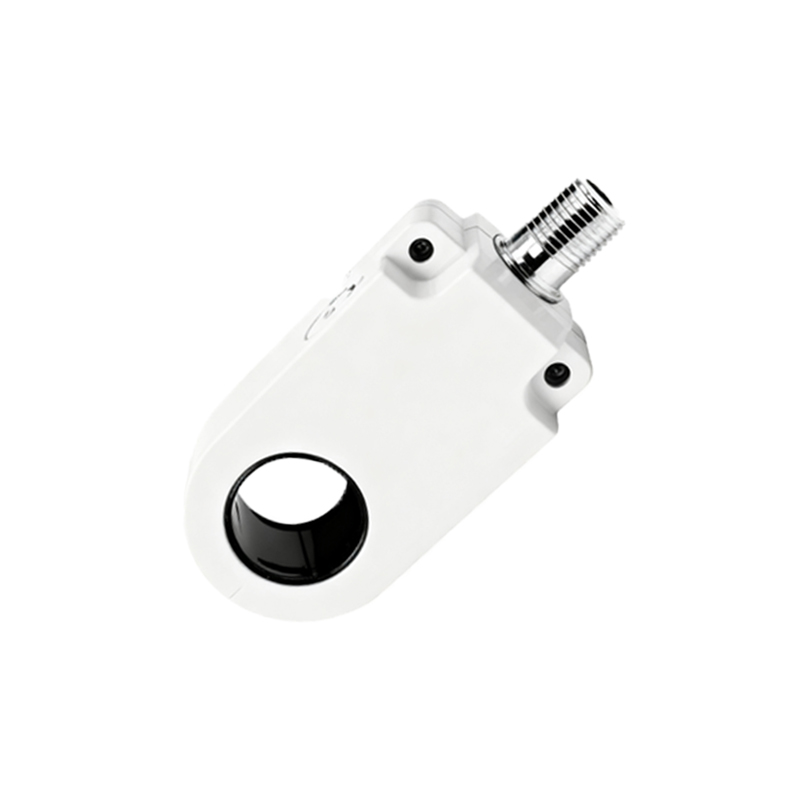
Another growing application is in smart logistics and inventory management. Capacitive or optical large-area sensors mounted on shelves or storage racks can monitor the presence or absence of packages or pallets across a wide bay. This provides real-time stock level information without the need for manual checks or RFID tags on every item, streamlining supply chain operations.
Selecting the appropriate large-area sensor requires careful consideration of several technical parameters. The sensing range and field of view (FOV) must match the application's geographical needs. Environmental factors are paramount; sensors must have suitable Ingress Protection (IP) ratings for dust and moisture, and withstand temperature variations, vibration, and electromagnetic interference (EMI) prevalent in industrial settings. Response time is crucial for high-speed applications, while the sensor's output type (e.g., digital switch, analog signal, networked data) must be compatible with the existing control architecture.
The future trajectory of large-area proximity sensing is tightly interwoven with advancements in artificial intelligence and edge computing. Next-generation sensors will incorporate on-board processing capabilities to not only detect presence but also classify objects—distinguishing between a human, a cardboard box, and a metal tool, for example. This intelligence will enable more nuanced and context-aware system responses. Furthermore, the development of flexible and even transparent sensor mats using printed electronics will open new possibilities for integrating detection zones into floors, workbenches, and other surfaces seamlessly.
In conclusion, large-area proximity sensors are far more than simple on/off devices. They are intelligent perceptual skins for industrial environments. By providing comprehensive spatial awareness, they form the foundational layer for safer, more efficient, and increasingly autonomous operations. As technology progresses towards smarter factories and interconnected systems, the role of these sensors will only expand, making their understanding and implementation essential for engineers and system integrators aiming to stay at the forefront of industrial innovation.