Laser sensors are pivotal components in modern industrial automation, offering high precision and reliability for various measurement and detection tasks. To comprehend their classification, it is essential to delve into the technical standards and operational principles that define these devices. Generally, laser sensors are categorized based on factors such as their measurement method, safety class, and application scope, aligning with international guidelines like those from the International Electrotechnical Commission (IEC) and the U.S. Food and Drug Administration (FDA).
Firstly, from a functional perspective, laser sensors can be divided into several types. Distance measurement sensors utilize time-of-flight or triangulation methods to calculate object positions with micron-level accuracy, commonly used in robotics and quality control. Speed sensors employ Doppler effects to monitor velocity in conveyor systems or automotive testing. Presence detection sensors, including diffuse reflective and through-beam variants, identify object existence in manufacturing lines, enhancing safety and efficiency. Each type serves distinct industrial needs, from simple object counting to complex 3D scanning.
Secondly, safety classification is crucial, as lasers emit radiation that can pose risks to human eyes and skin. According to IEC 60825-1 and FDA regulations, lasers are grouped into classes based on output power and potential hazards. Class 1 lasers are inherently safe under normal operation, often found in enclosed sensor systems. Class 2 lasers, typically in visible range, are low-risk but require caution for direct exposure. Class 3 and 4 lasers, used in high-power industrial sensors, demand strict protective measures due to their ability to cause injury. Most industrial laser sensors fall into Class 1 or 2, ensuring compliance with workplace safety standards while maintaining performance.
Moreover, application-based classification highlights versatility. In automotive industries, laser sensors assist in alignment and inspection processes, while in electronics, they enable precise component placement. Environmental monitoring employs them for pollution detection, and in logistics, they optimize sorting systems. Advanced types like LiDAR sensors, used in autonomous vehicles and mapping, represent a sophisticated category combining multiple laser beams for spatial analysis. This diversity underscores the adaptability of laser sensors across sectors, driven by innovations in fiber optics and digital signal processing.
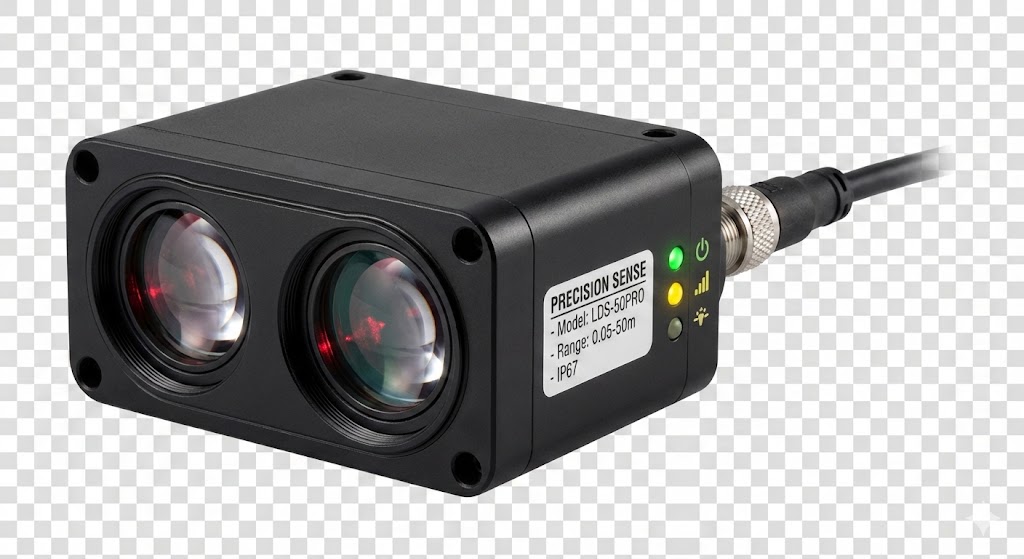
The evolution of laser sensor technology continues to refine these classifications. With trends toward miniaturization and IoT integration, smart sensors now incorporate wireless connectivity and AI algorithms, blurring traditional boundaries. For instance, a single device might function as both a distance and presence sensor, leveraging multi-class capabilities. Industry professionals must stay updated on standards like ANSI Z136 for safe implementation, ensuring optimal use in automated factories and smart infrastructure.
In summary, laser sensors are not a monolithic group but a spectrum of devices classified by function, safety, and application. Understanding these categories helps engineers select appropriate models for tasks ranging from basic detection to advanced metrology. As industries embrace Industry 4.0, the role of laser sensors will expand, necessitating continuous learning about their classifications to harness their full potential in driving efficiency and innovation. By adhering to global standards and leveraging technical advancements, businesses can integrate these sensors effectively, paving the way for smarter, safer industrial environments.