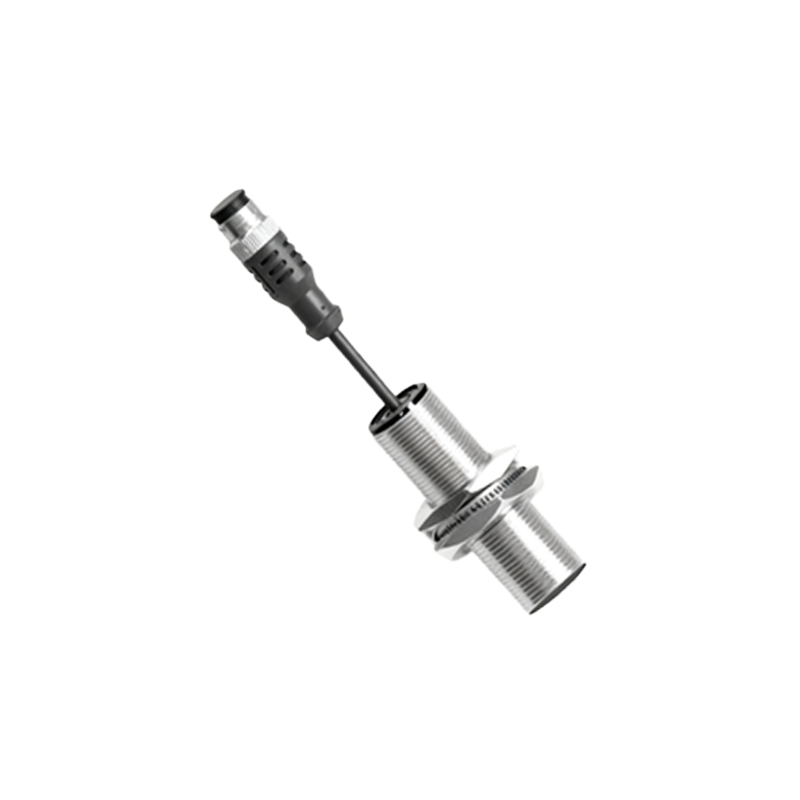
In the rapidly evolving landscape of industrial automation and smart manufacturing, proximity sensors have become indispensable components. These non-contact devices, which detect the presence or absence of objects, are critical for countless applications from automotive assembly lines to consumer electronics. A common question from procurement specialists, design engineers, and business developers is: "Where are proximity sensor factories located?" The answer reveals a complex, globalized supply chain strategically distributed across several key regions, each with its own advantages and specializations.
The Asia-Pacific region stands as the undeniable epicenter of proximity sensor manufacturing. China, in particular, hosts a massive concentration of production facilities. Major industrial hubs like Shenzhen, Shanghai, and Suzhou are home to both large-scale international corporations and a dense network of specialized component suppliers. This cluster effect provides unparalleled advantages in supply chain efficiency, cost competitiveness, and rapid prototyping. China's manufacturing ecosystem supports everything from high-volume, cost-sensitive inductive and capacitive sensors to more sophisticated photoelectric and ultrasonic variants. Following closely, Japan remains a leader in high-precision, high-reliability sensor technology. Factories operated by giants like Omron, Keyence, and Panasonic are renowned for their rigorous quality control and innovation in miniaturization and performance. South Korea and Taiwan also contribute significantly, with strong capabilities in sensors tailored for the semiconductor and display panel manufacturing industries.
Europe maintains a robust and highly specialized manufacturing base for proximity sensors, particularly for demanding industrial and automotive applications. Germany is at the heart of this sector, with "Industrie 4.0" driving innovation. Factories here, often operated by companies like Siemens, Sick, and Balluff, focus on precision engineering, ruggedness for harsh environments, and seamless integration with advanced industrial communication protocols (like IO-Link and PROFINET). These sensors are frequently designed and built alongside the machinery they control, ensuring optimal performance. Other European nations, including Italy, France, and Switzerland, host factories that specialize in niche applications, such as food-grade sensors or ultra-high-speed models for packaging machinery. The European approach often emphasizes quality, certification standards (e.g., ATEX for explosive atmospheres), and customized solutions over pure cost-driven volume production.
North America's manufacturing footprint, while smaller in volume compared to Asia, is vital for regional supply chains and cutting-edge R&D. Factories in the United States, Mexico, and Canada often focus on serving the automotive, aerospace, and heavy equipment sectors. There is a strong trend towards reshoring and nearshoring, driven by supply chain resilience concerns. Many factories in the U.S. Midwest and Mexico are integrated into just-in-time production lines for automotive manufacturers. Furthermore, the U.S. is a global leader in the R&D of new sensing technologies, such as advanced LiDAR and time-of-flight sensors, with pilot production lines often located close to research centers in tech hubs like Silicon Valley and Boston.
Emerging manufacturing regions are also gaining importance. Countries in Southeast Asia, such as Thailand, Vietnam, and Malaysia, are seeing increased investment in sensor assembly plants. This diversification is a strategic move by many corporations to mitigate geopolitical risks and leverage new trade agreements. These locations often offer a competitive balance of labor costs and improving technical infrastructure.
The location of a proximity sensor factory is ultimately dictated by a matrix of factors: target market proximity, labor and operational costs, access to skilled engineering talent, supply chain logistics, and intellectual property considerations. A tier-one automotive supplier likely sources from a high-mix, high-quality factory in Germany or Japan for its premium line, while a consumer appliance manufacturer may rely on high-volume production from a facility in China. The modern landscape is not about a single "best" location, but rather a networked, globalized production strategy designed for agility, resilience, and market-specific responsiveness. Understanding this geographic distribution is crucial for anyone involved in specifying, sourcing, or integrating these fundamental components of modern industry.