In the relentless pursuit of automotive excellence, Lexus has consistently positioned itself at the forefront of integrating advanced sensor technologies. Among these, laser sensor systems represent a critical pillar in the brand's commitment to safety, autonomous driving capabilities, and unparalleled driving refinement. This technology, often operating silently and unseen, forms the eyes of modern Lexus vehicles, enabling a suite of features that protect occupants and redefine the driving experience.
Fundamentally, Lexus employs laser sensors primarily within its LiDAR (Light Detection and Ranging) systems and laser-based distance measurement units. Unlike conventional radar or camera systems, LiDAR uses pulsed laser light to create high-resolution, three-dimensional maps of the vehicle's surroundings. Each laser pulse measures the time it takes for light to bounce back from an object, calculating distance with extreme accuracy. This allows the vehicle's computer to perceive the world in precise point clouds, identifying not just the presence of obstacles but their exact shape, size, and relative velocity.
The application of this technology is most evident in Lexus's advanced driver-assistance systems (ADAS), marketed under the Lexus Safety System+ umbrella. For instance, laser sensors play a crucial role in Pre-Collision Systems (PCS). By continuously scanning the road ahead, these sensors can detect pedestrians, cyclists, and vehicles even in low-light conditions where cameras may struggle. The system can provide audible and visual warnings to the driver and, if necessary, initiate automatic braking to mitigate or avoid a collision. This proactive safety net is a direct result of the millisecond-level reaction time afforded by laser sensing.
Furthermore, laser sensors are integral to adaptive cruise control (ACC) systems in high-end Lexus models. Here, they maintain a set following distance from the vehicle ahead by accurately measuring the gap and adjusting throttle and brake input seamlessly. This creates a more relaxed and less fatiguing driving experience, especially in congested highway traffic. The precision of laser measurement ensures smooth acceleration and deceleration, maintaining the brand's signature comfort.
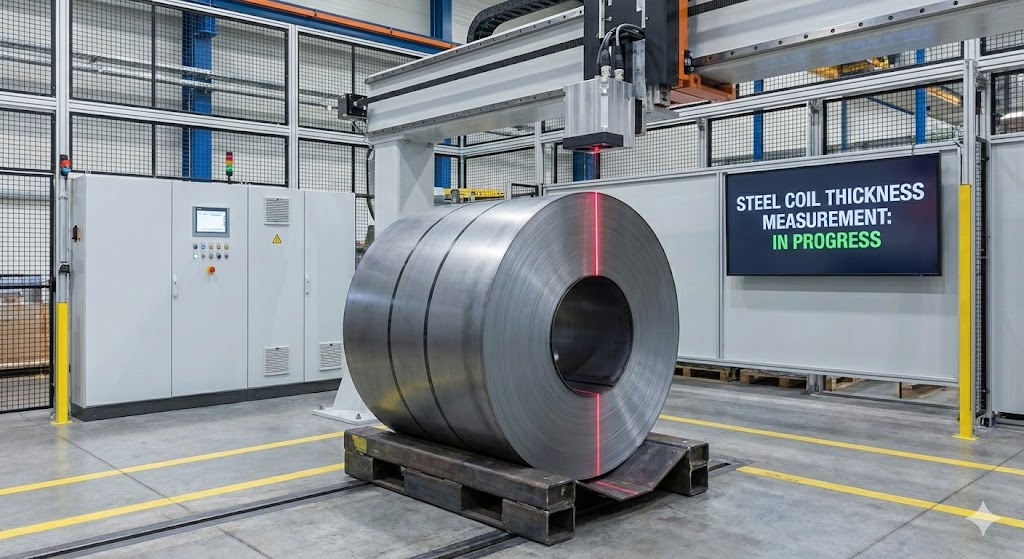
Looking toward the autonomous future, Lexus's development of more sophisticated laser sensor arrays is pivotal. Next-generation Lexus vehicles, particularly those built on dedicated electric vehicle platforms, are being designed with integrated, solid-state LiDAR units. These units are more compact, reliable, and cost-effective than their earlier mechanical counterparts. They are often seamlessly embedded into the roofline or front grille, preserving the vehicle's aesthetic while providing a 360-degree sensing envelope. This comprehensive perception is essential for achieving higher levels of automation, where the vehicle must make complex navigational decisions in dynamic urban environments.
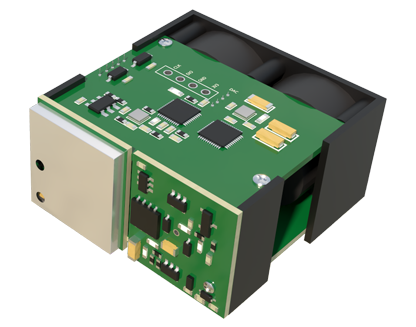
The engineering philosophy behind Lexus's implementation emphasizes not just capability but robustness. These laser sensor systems are subjected to rigorous environmental testing to ensure performance in rain, fog, snow, and extreme temperatures. Lexus engineers calibrate the systems to filter out noise and distinguish between relevant objects (like a moving pedestrian) and irrelevant debris (like airborne paper). This reliability is paramount for building driver trust in the technology.
Moreover, the synergy between laser sensors and other sensing modalities—such as millimeter-wave radar and high-resolution cameras—creates a sensor fusion architecture. This multi-layered approach compensates for the individual weaknesses of each technology. While lasers provide excellent spatial resolution, radar excels at determining speed and performing well in adverse weather. Cameras add rich contextual and color data. The Lexus processing unit synthesizes this information into a single, coherent, and highly accurate model of the world, forming the bedrock for all automated functions.
In conclusion, Lexus's investment in laser sensor technology is a strategic commitment to its core values of safety, innovation, and omotenashi (hospitality). From enhancing today's collision avoidance systems to enabling the self-driving capabilities of tomorrow, these sensors are a key differentiator. As the technology evolves toward greater miniaturization and integration, we can expect Lexus vehicles to become even more perceptive, proactive guardians on the road, solidifying the brand's reputation for thoughtful, human-centric engineering. The laser sensor, in essence, is more than a component; it is a fundamental enabler of the intelligent, serene, and secure mobility that defines the Lexus brand.