In the high-stakes world of industrial automation, precision and reliability are non-negotiable. At the heart of countless assembly lines, packaging systems, and logistics hubs, a critical component ensures this precision: the laser barcode positioning sensor. This sophisticated device transcends the basic function of a standard barcode scanner. It is a system engineered not just to read a code, but to pinpoint its exact spatial location in three dimensions, thereby enabling robotic systems and machinery to interact with objects with unprecedented accuracy.
The core technology hinges on the integration of a focused laser line generator, a high-resolution CMOS or CCD imaging sensor, and advanced processing algorithms. Unlike a single-point laser used in traditional scanners, these sensors project a thin, bright line of laser light onto the target surface. When this line intersects with a barcode—be it a traditional 1D code or a modern 2D Data Matrix—the camera captures the distortion and reflection pattern. The onboard processor then performs a complex triangulation calculation in real-time. By analyzing the precise deformation of the laser line as it falls across the code's edges and quiet zones, the sensor can determine the barcode's X, Y, and often Z coordinates (height or tilt) relative to a known reference point. This positional data, coupled with the decoded information from the barcode itself, is transmitted via industrial protocols like EtherCAT, PROFINET, or IO-Link to a central controller.
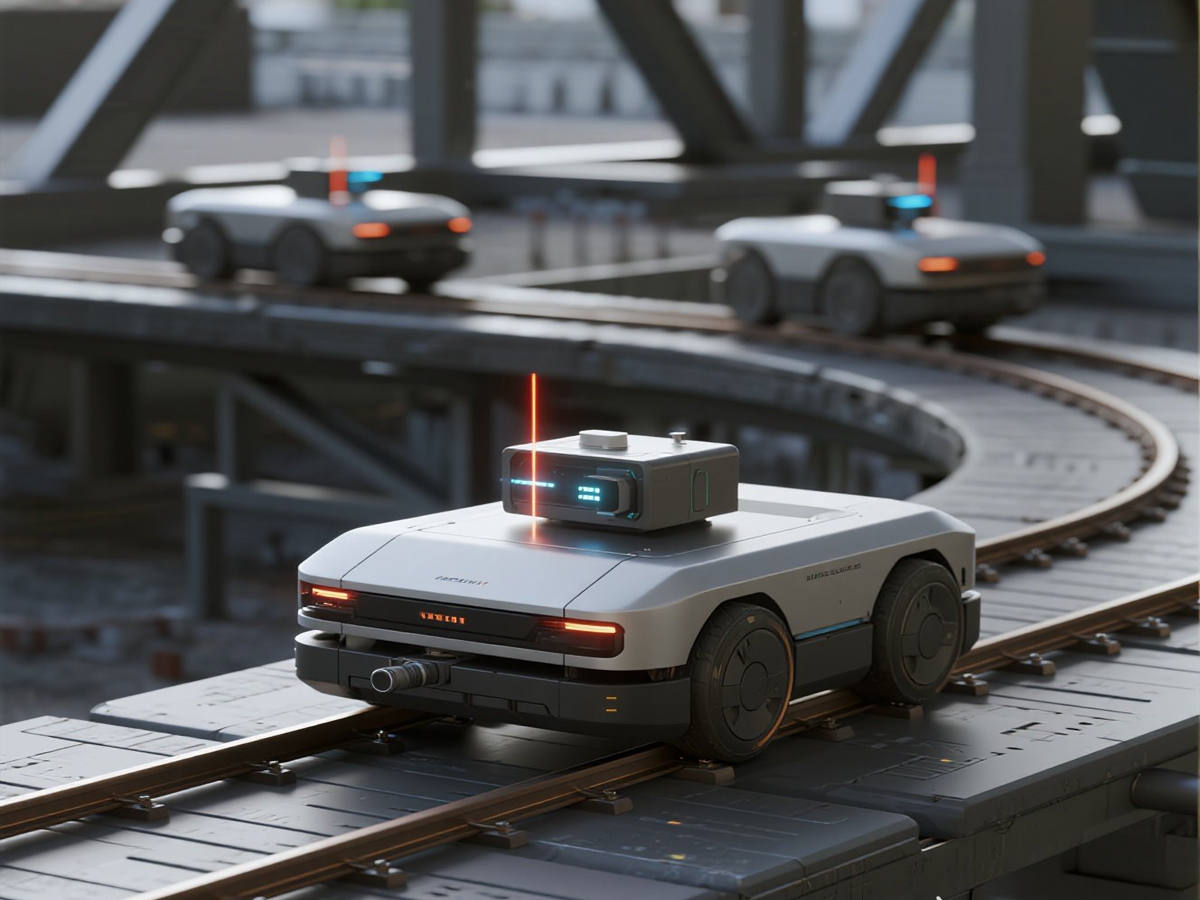
The applications are transformative. In automotive manufacturing, a robot arm equipped with such a sensor can locate and pick a specific part from a bin of randomly oriented components, guided by the barcode on the part's packaging. It doesn't just identify the part; it knows exactly where and how it is lying, enabling reliable grasping. In high-speed packaging lines, these sensors verify the correct placement of labels on products. They don't merely confirm the label is present; they measure its position and orientation to within sub-millimeter tolerances, rejecting any product where the label is skewed or misapplied. In warehouse automation, autonomous mobile robots (AMRs) use laser barcode positioning sensors for navigation and pallet handling, reading floor-mounted or rack-positioned codes to ascertain their exact location within the facility, far more reliably than camera-based systems in variable lighting conditions.
The advantages over conventional vision systems or simple scanners are substantial. The laser line provides its own illumination, making performance exceptionally robust against ambient light interference, a common challenge in factory settings. This allows for consistent operation in environments with fluctuating overhead lighting or complete darkness. The speed is another critical factor. These sensors can capture and process positional data at rates exceeding several thousand readings per second, facilitating integration into the fastest production lines without becoming a bottleneck. Furthermore, their ability to handle low-contrast, damaged, or directly marked (DPM) codes on metallic or reflective surfaces is superior, thanks to the controlled laser illumination that enhances contrast.
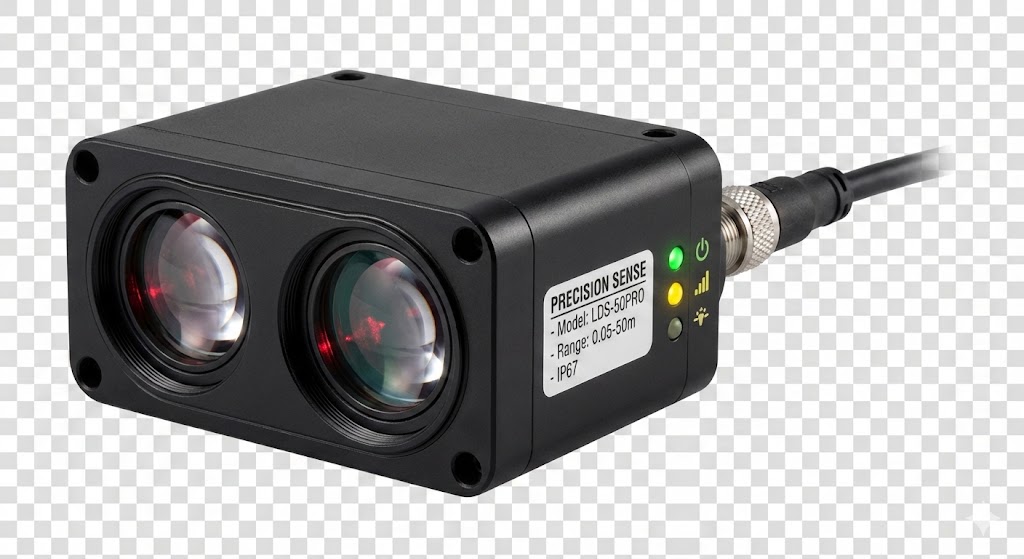
When selecting a laser barcode positioning sensor, engineers must evaluate several key parameters. The working distance, or the range over which accurate positioning is possible, must match the application. The field of view, determined by the laser line length and camera angle, defines the area the sensor can cover in a single scan. Resolution, often specified in microns, indicates the smallest positional change the sensor can detect. Environmental ratings, such as IP67 for dust and water ingress protection, are crucial for harsh industrial environments. Finally, the choice of communication interface must align with the existing factory network architecture to ensure seamless integration.
Looking ahead, the evolution of laser barcode positioning sensors is intertwined with Industry 4.0 and the Industrial Internet of Things (IIoT). Future iterations will feature enhanced connectivity for deeper data integration into Manufacturing Execution Systems (MES) and cloud platforms, facilitating predictive maintenance and real-time analytics. Advances in machine learning algorithms will allow sensors to self-adapt to changing conditions and recognize a wider array of codes and surfaces without manual reprogramming. As demands for flexibility and precision in manufacturing and logistics continue to escalate, the laser barcode positioning sensor will remain an indispensable tool, providing the exact "eyes and brain" needed for intelligent, automated decision-making on the factory floor.
