In the realm of industrial automation and control systems, proximity sensors play a pivotal role in enabling non-contact detection of objects. Among the various models available, the KCD2-E2 proximity sensor stands out as a reliable and widely used component. This article delves into the technical specifications, operational principles, common applications, and key considerations for selecting and implementing the KCD2-E2 sensor.
The KCD2-E2 is typically an inductive proximity sensor. Inductive sensors operate on the principle of electromagnetic induction. The sensor generates an oscillating electromagnetic field from its active face. When a metallic object enters this field, eddy currents are induced within the object, causing a change in the oscillation amplitude. The sensor's internal circuit detects this change and triggers a switching signal. This non-contact method of detection offers significant advantages, including no mechanical wear, high switching frequency, and reliability in harsh environments.
Key technical features of the KCD2-E2 sensor often include a defined sensing range, which is the maximum distance at which it can reliably detect a standard target. It is crucial to consult the specific datasheet for the exact value, as it can vary. These sensors usually come in a cylindrical housing with standard thread sizes (e.g., M12, M18) for easy mounting. The output configuration is a critical parameter; the KCD2-E2 commonly provides a digital switching output, which can be either NPN (sinking) or PNP (sourcing) transistor outputs. The choice between NPN and PNP depends on the PLC or control system's input card requirements. Furthermore, many variants feature a built-in LED indicator that shows the operational status, simplifying installation and troubleshooting.
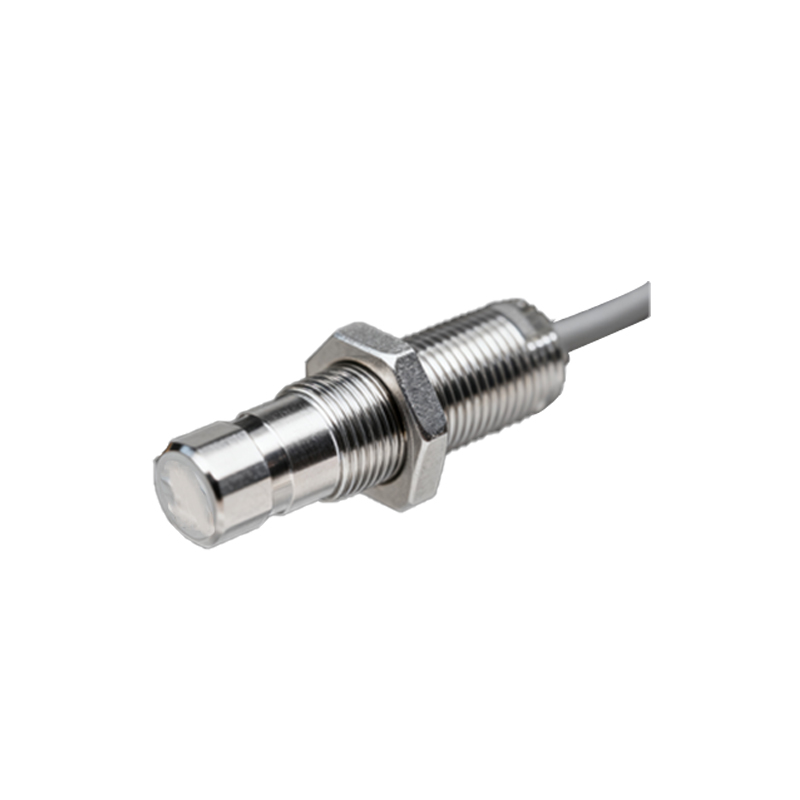
One of the primary strengths of sensors like the KCD2-E2 is their environmental robustness. They are often designed with protection ratings such as IP67, making them resistant to dust ingress and capable of withstanding temporary immersion in water. This makes them suitable for demanding applications in manufacturing, packaging, and material handling. They can operate effectively in the presence of coolants, oils, and vibrations commonly found on factory floors.
The applications for the KCD2-E2 proximity sensor are extensive across industrial sectors. A common use is in position sensing on automated machinery, such as confirming the presence of a metal part in a fixture or the end-of-travel position of a cylinder. They are integral to conveyor systems for counting metallic objects, detecting the position of pallets, or initiating sorting processes. In machine tools, they are used for tool breakage detection or monitoring spindle position. Their fast response time also makes them suitable for high-speed counting and sequencing operations.
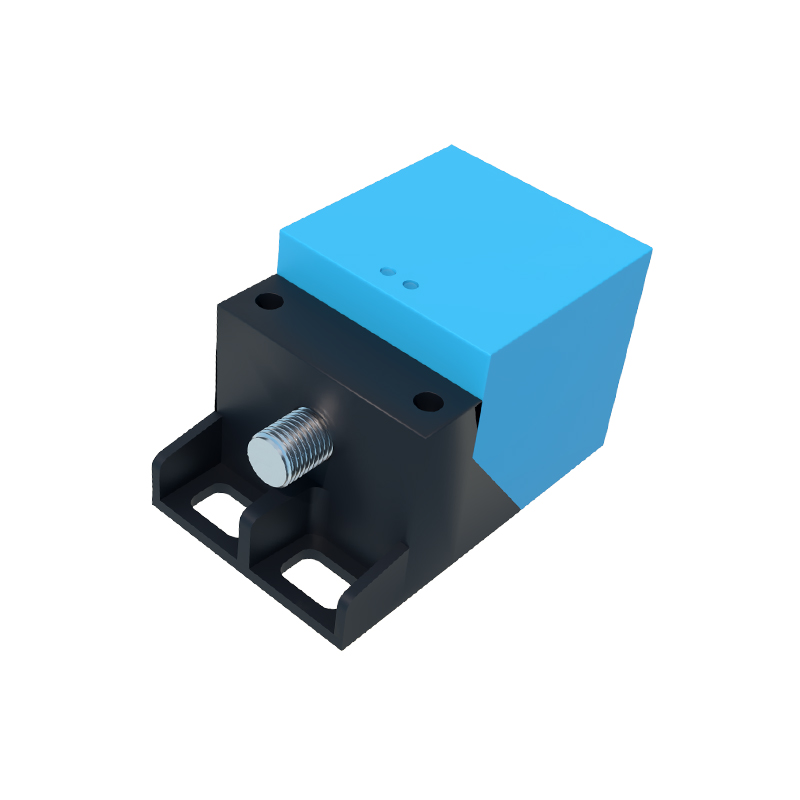
When selecting a KCD2-E2 sensor for a specific application, several factors must be evaluated. First, determine the object material; standard inductive sensors only detect metals, with different detection efficiencies for steel, aluminum, and copper. The required sensing distance should be chosen with a safety margin, typically 70-80% of the nominal range, to account for temperature variations and part tolerances. The electrical characteristics are paramount: ensure the operating voltage (commonly 10-30V DC) matches the supply, and select the correct output type (NPN or PNP) to interface with your controller. The physical installation conditions, including available space, temperature extremes, and potential exposure to chemicals, should also guide the selection of the housing material and protection rating.
Installation and wiring require attention to detail. Maintain the recommended clearance between multiple sensors to prevent mutual interference. Avoid mounting the sensor directly on a metal surface unless it is a flush-mountable type designed for such an installation. Always follow the wiring diagram provided by the manufacturer, typically a three-wire configuration (brown wire to +V, blue wire to 0V, and black wire as the switched output). Proper shielding and routing of cables away from high-power lines can prevent electrical noise from causing false triggering.
In summary, the KCD2-E2 inductive proximity sensor is a versatile and durable workhorse in industrial automation. Its non-contact operation, environmental resilience, and reliable performance make it a go-to solution for myriad detection tasks involving metallic objects. By carefully considering the material, sensing distance, electrical interface, and environmental conditions, engineers and technicians can effectively integrate this sensor to enhance machine reliability, safety, and productivity. As with any component, referring to the official manufacturer's documentation for the specific model's parameters is essential for optimal performance and system integration.