In the rapidly evolving landscape of industrial automation, laser vision sensors have emerged as pivotal components, driving efficiency and precision across diverse sectors. These sensors, which integrate laser technology with advanced imaging systems, are revolutionizing quality control, measurement, and inspection processes. The term "flip cover" in this context often refers to protective mechanisms or modular designs that enhance sensor durability and accessibility in harsh environments. This article delves into the latest advancements in laser vision sensor technology, exploring their operational principles, applications, and the significance of features like flip covers in industrial settings.
Laser vision sensors operate by projecting a laser line or pattern onto a target surface and capturing the reflected light with a high-resolution camera. By analyzing the deformation or displacement of the pattern, these sensors can generate precise 3D profiles of objects, enabling accurate dimensional analysis and defect detection. The integration of sophisticated algorithms allows for real-time data processing, making them indispensable in high-speed production lines. For instance, in automotive manufacturing, laser vision sensors are used to inspect weld seams, measure gaps between panels, and ensure component alignment, thereby reducing errors and enhancing safety standards.
The design of laser vision sensors often incorporates protective elements such as flip covers, which serve multiple functions. These covers shield sensitive optical components from dust, moisture, and mechanical impact, extending the sensor's lifespan in demanding conditions like factories or outdoor installations. Additionally, flip covers can facilitate easy maintenance and calibration, allowing engineers to access internal parts without disassembling the entire unit. This modularity not only minimizes downtime but also supports scalability in automated systems. As industries adopt Industry 4.0 practices, the demand for robust, user-friendly sensor designs with features like flip covers is growing, emphasizing reliability and adaptability.
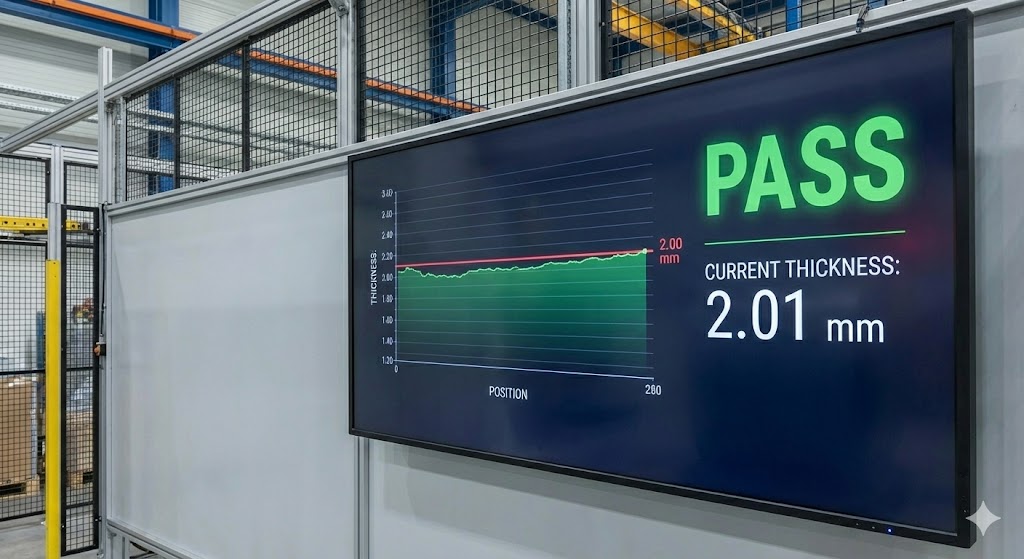
Applications of laser vision sensors span various industries, including electronics, aerospace, pharmaceuticals, and logistics. In electronics assembly, they verify the placement of microchips on circuit boards, detecting minute defects that could lead to device failures. In aerospace, these sensors measure turbine blade dimensions with micron-level accuracy, ensuring compliance with stringent engineering specifications. The pharmaceutical sector utilizes them for inspecting packaging integrity, such as checking seal quality on blister packs, which is critical for product safety. Moreover, in logistics and warehousing, laser vision sensors enable automated sorting and tracking of parcels by reading barcodes or assessing package dimensions, optimizing supply chain operations.
Recent technological advancements have further enhanced the capabilities of laser vision sensors. Innovations in laser sources, such as the adoption of blue or green lasers, improve visibility on reflective or dark surfaces, expanding their applicability. Enhanced camera resolutions and faster processing units allow for higher throughput and finer detail capture. Machine learning integration is another breakthrough, enabling sensors to learn from data patterns and adapt to new inspection tasks without extensive reprogramming. This adaptability is crucial in dynamic production environments where product designs frequently change. Furthermore, the development of compact, lightweight sensors with flip covers makes installation more flexible, supporting integration into robotic arms or mobile platforms for autonomous inspections.
Despite their advantages, challenges remain in deploying laser vision sensors effectively. Environmental factors like ambient light interference or temperature fluctuations can affect performance, necessitating proper shielding and calibration. The initial cost of high-end sensors may be prohibitive for small-scale operations, though long-term benefits in quality and efficiency often justify the investment. Training personnel to operate and maintain these systems is also essential, highlighting the need for comprehensive support from manufacturers. Looking ahead, trends indicate a move toward smarter, more interconnected sensors that communicate seamlessly with other industrial IoT devices, paving the way for fully automated, data-driven factories.

In conclusion, laser vision sensors represent a cornerstone of modern industrial automation, with their precision and versatility transforming manufacturing and inspection processes. Features like flip covers underscore the importance of durability and ease of use in real-world applications. As technology continues to evolve, these sensors will play an increasingly vital role in enhancing productivity, reducing waste, and fostering innovation across global industries. By staying abreast of developments and addressing implementation challenges, businesses can leverage laser vision sensors to gain a competitive edge in an automated future.
