In hazardous industrial environments where flammable gases, vapors, or dusts are present, standard proximity sensors are not just inadequate—they are a potential ignition source. Gas-explosion proof proximity sensors are engineered to operate safely within such classified areas, preventing catastrophic events by containing any potential spark or thermal energy within their robust housings. As an industry veteran, I've witnessed the evolution of these critical components. Selecting the right sensor is a matter of safety, reliability, and operational efficiency. This article presents a curated ranking of the top five gas-explosion proof proximity sensor series based on industry adoption, technical robustness, certification breadth, and field-proven performance in 2024.
1. Pepperl+Fuchs IECEx Series
A perennial leader, Pepperl+Fuchs sets the benchmark for intrinsic safety and explosion protection. Their IECEx certified series, particularly the NAMUR and two-wire DC models, are ubiquitous in chemical and pharmaceutical plants. What sets them apart is their exceptional electromagnetic compatibility (EMC) performance and a wide range of housing materials, including high-grade stainless steel and specialized plastics resistant to aggressive media. Their "Triple Protection" concept—combining encapsulation, flameproof enclosure, and intrinsic safety barriers—offers unparalleled flexibility for zone 0, 1, and 2 applications. The consistent switching accuracy, even in the presence of conductive coatings, makes them a top choice for critical monitoring points.
2. Siemens Sitrans P Series for Hazardous Areas
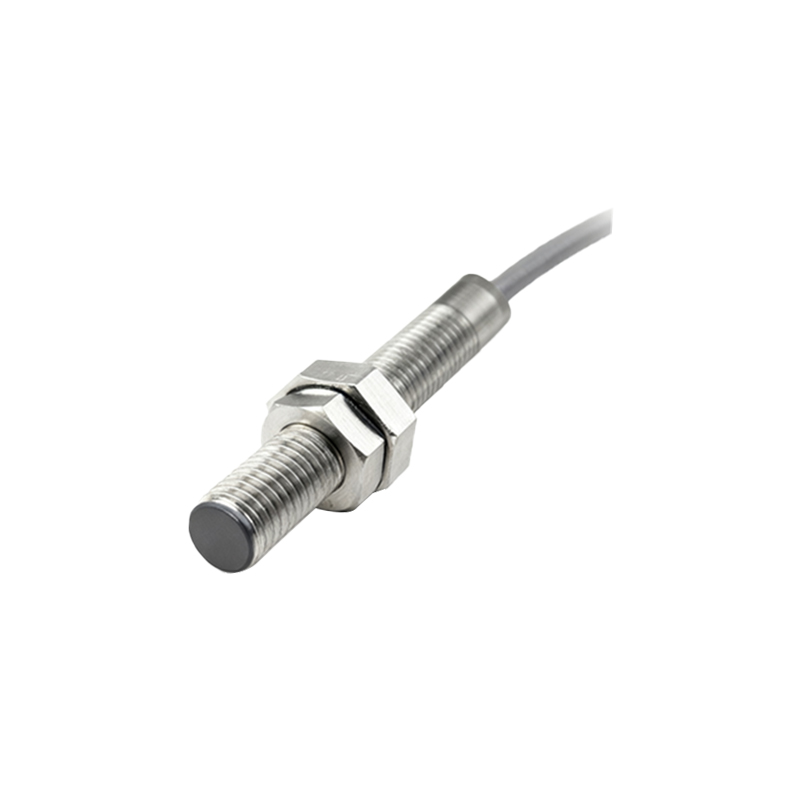
Siemens integrates sensor technology seamlessly into broader automation architectures. Their Sitrans P proximity sensors with ATEX and IECEx approvals are renowned for exceptional durability and long-term stability. A key advantage is their diagnostic capability via IO-Link communication, which provides real-time data on sensor health, operating temperature, and potential drift—a feature increasingly vital for predictive maintenance in remote, hazardous locations. The robust metal housings and welded hermetic seals ensure integrity against moisture and corrosive atmospheres. They excel in oil & gas upstream applications and bulk material handling where mechanical stress and environmental extremes are common.
3. Turck F90 Explosion-Proof Inductive Sensors
Turck's F90 series is the workhorse for heavy-duty applications. Built with a massive nickel-plated brass housing, these sensors are designed to withstand severe mechanical impact, vibration, and high-pressure washdowns. Their certifications (ATEX, IECEx, UL/cUL) are among the most comprehensive, facilitating global project deployment. The patented "Reed-Technology" in some models provides extremely low switching hysteresis and high repeatability. Turck excels in mining, grain silos, and paint shops, where ruggedness is non-negotiable. The extensive range includes factors 1 and 2 versions, catering to different installation density requirements in explosion-protected cabinets.
4. ifm Electronic PMI Series
ifm electronic combines German engineering with a strong focus on user-friendly design and value. Their PMI series of ATEX/IECEx certified inductive sensors offers outstanding performance at a competitive price point. They feature high switching distances and integrated LED status indicators with a 360-degree visibility ring, greatly aiding commissioning and troubleshooting in poorly lit areas. The PVDF housing variants offer excellent resistance to solvents and UV radiation. ifm's strength lies in packaging machinery, chemical processing, and offshore platforms where a reliable, easy-to-install sensor with clear diagnostics is preferred. Their ecomatmobile line is also notable for mobile equipment in Ex zones.
5. Balluff BES Ex Series
Balluff rounds out the list with its highly modular BES Ex series. These sensors are praised for their design flexibility, offering a wide array of form factors (cylindrical, rectangular, ring-shaped), connection types (M8, M12, conduit), and sensing principles (inductive, capacitive). This allows for precise adaptation to tight spatial constraints common in explosion-protected enclosures. Their high-temperature variants reliably operate in ambient temperatures up to 120°C. Balluff sensors are frequently specified in automotive paint lines, refinery automation, and distributed control systems where sensor variety and form factor standardization across a plant are crucial.
Selection Criteria Beyond the Ranking
While this ranking highlights top contenders, the final choice must be driven by a rigorous assessment:
Certification & Zone: Match the sensor's ATEX/IECEx marking (e.g., Ex ia IIC T6 Ga) precisely to the hazardous zone (0, 1, 2) and gas group (IIC being the most rigorous).
Environmental Rating: Ensure the IP (Ingress Protection) and IK (Impact Protection) codes are suitable for dust, moisture, and physical impact.
Material Compatibility: Housing material (e.g., stainless steel 316L, PBT) must