In the realm of industrial automation and machinery, proximity sensors are indispensable components for non-contact detection of metallic and, in some cases, non-metallic objects. Among the critical design choices engineers face is the selection of the sensor's head style. Two predominant configurations dominate the landscape: the High Head (or Cylindrical) style and the Flat Head (or Flush-mountable) style. Understanding the distinct operational characteristics, mounting implications, and application suitability of each is paramount for optimal system design, reliability, and cost-efficiency.
The High Head proximity sensor, often recognizable by its pronounced, threaded cylindrical barrel that protrudes significantly from the mounting surface, is a classic and widely used design. Its primary mechanical advantage lies in its extended sensing face. This physical protrusion allows the sensor to be installed in a standard drilled and tapped hole without requiring a counterbore. The sensing coil within the head is positioned away from surrounding metallic materials, such as the mounting bracket or machine frame. This inherent standoff distance is crucial because it minimizes the risk of "side sensing" or interference from adjacent metal. The electromagnetic field generated by the sensor can project forward with less lateral interaction, leading to a more stable and predictable sensing range, typically specified as its "rated operating distance." This design makes High Head sensors exceptionally robust in environments where the mounting nut or the surrounding installation material might be metallic. They are the go-to choice for general-purpose applications, such as detecting the presence of a metal flag on a rotating shaft, counting parts on a conveyor, or serving as end-of-travel limit switches on actuators. Their standardized threaded barrels (e.g., M8, M12, M18, M30) simplify inventory and installation across diverse equipment.
Conversely, the Flat Head proximity sensor is engineered with a sleek, low-profile front face that is designed to be mounted flush with, or even recessed into, a metal surface. This design presents a significant spatial advantage. By eliminating protrusion, Flat Head sensors are ideal for applications with severe space constraints where a protruding sensor could be physically struck, damaged, or simply not fit. Common scenarios include detection within tight robotic grippers, inside narrow machine channels, or on the face of moving slides and carriages where clearance is minimal. However, this compact form factor introduces an important electrical consideration: the "shielding" effect. When a Flat Head sensor is mounted flush in metal, the surrounding material influences its electromagnetic field. To counteract this and prevent the sensor from being "blind" to the target due to the nearby metal, these sensors are specifically shielded. The shielding contains the field, directing it predominantly forward. A critical consequence is that the effective sensing range of a Flat Head sensor is typically reduced compared to a High Head sensor of the same diameter and technology. Furthermore, installation requires precise machining: a counterbored hole is necessary to accommodate the sensor's body while allowing its face to sit flush. Despite the shorter range, the benefit is the ability to detect objects that are themselves flush against the mounting surface, a task impossible for a protruding High Head sensor.
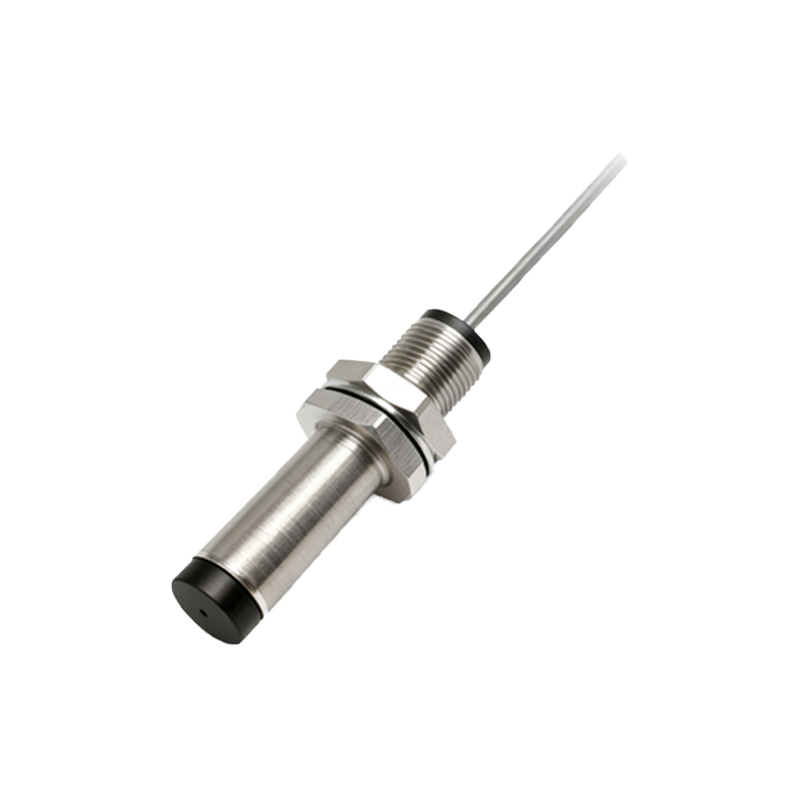
The choice between High Head and Flat Head extends beyond mere geometry; it impacts sensing performance and installation logistics. For a High Head sensor, the nominal sensing distance is generally reliable and less affected by the mounting conditions, assuming standard non-ferrous mounting nuts are used. Its "free space" sensing field is larger. The Flat Head sensor's performance is intrinsically linked to its installation. If not mounted perfectly flush, or if the counterbore is incorrectly sized, its sensing characteristics can deviate significantly from the datasheet specifications. The shielding ensures it only detects objects directly in front, offering superior immunity to lateral metal, but at the cost of range.
Application dictates selection. Use a High Head sensor when: mounting space is ample; the application demands the full rated sensing distance; the sensor may be subject to physical adjustment or replacement frequently; and the mounting environment is non-metallic or standard practices are followed. Opt for a Flat Head sensor when: installation space is extremely limited or a flush surface is mandatory to avoid mechanical damage; the target object will travel parallel and very close to the mounting surface; and the required detection distance is short and well within the sensor's reduced capability.

In conclusion, neither head style is universally superior. The High Head sensor offers robust performance, easier installation, and longer range for general industrial duties. The Flat Head sensor provides a critical solution for space-constrained, flush-mount applications, accepting a trade-off in sensing distance for mechanical integration. A seasoned engineer evaluates the mechanical envelope, the nature of the target, the required sensing gap, and the installation environment to specify the correct head style, ensuring seamless and reliable integration into the automated system.