In the realm of industrial automation and electronic design, proximity sensors are indispensable components for detecting the presence or absence of objects without physical contact. Among the diverse types available, Surface-Mount Device (SMD) square proximity sensors have gained significant traction due to their compact form factor, reliability, and integration ease. This article delves into the design principles, operational mechanisms, key applications, and critical selection criteria for these sophisticated sensing devices.
SMD square proximity sensors are typically constructed using a housing made of engineering plastics or ceramics, which provides mechanical strength and environmental protection. Internally, they incorporate an oscillator circuit, a sensing coil, and a signal conditioning unit. The core operating principle is based on electromagnetic induction. When an AC current passes through the oscillator, it generates an alternating magnetic field around the sensing face. As a metallic target approaches this field, eddy currents are induced on the target's surface, causing a change in the oscillation amplitude or frequency. This change is detected by the sensor's internal circuitry, which then triggers a switching output—typically an open-collector or push-pull configuration—to indicate the target's presence.
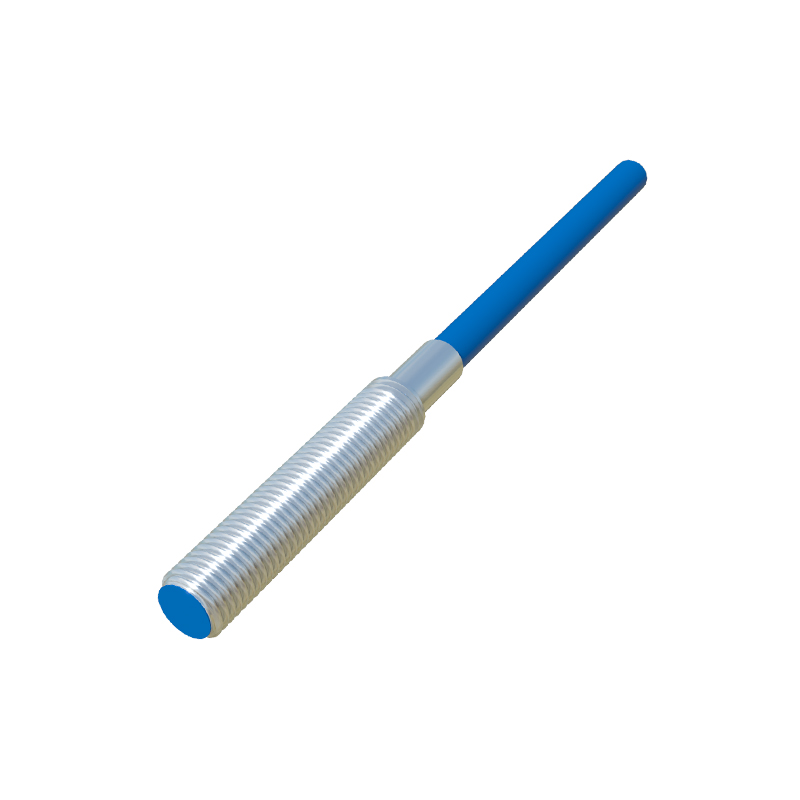
One of the standout features of SMD square proximity sensors is their miniaturized, flat package. The square shape allows for efficient PCB layout and high-density mounting, which is crucial in modern compact electronic assemblies. These sensors often come in standardized sizes, such as 5mm x 5mm or 8mm x 8mm, with thicknesses as low as 1.5mm. This compact design does not compromise performance; many models offer sensing ranges from 1mm to 5mm, suitable for precise detection tasks. They are designed to operate across a wide temperature range, commonly from -40°C to 85°C, ensuring functionality in harsh industrial environments.
The applications of SMD square proximity sensors are vast and varied. In consumer electronics, they are used for lid detection in laptops, position sensing in smartphones, and touchless controls in appliances. Within industrial automation, these sensors play a critical role in robotic assembly lines for part presence verification, in conveyor systems for object counting, and in packaging machinery for ensuring correct product placement. The automotive industry employs them in seat occupancy detection, gear position sensing, and safety interlock systems. Their non-contact nature makes them ideal for applications requiring high durability and minimal maintenance, as they avoid mechanical wear and tear.
When selecting an SMD square proximity sensor, several parameters must be carefully evaluated. First, the sensing distance and target material are paramount. Most sensors are optimized for ferrous metals like steel, but specific models are calibrated for non-ferrous metals such as aluminum or copper. The output type is another key consideration: NPN or PNP transistor outputs are standard, with choices between normally open (NO) and normally closed (NC) configurations to match the control logic of the system. Supply voltage compatibility, typically ranging from 3.3V DC to 24V DC, must align with the host circuit. Additionally, factors like response time (often in microseconds), switching frequency, and protection ratings (e.g., against short-circuit, reverse polarity, and electromagnetic interference) are crucial for ensuring reliable operation in noisy industrial settings.
Installation and layout are critical to maximizing sensor performance. Designers must ensure that the sensing face is unobstructed and that metallic objects or other sensors are not placed within the specified lateral distance to prevent mutual interference. Proper PCB soldering techniques, following the manufacturer's reflow profile, are essential to avoid thermal damage. Furthermore, environmental conditions such as humidity, dust, and chemical exposure should be considered; many sensors feature conformal coating or encapsulation to withstand such challenges.
In summary, SMD square proximity sensors represent a fusion of miniaturization and high performance, enabling smarter, more efficient automated systems. Their versatility across industries underscores their importance in modern engineering. By understanding their technical nuances and application requirements, engineers can leverage these sensors to enhance product functionality, improve safety, and drive innovation in automation technology. As the trend toward IoT and Industry 4.0 accelerates, the demand for such intelligent, compact sensing solutions is poised to grow exponentially.