In the realm of industrial automation and machine control, the selection of the right sensing component is paramount for ensuring reliability, precision, and efficiency. Among the diverse array of sensors available, the 12mm diameter proximity switch sensor, particularly those offering a standard 4cm (40mm) sensing range, represents a critical and widely utilized category. This article delves into the technical specifications, operational principles, application considerations, and advantages of these compact yet powerful inductive proximity sensors.
The fundamental operating principle of a standard 12mm inductive proximity sensor is based on electromagnetic induction. The sensor's face contains an oscillator circuit that generates a high-frequency electromagnetic field. When a metallic target (typically ferrous metals like steel or iron, with specific models for non-ferrous metals) enters this field within the specified sensing range—in this case, up to 4cm—eddy currents are induced in the target. This causes a change in the oscillation amplitude, which is detected by a threshold circuit. This detection triggers a solid-state switch (PNP or NPN output) to change state, sending a clear digital signal to the controller, such as a PLC (Programmable Logic Controller). The entire process is contactless, meaning there is no physical wear on the sensor, leading to exceptional longevity and maintenance-free operation.
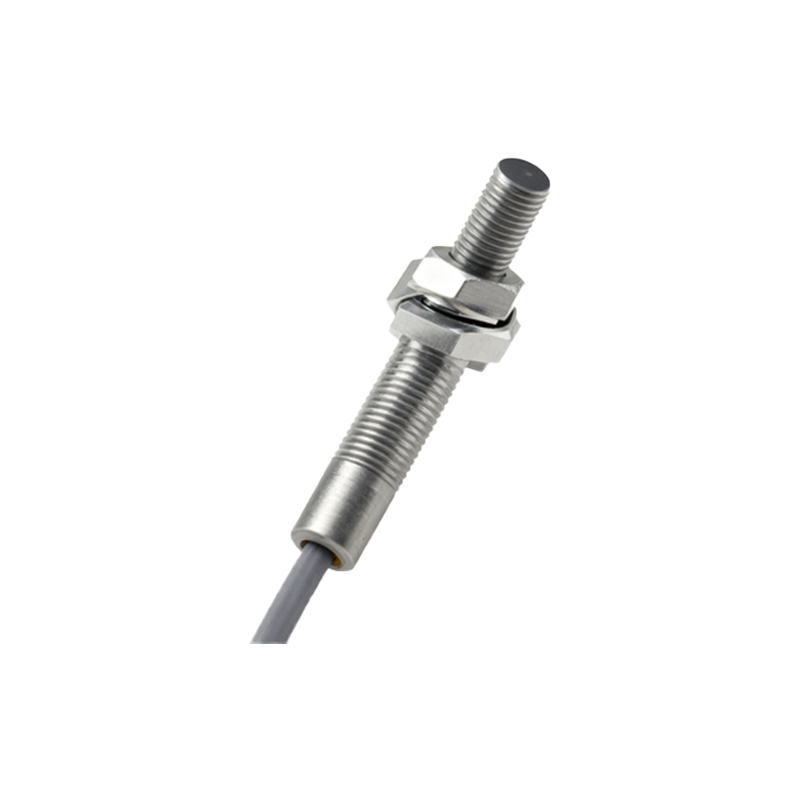
The "12mm" designation refers to the cylindrical housing's diameter, a form factor that allows for easy installation in tight spaces where mounting real estate is limited. The compact size does not compromise robustness; these sensors are typically housed in stainless steel (e.g., 303 or 304 grade) or nickel-plated brass bodies, offering high resistance to mechanical impacts, vibrations, and harsh industrial environments. Many models conform to IP67 or IP68 ingress protection ratings, making them resistant to dust and capable of withstanding temporary or prolonged immersion in water, which is crucial for washdown applications in food processing or outdoor use.
The specified "4cm sensing range" (Sn) is a nominal value defined for a standard mild steel target. It is crucial to understand that this is the rated operating distance. For reliable operation and to account for manufacturing tolerances, temperature variations, and supply voltage fluctuations, a practical installation should utilize approximately 70-80% of this nominal range. Furthermore, the sensing range is influenced by the target material. For instance, the effective range for stainless steel might be reduced to 70-85% of the nominal range, and for aluminum or copper, it can be as low as 30-50%. Engineers must consult the sensor's datasheet for precise correction factors.
The electrical characteristics are equally important. These sensors are available in both DC (10-30V DC) and AC variants, with DC models being more prevalent in modern control systems. The output configuration is typically either PNP (sourcing) or NPN (sinking), a choice dictated by the input module of the connected controller. Many 12mm 4cm-range sensors feature a built-in LED status indicator, providing immediate visual confirmation of power and switching state, which significantly aids in commissioning and troubleshooting. The switching frequency can range from 500 Hz to 5 kHz, allowing them to detect very fast-moving objects on production lines.
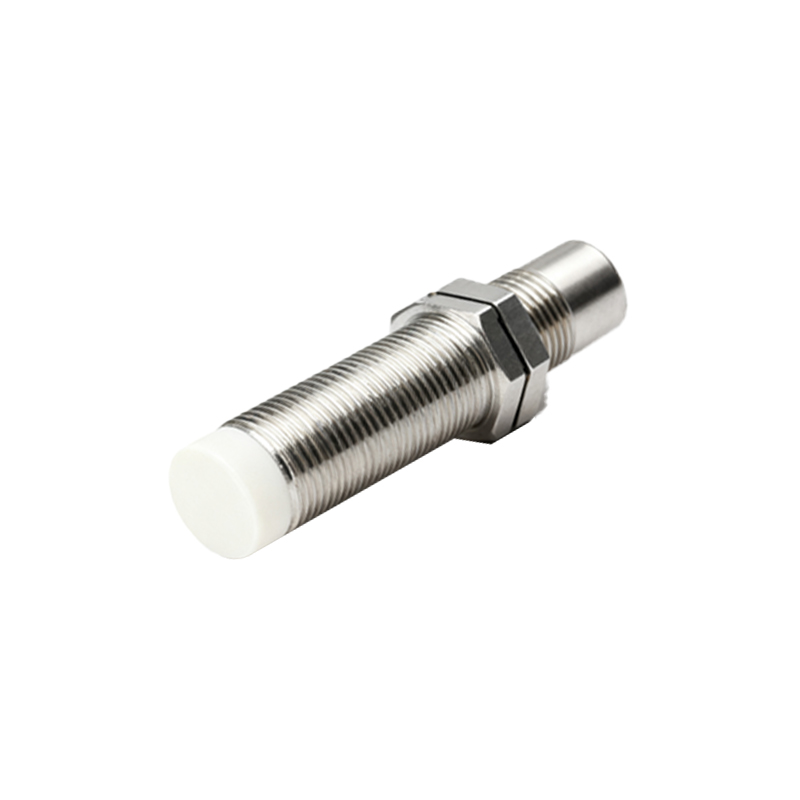
Application scenarios for the 12mm proximity sensor with a 4cm range are extensive. They are ideal for position detection: verifying if a robotic gripper has picked up a part, confirming the closed position of a safety gate, or detecting the presence of a metal component on a conveyor. They serve as end-of-travel limit switches in linear actuators without the mechanical failure points of traditional micro-switches. In automated assembly, they count metallic parts or control the indexing of a rotary table. Their sealed construction makes them suitable for monitoring fluid levels via a float with a metallic trigger or for use in CNC machine tooling.
When integrating these sensors, several best practices must be followed. Ensure the target is large enough to reliably interrupt the electromagnetic field; a target should ideally be at least equal to the sensor's face diameter. Maintain proper clearance from surrounding metals (lateral and flush-mounting distances as per manual) to prevent false triggering. Use shielded cables in electrically noisy environments and ensure correct polarity for DC models. Regular functional testing, though rarely needed due to their durability, is recommended as part of preventive maintenance schedules.
In conclusion, the 12mm proximity switch sensor with a 4cm sensing range is a testament to the principle of "small but mighty" in industrial sensing. Its compact dimensions, robust construction, contactless operation, and reliable performance under demanding conditions make it an indispensable component in designing responsive, durable, and efficient automated systems. A thorough understanding of its parameters and correct application is key to leveraging its full potential for machine safety, process control, and operational intelligence.