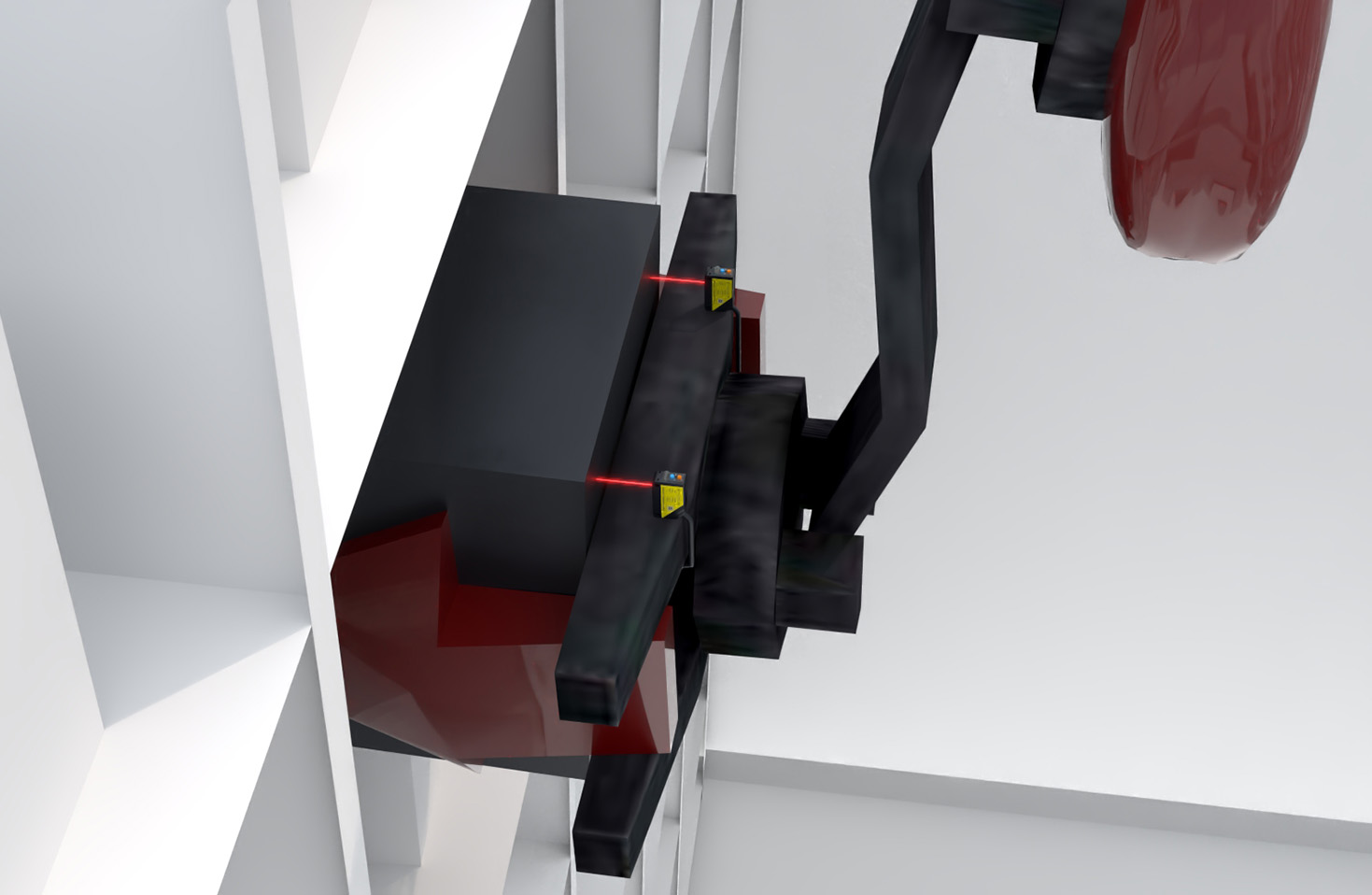
Laser positioning sensors are integral components in modern automation, robotics, and quality control systems. Their ability to provide non-contact, high-precision measurements makes them indispensable in industries ranging from manufacturing to logistics. Understanding the fundamental principles behind these devices reveals why they are so effective and reliable.
At its core, a laser positioning sensor operates on the principle of optical triangulation. The system typically consists of three main elements: a laser diode emitter, a lens or optical system, and a light-sensitive detector, usually a CCD (Charge-Coupled Device) or CMOS (Complementary Metal-Oxide-Semiconductor) linear array. The process begins when the laser diode projects a focused beam of coherent light onto the target surface. This spot of light is then reflected, and the lens collects the reflected light, focusing it onto a specific point on the detector array.
The key to measurement lies in the geometry of this setup. The emitter, the target point, and the detector form a triangle. When the distance to the target changes, the angle of the reflected light entering the lens also changes. Consequently, the position where the reflected light spot lands on the detector array shifts. By precisely calculating this shift in the spot's position on the detector, the sensor's internal processor can determine the exact distance to the target with remarkable accuracy, often in the micrometer range.

Different measurement modes are employed based on application needs. The most common is the diffuse reflection mode, where the sensor uses light scattered directly from the target's surface. This mode is versatile for various surfaces but can be affected by color and texture. For highly reflective or demanding surfaces, the retro-reflective mode is used, where a reflector is placed behind or opposite the target. The sensor detects the beam reflected from this dedicated reflector, and the presence of the target object interrupts this beam, allowing for precise edge or presence detection. The most precise method is the through-beam mode, which uses separate emitter and receiver units. The target object breaks the laser beam traveling between them, offering the highest accuracy and reliability for detecting small objects or precise positioning.
Several factors influence the performance and accuracy of a laser positioning sensor. The wavelength of the laser is crucial; red lasers (around 650 nm) are common, but blue lasers offer better visibility and performance on certain materials. The spot size determines the measurement resolution; a smaller spot allows for more precise detection of edges or small features. Sampling speed, or response time, is critical in high-speed production lines. Environmental factors like ambient light, dust, fog, or vibrations must also be considered, with many industrial sensors featuring protective housings and filters to mitigate these interferences.

The applications of laser positioning sensors are vast. In automated assembly lines, they measure part dimensions, check for presence, or guide robotic arms for precise placement. In electronics manufacturing, they ensure the exact positioning of components on circuit boards. In logistics, they measure package dimensions for sorting and volumetric scanning. Furthermore, they are essential in coordinate measuring machines (CMMs) and for controlling the gap and flushness in automotive body assembly.
In summary, laser positioning sensors translate the simple geometry of triangulation into sophisticated, high-speed distance data. By emitting a laser beam and analyzing the position of its reflection on a dedicated detector, these sensors provide the non-contact precision that drives efficiency and quality in countless automated processes. Their continued evolution, including advancements in miniaturization, speed, and smart data processing, ensures they will remain a cornerstone of industrial measurement technology.