In the demanding landscape of modern industrial automation, precision and reliability over extended distances are paramount. The 20-meter laser proximity sensor represents a significant leap forward in sensing technology, offering unparalleled performance for applications where traditional sensors fall short. This advanced device operates on the principle of time-of-flight (ToF) or phase-shift measurement, emitting a focused, coherent laser beam towards a target. The sensor then precisely calculates the distance by measuring the time it takes for the reflected light to return or by analyzing the phase shift of the modulated beam. This method ensures high accuracy and stability even at its maximum rated range of 20 meters.
The core advantages of a 20m laser sensor are its exceptional range, pinpoint accuracy, and minimal beam divergence. Unlike ultrasonic or inductive sensors, the laser's focused beam allows for precise detection of small objects and can operate effectively in environments with varying ambient light conditions, thanks to sophisticated optical filters and signal processing algorithms. Typical accuracy specifications can reach within ±1mm to ±5mm at 20 meters, depending on the model and target surface properties. This makes them indispensable for large-scale material handling, such as monitoring stockpile levels in silos or warehouses, positioning gantry cranes, and guiding automated guided vehicles (AGVs) in vast logistics centers.
Furthermore, these sensors exhibit remarkable resistance to environmental interference. Many industrial-grade models feature robust housings rated IP67 or higher, protecting against dust and water ingress. They are designed to withstand significant vibrations, temperature fluctuations commonly found in outdoor or harsh industrial settings, and electromagnetic interference. The laser diode itself is engineered for long-term stability, often boasting operational lifespans exceeding 100,000 hours. Integration into control systems is streamlined through various output options, including analog (4-20mA, 0-10V), discrete (PNP/NPN), and industrial communication protocols like IO-Link, PROFINET, or EtherNet/IP. IO-Link, in particular, enables advanced parameterization, remote diagnostics, and condition monitoring, paving the way for predictive maintenance strategies.
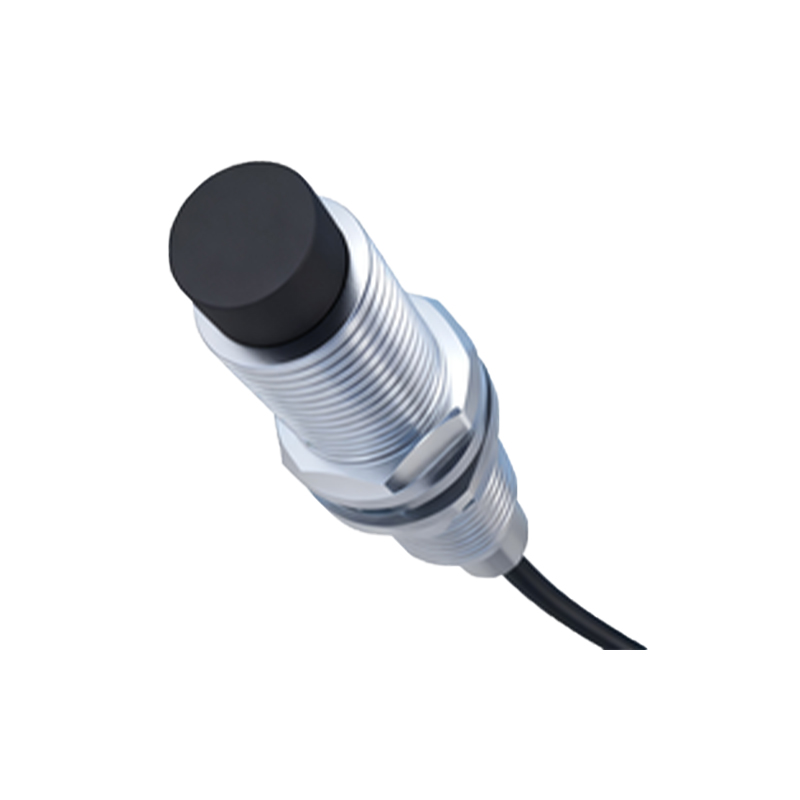
When selecting a 20m laser proximity sensor, several critical factors must be evaluated. The target's surface characteristics—its color, reflectivity, and texture—directly influence performance. Dark, matte, or absorbent surfaces may require sensors with higher output power or specialized models designed for low reflectivity. The required response time, which can be in the microsecond range for lasers, must align with the application's speed. Installation considerations are also crucial; ensuring a stable mount and a clear line of sight is essential for consistent operation. Regular maintenance primarily involves keeping the lens clean from obstructions like dust, oil, or condensation, which can attenuate the laser signal.
Looking ahead, the evolution of 20m laser sensors is intertwined with Industry 4.0. Future iterations will likely incorporate enhanced data analytics directly at the sensor level, more compact form factors without sacrificing power, and even longer ranges with improved energy efficiency. Their role is expanding into complex areas like 3D profiling for volume measurement and integration with machine vision systems for comprehensive spatial awareness. In conclusion, the 20-meter laser proximity sensor is not merely a component but a strategic enabler for automation, providing the critical long-range, high-fidelity data necessary for optimizing safety, efficiency, and intelligence in large-scale industrial operations. Its ability to deliver precise measurements over challenging distances solidifies its position as a cornerstone technology in advanced manufacturing, logistics, and process industries.