In the realm of industrial automation and smart systems, the ability to detect the presence or absence of an object without physical contact is a cornerstone of efficiency, safety, and innovation. This capability is delivered by proximity sensors, a family of devices that "signal upon approach." These sensors have revolutionized countless applications, from assembly lines and robotics to consumer electronics and automotive systems, by providing reliable, non-contact detection.
At its core, a proximity sensor is a device that emits an electromagnetic field or a beam of electromagnetic radiation (like infrared light), and looks for changes in the field or return signal. The key principle is that the sensor itself does not need to touch the target object to detect it. The moment an object enters its predefined sensing range or "switching distance," the sensor's output state changes, typically closing or opening an electrical circuit. This change in output acts as the signal that can trigger a subsequent action—stopping a motor, counting an item, activating a safety curtain, or turning on a light.
Several primary technologies underpin the operation of these versatile sensors, each with distinct advantages and ideal applications.
Inductive Proximity Sensors: These are the workhorses of metal detection in industrial environments. They generate an oscillating electromagnetic field from a coil. When a metallic object (ferrous or non-ferrous) enters this field, it induces eddy currents within the target, which causes a change in the oscillation amplitude. The sensor's circuitry detects this change and switches its output. Inductive sensors are renowned for their robustness, high switching frequency, and immunity to environmental factors like dust, oil, or moisture. They are ideal for detecting metal parts in machinery, position verification in CNC machines, and high-speed counting.
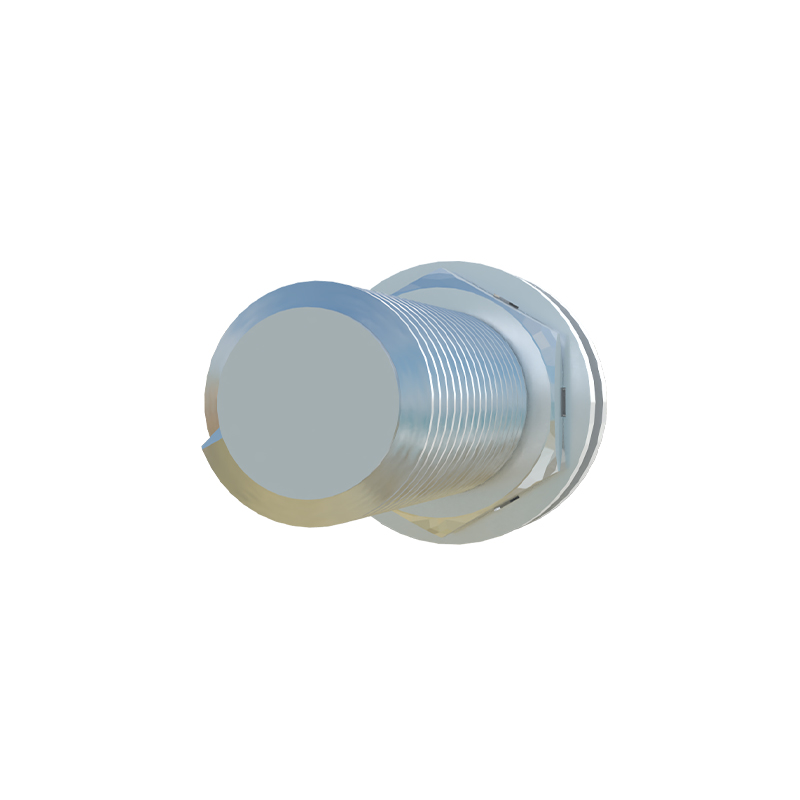
Capacitive Proximity Sensors: These sensors can detect both metallic and non-metallic objects—liquids, plastics, wood, glass, and granular materials. They operate by generating an electrostatic field. When any object with a dielectric constant different from air enters this field, it alters the sensor's capacitance, triggering a state change. This makes capacitive sensors incredibly versatile for applications like liquid level detection in tanks, material presence sensing in hoppers, or detecting non-metallic packaging on conveyor belts.
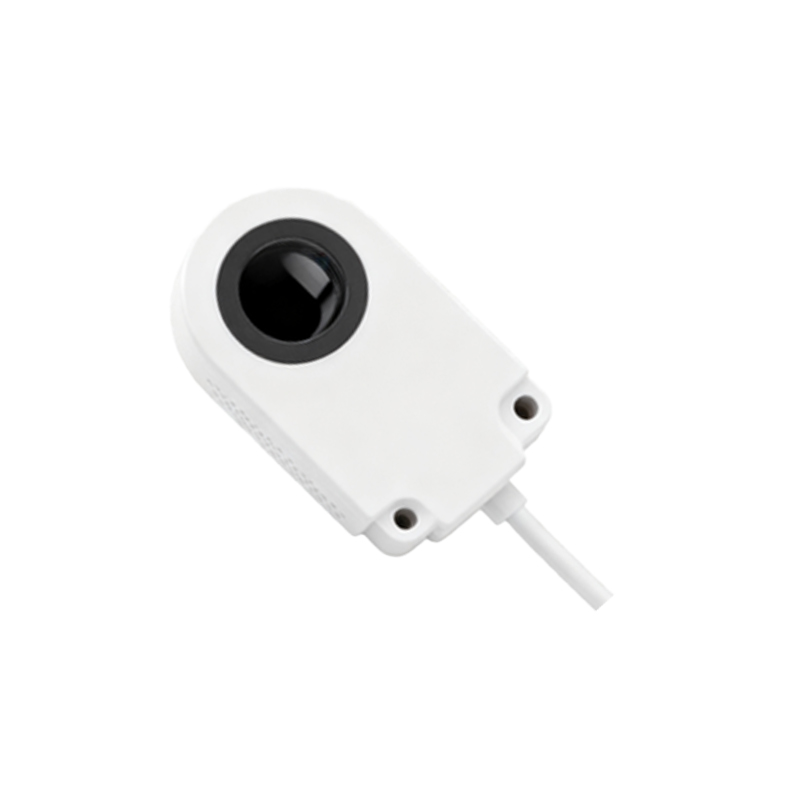
Photoelectric Sensors: This category uses light, typically infrared, visible red, or laser, to detect objects. They consist of an emitter (light source) and a receiver. The three main operating modes are through-beam (separate emitter and receiver, object breaks the beam), retro-reflective (object reflects light back to a combined unit via a reflector), and diffuse (or proximity) mode, where the sensor detects light reflected directly from the object itself. Photoelectric sensors offer very long sensing ranges and can detect virtually any material. They are perfect for transparent object detection, long-range presence sensing, and precise positioning.
Ultrasonic Sensors: Functioning similarly to sonar, these sensors emit high-frequency sound waves and evaluate the echo reflected back from a target. By measuring the time between emission and reception, they can determine the object's presence and distance. Ultrasonic sensors excel in harsh environments where optical sensors might fail due to dust, fog, or target color/reflectivity issues. Common uses include distance measurement, level sensing of bulk solids or liquids, and detecting clear or complex-shaped objects.
The selection of the appropriate proximity sensor hinges on several critical factors: the material of the target object (metal, plastic, liquid), the required sensing distance, the environmental conditions (temperature, contaminants), the required response speed, and the electrical output type needed (e.g., NPN/PNN, analog, IO-Link).
Modern advancements are pushing the boundaries further. Sensors with IO-Link digital communication provide not just a simple on/off signal but a wealth of diagnostic data, enabling predictive maintenance and tighter process integration. Miniaturization allows for installation in extremely confined spaces, while enhanced sealing (IP67/IP69K) ensures reliable operation under washdown conditions in food and pharmaceutical industries.
In conclusion, proximity sensors are the silent, intelligent sentinels of modern automation. Their ability to provide a clean, contactless signal upon the mere approach of an object underpins precision, enhances safety by eliminating mechanical wear and potential spark risks, and enables sophisticated control sequences. As industries continue to evolve towards greater connectivity and intelligence, the role of these fundamental yet advanced components will only become more pivotal, forming the essential sensory layer of the Internet of Things (IoT) in industrial and commercial settings.