In the intricate and demanding world of industrial automation and process control, the accurate and reliable measurement of liquid levels is paramount. Among the diverse array of sensing technologies available, proximity level sensors stand out for their versatility, robustness, and non-contact operation. These sensors play a critical role in ensuring operational efficiency, safety, and product quality across numerous sectors, from chemical processing and water treatment to food and beverage production and pharmaceutical manufacturing.
At its core, a proximity level sensor detects the presence or absence of a liquid at a specific point or measures the continuous level within a vessel without making physical contact with the medium. This non-invasive characteristic is a significant advantage, eliminating issues related to contamination, mechanical wear, and corrosion that often plague contact-based sensors like floats or conductive probes. The fundamental operating principle typically involves generating an electromagnetic or electrostatic field. When a conductive or dielectric liquid enters this sensing field, it causes a detectable change in the field's characteristics—such as capacitance, inductance, or the damping of an oscillating circuit. This change is then converted by the sensor's electronics into a clear switching signal or a proportional analog output.
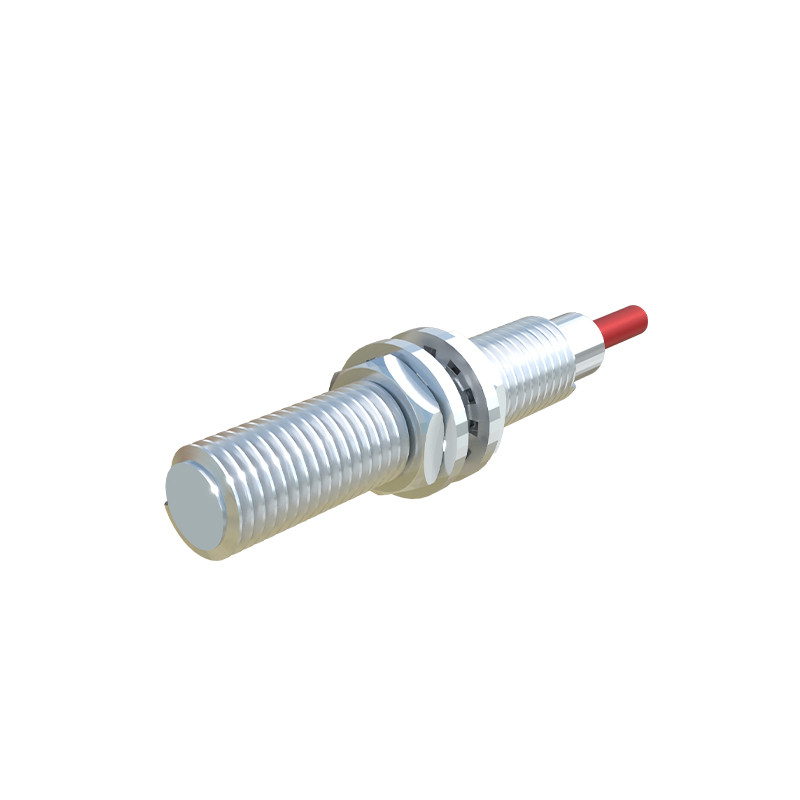
The applications of proximity level sensors are vast and varied. One of the most common uses is point-level detection for pump control. For instance, a sensor mounted at a low point in a tank can trigger an alarm or automatically start a pump to prevent the tank from running dry, which could damage the pump. Conversely, a sensor at a high-level point can stop filling operations to avoid overflows, a crucial function for both safety and material conservation. In continuous level measurement, specially designed proximity sensors can provide a 4-20 mA or digital signal corresponding to the fluid level, enabling precise inventory management and process control.
Several key factors influence the selection and performance of a proximity level sensor. The properties of the liquid itself are primary considerations. Conductivity, dielectric constant, viscosity, and temperature all impact sensor choice. For example, capacitive proximity sensors are excellent for non-conductive liquids like oils, fuels, or distilled water, as they detect changes in the dielectric constant. Inductive sensors, on the other hand, are suited for conductive liquids. The construction material of the sensor housing and sensing face is another critical factor, especially when dealing with aggressive chemicals, solvents, or sanitary applications requiring FDA-approved materials like PTFE or stainless steel. Environmental conditions such as pressure, temperature extremes, and the presence of foam, vapor, or heavy turbulence must also be accounted for to ensure reliable operation.
Modern advancements have further expanded the capabilities of proximity level sensors. The integration of microprocessors and smart electronics has led to sensors with enhanced functionality, such as adjustable sensitivity, time delays, and temperature compensation. Many models now feature IO-Link communication, allowing for digital parameter setting, advanced diagnostics, and seamless integration into Industry 4.0 frameworks. This enables predictive maintenance, as the sensor can report its health status and warn of potential failures before they cause downtime.
In conclusion, proximity level sensors are indispensable components in the industrial landscape. Their ability to provide accurate, maintenance-free, and non-contact level monitoring addresses fundamental challenges in process automation. By ensuring precise control over liquid inventories, preventing equipment damage, and safeguarding against hazardous overflows or run-dry conditions, these sensors contribute directly to enhanced productivity, cost savings, and operational safety. As industrial processes grow more complex and interconnected, the role of intelligent and reliable proximity sensing technology will only become more pronounced, solidifying its status as a cornerstone of efficient and modern industrial system design.