In today's rapidly evolving industrial landscape, laser sensors have emerged as a cornerstone technology, offering unparalleled precision, reliability, and versatility. These devices operate by emitting a focused beam of light to detect, measure, or profile objects with exceptional accuracy. One of the most significant advantages of laser sensors is their high precision. Unlike traditional mechanical or ultrasonic sensors, laser sensors can achieve micrometer-level resolution, making them ideal for applications requiring exact measurements, such as in semiconductor manufacturing, automotive assembly, and quality control processes. This precision is maintained even over long distances, thanks to the coherent and collimated nature of laser light, which minimizes dispersion and ensures consistent performance.
Another key benefit is the non-contact nature of laser sensing. Since the laser beam does not physically touch the target object, it eliminates the risk of damage, wear, or contamination. This is particularly valuable in industries handling delicate materials, like electronics or pharmaceuticals, where even minor contact could compromise product integrity. Additionally, non-contact sensing allows for high-speed operation, enabling real-time monitoring and inspection in dynamic production lines without causing delays. The ability to measure moving objects accurately has revolutionized processes such as web inspection, robotics guidance, and conveyor belt tracking.
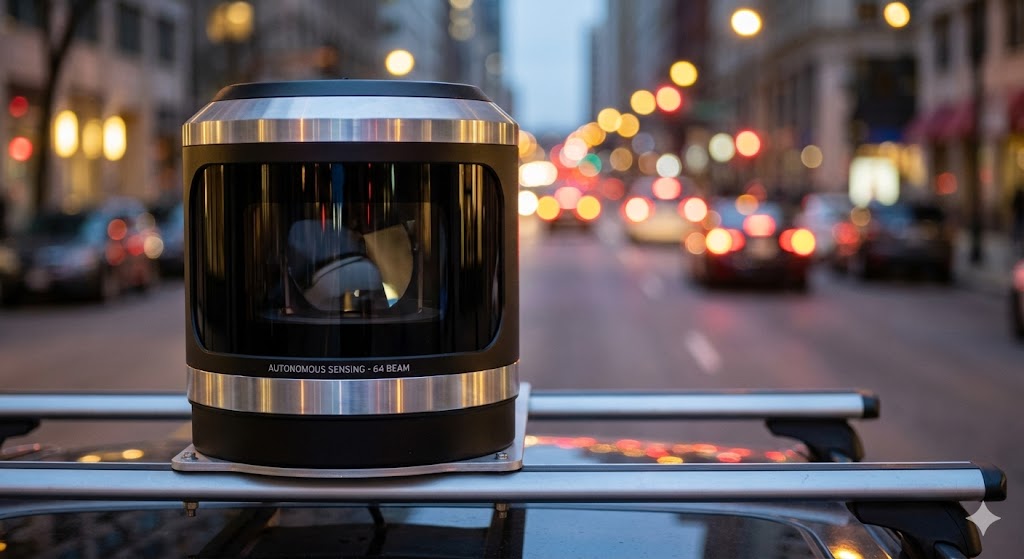
Laser sensors also excel in versatility and adaptability. They can be configured for various functions, including distance measurement, displacement sensing, edge detection, and 3D profiling. Advanced models incorporate features like background suppression, which filters out irrelevant environmental signals, and programmable logic for customized output. This flexibility makes laser sensors suitable for diverse environments, from harsh industrial settings with extreme temperatures and vibrations to clean rooms requiring minimal interference. Moreover, their compact design and ease of integration with existing systems, such as PLCs (Programmable Logic Controllers) and IoT (Internet of Things) networks, enhance operational efficiency and reduce installation costs.
Durability and low maintenance are further advantages that contribute to the growing adoption of laser sensors. Constructed with robust materials and solid-state components, they have a long operational lifespan with minimal degradation in performance. Unlike mechanical sensors that may require frequent calibration or replacement due to friction and tear, laser sensors maintain stability over time, reducing downtime and total cost of ownership. This reliability is critical in continuous production environments where unexpected failures can lead to significant financial losses.

In terms of safety and compliance, modern laser sensors are designed to meet international standards, such as those set by the FDA (Food and Drug Administration) and IEC (International Electrotechnical Commission). They often include built-in safety features, like low-power emissions and protective housings, ensuring safe use around human operators. Furthermore, their energy efficiency aligns with sustainability goals, consuming less power compared to alternative sensing technologies while delivering superior results.
As industries embrace automation and smart manufacturing, the role of laser sensors continues to expand. They enable predictive maintenance by monitoring equipment wear, enhance quality assurance through precise defect detection, and support data-driven decision-making with accurate feedback. From automotive and aerospace to healthcare and consumer goods, laser sensors are driving innovation by providing solutions that are faster, more accurate, and more cost-effective. Their integration with AI (Artificial Intelligence) and machine learning algorithms further amplifies their capabilities, allowing for adaptive sensing and anomaly detection in complex scenarios.
In conclusion, laser sensors represent a transformative technology in industrial applications, offering a combination of precision, speed, and reliability that is hard to match. Their non-contact operation, versatility, and durability make them indispensable tools for modern engineering challenges. As technology advances, we can expect laser sensors to become even more sophisticated, paving the way for smarter, more efficient industrial systems that push the boundaries of what is possible in measurement and control.