In the rapidly evolving landscape of industrial automation, intelligent laser sensor height measurement has emerged as a pivotal technology, driving precision, efficiency, and reliability across diverse sectors. These advanced sensors utilize laser triangulation or time-of-flight principles to capture highly accurate distance data, enabling real-time monitoring and control of object heights with micron-level resolution. Unlike traditional mechanical or ultrasonic methods, laser-based systems offer non-contact measurement, eliminating wear and tear while maintaining consistent performance in harsh environments such as manufacturing floors, construction sites, and logistics hubs.
The core of intelligent laser sensors lies in their integration with embedded processors and AI algorithms. Modern sensors are equipped with self-calibration capabilities, adaptive filtering, and data fusion techniques that compensate for environmental variables like temperature fluctuations, surface reflectivity, and ambient light interference. For instance, in automotive assembly lines, laser sensors continuously measure the gap between body panels, ensuring uniform tolerances and enhancing product quality. Similarly, in semiconductor fabrication, they monitor wafer thickness during polishing processes, preventing defects and reducing material waste.
One of the standout features is the seamless connectivity offered by Industry 4.0 frameworks. Intelligent laser sensors interface with PLCs, SCADA systems, and cloud platforms via protocols like IO-Link, Ethernet/IP, or MQTT, facilitating predictive maintenance and data analytics. This connectivity allows operators to track measurement trends, set automated alerts for deviations, and optimize production workflows remotely. Case studies from aerospace industries demonstrate how laser height sensors contribute to turbine blade inspection, where even minor dimensional errors can lead to catastrophic failures. By providing sub-micron accuracy, these sensors enable early detection of anomalies, prolonging equipment lifespan and ensuring safety compliance.
Moreover, the adaptability of laser sensors extends to dynamic applications. In robotic guidance systems, they assist in pick-and-place operations by precisely locating objects on conveyor belts, reducing cycle times and minimizing human intervention. Agricultural machinery employs laser height measurement to adjust planting depths based on soil topography, boosting crop yields through precision farming. The technology also plays a crucial role in smart infrastructure, such as monitoring bridge deformations or railway track alignments, where continuous height data supports structural health assessments.
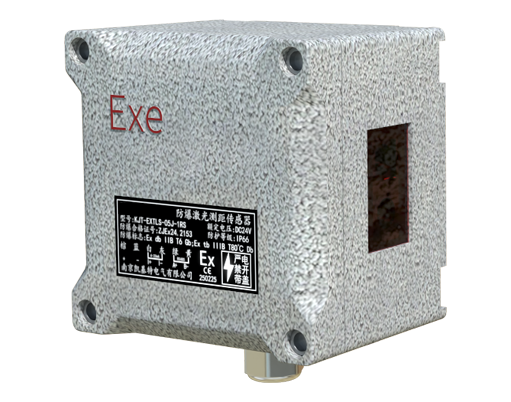
Despite their advantages, challenges persist, including high initial costs and sensitivity to extreme conditions like heavy dust or vapors. However, ongoing R&D focuses on enhancing robustness through protective housings, multi-spectral lasers, and machine learning models that improve signal-to-noise ratios. Future trends point toward miniaturization and integration with IoT ecosystems, enabling decentralized sensor networks for large-scale monitoring. As industries prioritize automation and quality assurance, intelligent laser sensor height measurement is set to become indispensable, transforming operational paradigms with its blend of accuracy, speed, and intelligence.

In summary, the convergence of laser optics, digital processing, and connectivity has redefined height measurement standards. By delivering real-time, non-contact data, intelligent laser sensors empower industries to achieve unprecedented levels of control and efficiency, paving the way for smarter, more resilient production environments.