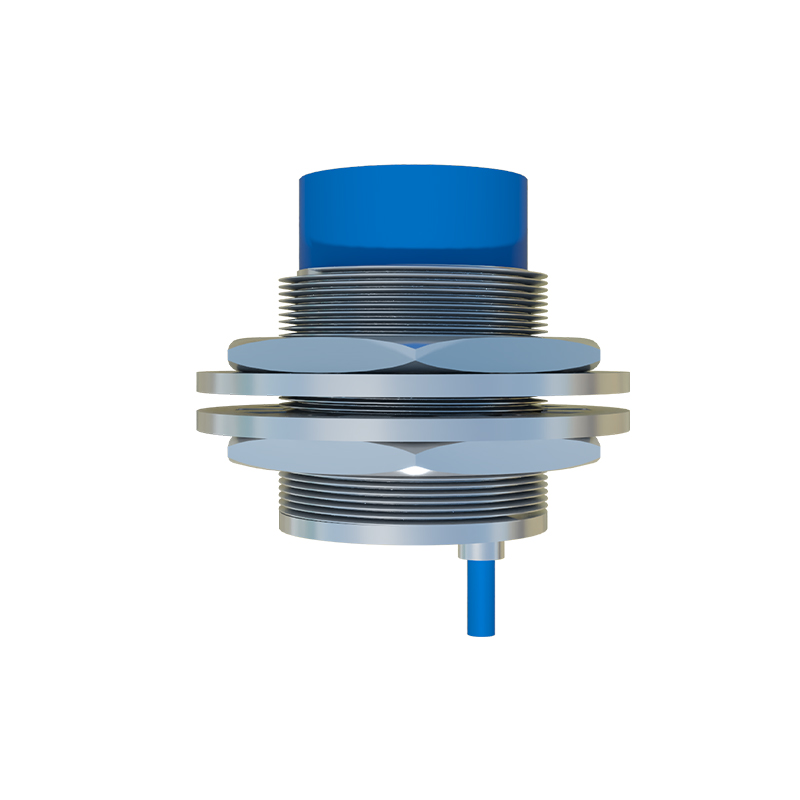
Metal proximity sensors are essential components in industrial automation, offering non-contact detection of metallic objects. These devices operate based on electromagnetic principles, primarily utilizing inductive sensing technology. At the core of a metal proximity sensor is an oscillator circuit that generates a high-frequency electromagnetic field. When a metallic object enters this field, eddy currents are induced on the surface of the metal. These eddy currents draw energy from the oscillator, causing a reduction in oscillation amplitude. The sensor's detection circuit monitors this change and triggers an output signal when the amplitude drops below a predefined threshold.
The effectiveness of a metal proximity sensor depends on several factors, including the type of metal being detected. Ferrous metals, such as iron and steel, are typically easier to detect due to their magnetic properties, which enhance the eddy current effect. Non-ferrous metals like aluminum or copper may require sensors with higher sensitivity or adjusted operating frequencies. Additionally, the sensor's sensing range is influenced by the size, shape, and orientation of the target metal. Most industrial sensors offer ranges from a few millimeters to several centimeters, with shielded designs allowing for flush mounting in metal environments.
Key components of these sensors include a coil wound around a ferrite core, an oscillator, a demodulator, and an output switching circuit. Advanced models incorporate microprocessors for programmable features like adjustable hysteresis, temperature compensation, and diagnostic functions. Common output types include NPN, PNP, analog, and IO-Link configurations, enabling integration with PLCs and control systems. Applications span across manufacturing lines, robotics, conveyor systems, and safety interlocks, where they detect presence, position, or count metallic parts without physical contact.
Maintenance considerations involve environmental factors such as temperature extremes, vibration, and exposure to chemicals. Proper installation ensures reliable operation, avoiding interference from adjacent metals or electrical noise. Innovations in sensor technology continue to enhance performance, with developments in miniaturization, energy efficiency, and smart connectivity driving Industry 4.0 applications. Understanding these principles allows engineers to select and deploy metal proximity sensors effectively, optimizing automation processes for precision and reliability.