In modern industrial manufacturing, precise thickness measurement is a critical parameter for ensuring product quality, process control, and material efficiency. Among the various non-contact measurement technologies available, laser-based thickness sensors have emerged as a superior solution, offering high accuracy, speed, and reliability across diverse applications such as metal rolling, plastic film production, glass manufacturing, and composite material processing.
Laser thickness sensors operate primarily on two fundamental principles: triangulation and time-of-flight (ToF). Triangulation-based sensors are widely used for measuring the thickness of moving or static materials. In this method, a laser diode projects a focused beam onto the target surface. The reflected light is captured by a position-sensitive detector, such as a CCD or CMOS array. As the distance to the target changes, the position of the laser spot on the detector shifts. Using geometric triangulation, the sensor calculates the distance to the surface with micron-level resolution. For thickness measurement, two laser sensors are typically configured in an opposing arrangement—one above and one below the material. Each sensor measures the distance to its respective surface. By knowing the fixed reference distance between the two sensor heads and subtracting the sum of the measured distances, the system computes the material thickness in real-time. This configuration effectively compensates for vertical movement or vibration of the material, ensuring stable and accurate readings.
Time-of-flight laser sensors, while less common for ultra-thin materials, are employed for thicker objects or longer ranges. They measure the time delay between emitting a laser pulse and receiving its reflection. Since the speed of light is constant, the distance can be derived accurately. For thickness, dual ToF sensors can be used similarly in an opposing setup. However, triangulation sensors generally provide better resolution for most industrial thickness gauging needs.
The advantages of laser thickness measurement are substantial. First, as a non-contact method, it eliminates issues like mechanical wear, surface deformation, or contamination that can occur with contact gauges such as micrometers or roller-based systems. This is particularly vital for measuring soft, delicate, or hot materials like molten glass, hot steel strips, or polymer films. Second, laser sensors offer extremely high measurement speeds, capable of thousands of samples per second. This enables 100% inline inspection on high-speed production lines, allowing for immediate feedback and control of processes like calendaring or rolling mills. Real-time data can be integrated into PLCs or SCADA systems to automatically adjust rollers, heaters, or extruders, maintaining thickness within tight tolerances. Third, laser sensors provide exceptional accuracy and repeatability. Modern models can achieve resolutions down to 0.1 microns, with accuracies often within ±1 micron or better, depending on the material and environmental conditions. This level of precision is essential for industries like lithium-ion battery electrode coating, where uniform thickness directly impacts performance and safety.

Key considerations when implementing laser thickness sensors include material properties, environmental factors, and system integration. The surface characteristics of the target material significantly influence measurement performance. Highly reflective, transparent, or absorptive surfaces can pose challenges. For instance, a mirror-like metal surface may cause specular reflection, directing the laser beam away from the detector. Conversely, a transparent material like glass or clear plastic may allow the laser to penetrate, yielding inaccurate readings. To address these issues, sensor manufacturers offer models with specialized algorithms, adjustable laser power, or complementary technologies like confocal chromatic sensors for transparent layers. Environmental factors such as ambient light, dust, oil mist, vibration, and temperature fluctuations must also be managed. Many industrial laser sensors are built with robust housings (IP67 ratings), integrated air purging, and temperature stabilization. Proper installation, alignment, and calibration are crucial. The opposing sensors must be precisely aligned to ensure their measurement axes are collinear. Regular calibration using certified thickness standards maintains long-term accuracy.
Applications span numerous sectors. In steel and aluminum rolling mills, laser thickness gauges continuously monitor strip thickness, enabling automatic gauge control (AGC) to minimize material usage and ensure compliance with standards. In plastics extrusion, they measure film or sheet thickness profile across the web, identifying variations that could lead to weaknesses or waste. In the production of flat panel displays or semiconductor wafers, they ensure substrate uniformity. Additionally, in the paper industry, they monitor caliper thickness, while in automotive, they measure coating thickness on brake pads or painted surfaces.
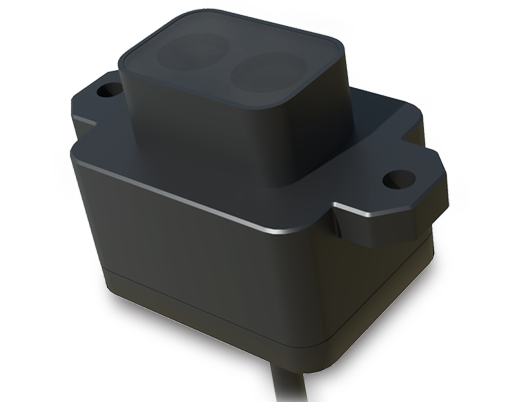
Looking forward, advancements in laser sensor technology continue to enhance capability. Integration with machine vision systems allows for simultaneous thickness and surface defect inspection. The adoption of blue lasers improves performance on organic materials like rubber or dark surfaces that absorb traditional red lasers. Furthermore, developments in embedded software and IoT connectivity enable predictive maintenance, data analytics, and deeper integration into Industry 4.0 smart factories.
In conclusion, laser measurement sensors represent a cornerstone technology for non-contact thickness gauging in industrial settings. Their precision, speed, and versatility make them indispensable for quality assurance and process optimization. By selecting the appropriate sensor type and ensuring proper implementation, engineers can achieve unparalleled control over product thickness, driving efficiency, reducing waste, and upholding stringent quality standards in a competitive global market.