In industrial automation and precision measurement, laser sensors are indispensable tools for their high accuracy, reliability, and rapid response capabilities. The detection speed of a laser sensor, often referred to as its response time or sampling rate, is a critical performance parameter that directly impacts system efficiency and effectiveness. This article delves into the technical aspects influencing laser sensor detection speed, explores the distinction between "fast" and "slow" operation in practical contexts, and provides insights into optimization strategies.
Fundamentally, the detection speed of a laser sensor is determined by the time required to complete one measurement cycle: emitting a laser beam, receiving the reflected or scattered light, processing the signal, and outputting the result. This speed is typically quantified in hertz (Hz), representing the number of measurements per second. A sensor with a 10 kHz sampling rate, for instance, can perform 10,000 measurements in one second.
Several key factors govern this speed. Firstly, the sensor's internal electronics and signal processing algorithm play a pivotal role. Advanced processors and efficient algorithms can drastically reduce computation time. Secondly, the physical principle of operation matters. Time-of-Flight (ToF) sensors, which calculate distance based on the round-trip time of light, may have different speed constraints compared to triangulation-based sensors or contrast sensors. ToF sensors for long ranges might involve more complex timing circuitry. Thirdly, the properties of the target object itself are crucial. Highly reflective, opaque surfaces with minimal texture typically produce strong, clear return signals, enabling faster and more stable detection. Conversely, dark, transparent, or highly absorptive materials can scatter or weaken the laser signal, potentially necessitating longer integration times or repeated measurements for reliability, thus slowing down the effective cycle. Environmental conditions like ambient light interference, dust, or vibrations can also force the sensor to employ filtering algorithms, adding processing overhead.
The concepts of "fast" and "slow" are highly application-dependent. In high-speed packaging lines, bottling plants, or electronic component placement, sensors often operate at speeds exceeding 50 kHz to keep pace with machinery, where milliseconds of delay could cause significant bottlenecks or defects. Here, a "slow" sensor would be one unable to match the line's throughput. Conversely, in applications like slow-moving conveyor sorting, bulk material level monitoring, or long-term structural deformation tracking, a sampling rate of 10-100 Hz might be perfectly adequate and even desirable for power saving and data management. In these scenarios, an excessively "fast" sensor generates redundant data without adding value.
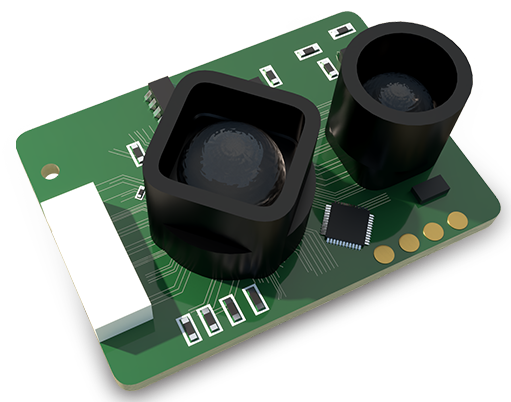
Optimizing detection speed involves a balanced approach. Selecting the right sensor type for the application is the first step. For instance, a background suppression sensor might be faster for detecting presence at a specific distance than a precise analog-output distance-measuring sensor. Configuring the sensor correctly is equally important. Many sensors allow adjustable parameters such as response time filters, averaging cycles, and output delay. Reducing filtering or averaging can increase speed but may compromise stability in noisy environments. Ensuring optimal installation—correct sensing distance, angle, and a clean, stable target surface—maximizes signal integrity, allowing the sensor to operate at its designed maximum speed. Regular maintenance to keep the lens clean from contamination is also essential to prevent signal degradation that indirectly slows down performance.
Furthermore, integration with the control system is vital. A fast sensor paired with a slow PLC (Programmable Logic Controller) scan time or communication bus (e.g., a low-bandwidth network) will create a system-level bottleneck. Utilizing high-speed digital outputs (like Push-Pull or NPN/PNP) or high-bandfieldbus protocols (like EtherCAT or PROFINET IRT) ensures the sensor's rapid detection is effectively communicated to the controller.
In conclusion, laser sensor detection speed is not a standalone specification but a system characteristic influenced by sensor technology, target properties, environmental factors, and integration design. Understanding the specific requirements of the application allows engineers to specify and configure sensors that are optimally "fast"—providing reliable data at the necessary rate without over-engineering or compromising on stability. The goal is always to achieve the precise synchronization between sensor capability and process demand, ensuring efficiency, quality, and robustness in automated operations.