Laser photoelectric sensors are indispensable components in modern industrial automation, offering unparalleled precision, speed, and reliability for a vast array of detection and measurement tasks. Unlike traditional photoelectric sensors that use LED light, laser sensors employ a highly focused, coherent beam of light, typically in the visible red or infrared spectrum. This fundamental difference grants them superior performance characteristics critical for demanding industrial environments.
The core operating principle remains based on the modulation and reception of light, but the laser source enables distinct sensing modes with enhanced capabilities. In the through-beam (or opposed) mode, the transmitter and receiver are separate units. The laser beam is projected directly to the receiver. An object is detected when it interrupts this beam. This mode offers the longest sensing ranges and highest reliability, as it is largely immune to object color, reflectivity, or surface finish. It is ideal for precise positioning, counting, and detecting small or transparent objects.
The retro-reflective mode uses a single housing containing both the laser emitter and receiver. The beam is directed towards a specialized reflector (corner-cube reflector) that returns the light directly to its source. Detection occurs when an object breaks the beam path. This mode provides a good balance of range and ease of installation, suitable for presence detection on conveyor lines or at access points.

The most versatile and commonly used mode is diffuse (or proximity) sensing. Here, the sensor emits a laser beam and detects the light scattered (diffused) back from the target object itself. No separate reflector is needed. Advanced versions, known as background suppression (BGS) or fixed-field sensors, use triangulation principles to detect objects only within a precisely defined distance window, ignoring more distant backgrounds. This is crucial for detecting objects on a conveyor belt while ignoring the belt itself or machinery behind it. Contrast sensors, a subtype, are optimized to detect differences in surface color, contrast, or markings with extreme accuracy, vital in printing, packaging, and electronics assembly.
The advantages of laser photoelectric sensors over standard LED-based sensors are significant. Their extremely small, intense spot size allows for the detection of minuscule objects, precise edge detection, and accurate positioning. They offer significantly longer sensing ranges in all modes. The coherent nature of laser light results in less dispersion over distance, leading to stable operation even in challenging conditions. Many models incorporate advanced features like programmable sensing windows, teach-in functions for easy setup, and analog or digital outputs for measurement tasks.
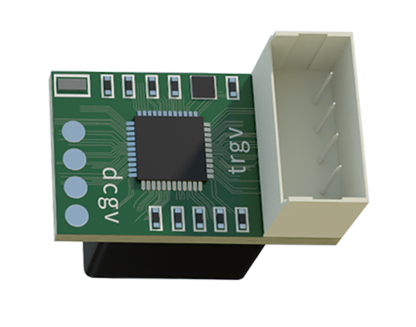
In industrial applications, these sensors are workhorses. In material handling and logistics, they count boxes, detect jams, and control sorting systems. In automotive manufacturing, they ensure precise robot guidance, part verification, and weld seam tracking. In electronics, they verify component placement, inspect PCB traces, and control wire bonding machines. In packaging, they register labels, check fill levels, and inspect seals. Their ability to perform non-contact measurement of distance, thickness, or vibration adds another dimension to process control.
Selecting the right laser photoelectric sensor requires careful consideration of several key parameters. First, define the application: simple presence detection, precise positioning, or accurate measurement? This determines the required sensing mode. The required sensing range and the size of the target object dictate the necessary spot size and laser power. The environmental conditions are critical; factors like dust, fog, ambient light, and temperature extremes may necessitate sensors with robust housings (IP67/IP69K ratings), specialized filters, or high-power lasers to penetrate contaminants. The required output type (discrete PNP/NPN, analog 4-20mA/0-10V, or industrial fieldbus protocols) must match the control system. Finally, form factor and mounting options must suit the mechanical constraints of the installation.
Installation and alignment, while simplified with visible laser beams, still require attention. Ensuring a stable mount free from vibration is essential. For through-beam and retro-reflective modes, precise alignment is necessary for optimal performance. For diffuse sensors, understanding the target's reflectivity and the potential for interference from background objects is key. Regular maintenance involves keeping the lens clean from dust, oil, or debris that could attenuate the laser beam.

In conclusion, laser photoelectric sensors represent a sophisticated and powerful tool for industrial automation. Their precision, long range, and versatility solve complex detection and measurement challenges that are beyond the reach of conventional sensors. By understanding their operating principles, application modes, and selection criteria, engineers and technicians can effectively leverage this technology to enhance productivity, improve quality control, and build more reliable and intelligent automated systems. As Industry 4.0 advances, the integration of these sensors with IoT platforms and data analytics will further unlock their potential for predictive maintenance and optimized process flows.