In the realm of industrial automation and control systems, proximity sensors are indispensable components that enable non-contact detection of objects. Among the various types, inductive and capacitive proximity sensors stand out due to their reliability, durability, and versatility. Understanding their principles, differences, and optimal applications is crucial for engineers and technicians aiming to enhance system efficiency and reliability.
Inductive proximity sensors operate on the principle of electromagnetic induction. They generate an oscillating electromagnetic field from a coil wound around a ferrite core. When a metallic object enters this field, eddy currents are induced on the surface of the object, causing a change in the oscillation amplitude. This change is detected by the sensor's circuitry, which then triggers an output signal. These sensors are exclusively used for detecting metallic objects, such as steel, aluminum, or copper, making them ideal for applications in metalworking, automotive assembly, and machinery where precise positioning of metal parts is required. Key advantages include high switching frequency, robustness in harsh environments (resistant to dust, moisture, and vibrations), and long operational life due to the absence of mechanical wear. However, their limitation lies in the inability to detect non-metallic materials, which necessitates alternative solutions for broader applications.
Capacitive proximity sensors, on the other hand, function based on changes in capacitance. They consist of an electrode that forms one plate of a capacitor, with the target object acting as the other plate. When an object approaches the sensor, it alters the dielectric constant of the space between the plates, leading to a change in capacitance. This variation is measured and converted into an output signal. Unlike inductive sensors, capacitive sensors can detect a wide range of materials, including metals, plastics, glass, liquids, and granular substances. This makes them highly versatile for industries such as food and beverage, pharmaceuticals, and packaging, where non-metallic object detection is common. They are particularly useful for level sensing in tanks, presence detection of plastic containers, or monitoring material flows. While they offer greater material flexibility, capacitive sensors can be sensitive to environmental factors like humidity or temperature fluctuations, requiring careful calibration and shielding to ensure accuracy.
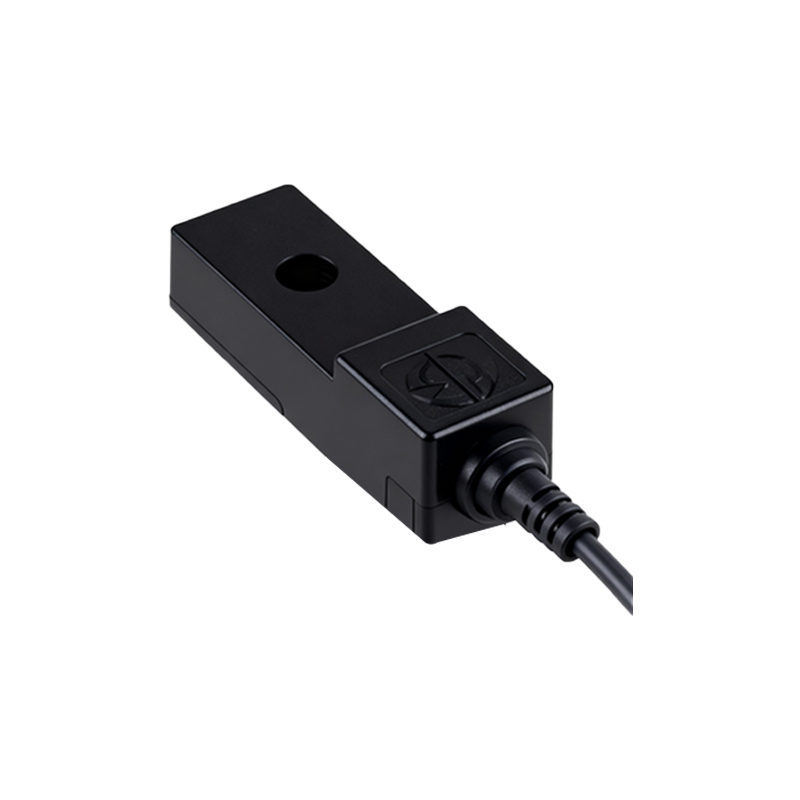
When selecting between inductive and capacitive proximity sensors, several factors must be considered. For environments with heavy metallic interference or where only metal detection is needed, inductive sensors are the preferred choice due to their immunity to non-metallic substances and stable performance. In contrast, capacitive sensors excel in applications involving diverse materials or where the target may have varying dielectric properties. Installation and setup also differ: inductive sensors typically have a shorter sensing range (up to 60 mm for standard models) and require minimal adjustment, while capacitive sensors often have adjustable sensitivity to compensate for material differences and environmental conditions. Maintenance is generally low for both types, but inductive sensors may offer higher durability in extreme conditions, such as high temperatures or corrosive settings.
In practice, integrating these sensors into control systems involves matching their specifications with operational requirements. For instance, in a conveyor system handling metal parts, inductive sensors can reliably detect each item without false triggers from plastic components. Conversely, in a bottling plant, capacitive sensors can monitor liquid levels in glass or plastic containers, ensuring efficient filling processes. Advances in technology have led to hybrid designs and miniaturized versions, expanding their use in robotics, IoT devices, and smart manufacturing. Engineers should also consider output types (e.g., analog, digital, or IO-Link) and housing materials (e.g., stainless steel or plastic) to optimize performance.
Overall, both inductive and capacitive proximity sensors play vital roles in modern industrial automation. By leveraging their unique strengths, professionals can design systems that are not only efficient but also adaptable to evolving challenges. As industries move toward greater automation and precision, the choice of sensor technology will continue to impact productivity and safety.