In the rapidly evolving landscape of automotive technology, laser vehicle sensors have emerged as a cornerstone for advanced driver-assistance systems (ADAS) and autonomous driving. These sensors, primarily Light Detection and Ranging (LiDAR) systems, operate by emitting pulsed laser light and measuring the time it takes for the reflections to return. This process, known as time-of-flight measurement, generates precise, high-resolution three-dimensional maps of the surrounding environment in real-time. Unlike traditional radar or camera-based systems, LiDAR offers exceptional accuracy in object detection, distance measurement, and speed estimation, even in challenging lighting or weather conditions, though performance can degrade in heavy rain, fog, or snow.
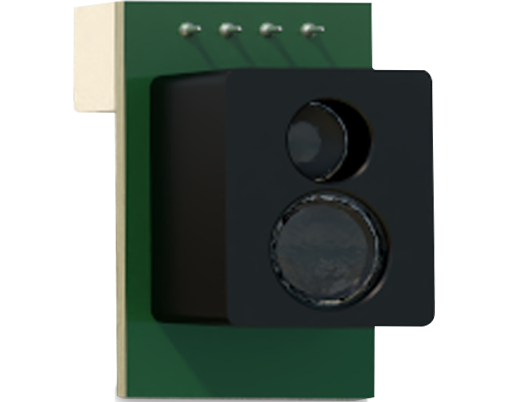
The core technology behind automotive LiDAR involves several key components. A laser emitter, typically using infrared wavelengths for eye safety, sends out rapid light pulses. A highly sensitive photodetector then captures the reflected signals. A rotating or solid-state scanning mechanism, often employing micro-electromechanical systems (MEMS) mirrors or optical phased arrays, directs these pulses across a wide field of view. Finally, sophisticated onboard processing units interpret the vast point cloud data, distinguishing between static infrastructure, moving vehicles, pedestrians, and cyclists with remarkable fidelity. Modern solid-state LiDAR designs are eliminating moving parts, enhancing durability, reducing size, and lowering costs—critical factors for mass-market vehicle integration.
The applications within the automotive sector are profound and multifaceted. The primary use is for perception and environmental modeling, creating a dynamic 360-degree map that is fundamental to autonomous navigation. This enables critical ADAS functions such as adaptive cruise control, automatic emergency braking, lane-keeping assistance, and traffic jam pilot. Furthermore, LiDAR is indispensable for high-definition mapping and precise localization, allowing vehicles to position themselves within centimeter-level accuracy relative to pre-mapped landmarks. In robotics and logistics, similar sensor technology guides automated guided vehicles (AGVs) in warehouses and ports.
Looking ahead, the future trajectory of laser vehicle sensors points toward continued miniaturization, cost reduction, and performance enhancement. The industry is actively developing longer-range sensors with higher resolution and improved robustness against interference. Sensor fusion—the intelligent combination of LiDAR data with inputs from cameras, radar, and ultrasonic sensors—is becoming the standard approach to create a redundant, reliable perception system. This multi-modal strategy compensates for the individual weaknesses of each sensor type. Another significant trend is the evolution towards software-defined sensor capabilities, where features and performance can be updated via over-the-air software updates, extending the vehicle's functional lifespan.
However, the path forward is not without challenges. Achieving a cost point conducive to consumer vehicle affordability remains a significant hurdle, though economies of scale are steadily driving prices down. Standardization of data formats, interfaces, and safety validation protocols across manufacturers is essential for broader adoption. Regulatory frameworks are still catching up with the technology, requiring clear guidelines for performance, testing, and cybersecurity. Finally, public acceptance and trust in systems reliant on such sensors will be paramount for widespread deployment.
In conclusion, laser vehicle sensors, particularly LiDAR, represent a transformative technology enabling the next generation of vehicle safety and autonomy. Through continuous innovation in solid-state designs, sensor fusion, and data processing algorithms, these systems are becoming more capable, reliable, and accessible. Their integration is pivotal in the journey toward fully autonomous transportation, promising to redefine mobility by significantly enhancing road safety, efficiency, and convenience for all users. The ongoing research and development in this field ensure that laser-based perception will remain at the forefront of automotive innovation for years to come.