In industrial automation and control systems, proximity switch sensors are indispensable components for non-contact detection of metallic or, in some cases, non-metallic objects. Among the diverse configurations available, the three-wire short-body proximity sensor represents a specialized and highly practical variant. This article delves into the design principles, operational characteristics, key applications, and critical selection criteria for these compact yet powerful devices.
Fundamentally, a three-wire proximity sensor comprises three distinct wires: typically brown for positive DC supply voltage (V+), blue for the common negative or ground (0V), and black for the switched output signal. This configuration is standard for DC-powered sensors, providing a clear and reliable interface with programmable logic controllers (PLCs) and other control units. The "short-body" designation refers to the sensor's compact physical housing. This reduced form factor is a direct response to the demands of modern machinery, where space is at a premium. Designers achieve this miniaturization without sacrificing core performance through advanced electronic component integration and optimized coil design for inductive types.
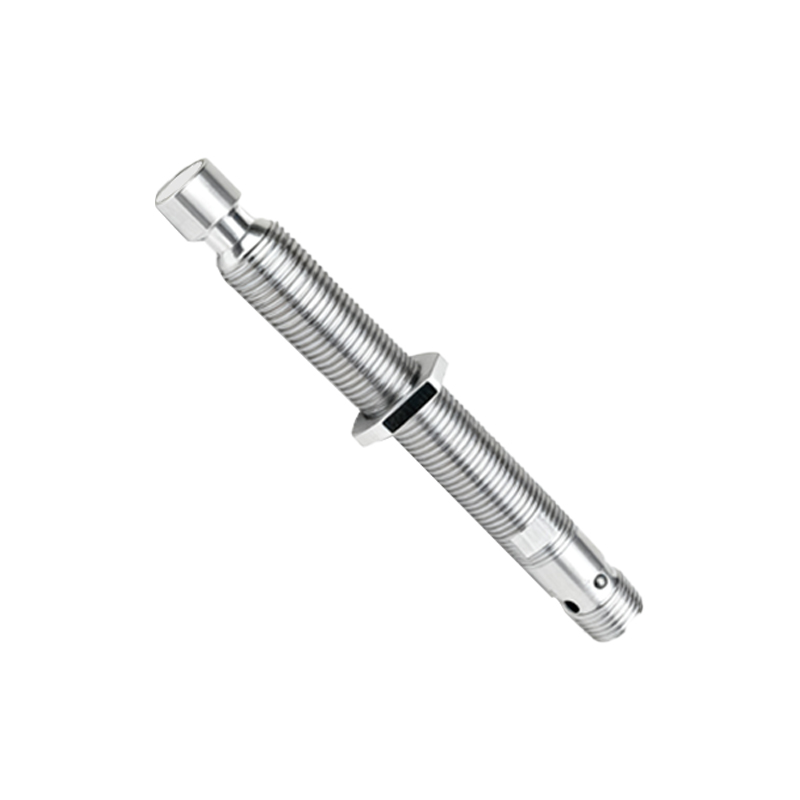
The primary technology employed in most short-body models for metal detection is the inductive principle. The sensor's active face contains an oscillator coil that generates a high-frequency electromagnetic field. When a metallic target enters this field, eddy currents are induced within the target, causing a dampening of the oscillator's amplitude. This change is detected by a threshold circuit, which subsequently switches the state of the solid-state output transistor (typically NPN or PNP sinking/sourcing). The three-wire design inherently provides the necessary power for this internal circuitry and a clean, amplified switching signal. Short-body sensors are renowned for their high switching frequency and fast response times, a necessity in high-speed packaging, sorting, and assembly lines.
The advantages of opting for a short-body, three-wire model are numerous. First and foremost is their exceptional suitability for installation in confined spaces where standard-sized sensors simply cannot fit. This includes tight cavities in molding machines, compact robotic grippers, and within modular linear actuator systems. Their reduced weight and size also minimize inertia and potential interference in dynamic, moving applications. Despite their small stature, leading manufacturers ensure these sensors maintain robust performance characteristics, such as IP67 or higher ingress protection ratings, making them resistant to dust, coolants, and temporary immersion—a crucial feature for harsh industrial environments.
Application areas for these sensors are vast and varied. They are extensively used in semiconductor manufacturing equipment for precise wafer and tooling positioning. In automotive assembly, they monitor the presence of small components like pins, springs, or valve lifters. They serve as end-position verification in compact pneumatic cylinders and as jam detection sensors in dense electronic PCB handling machines. The short-body design is also ideal for integration into custom machinery and small-scale automation projects where every millimeter counts.
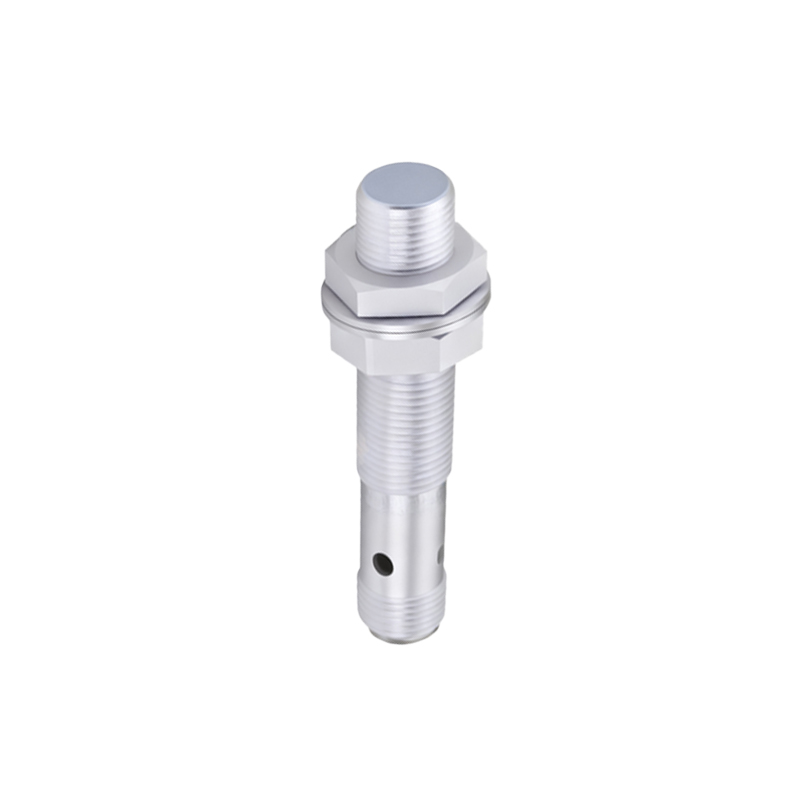
Selecting the correct three-wire short-body proximity sensor requires careful consideration of several parameters beyond just size. The sensing distance, often specified as the nominal range (Sn), is critical and is typically shorter for smaller sensors; one must verify it meets the application's mechanical tolerances. The output type (NPN normally open/closed or PNP normally open/closed) must be compatible with the control system's input card. Supply voltage range (e.g., 10-30V DC) and current consumption are also key. Material compatibility is another factor; while standard models detect ferrous metals best, special versions (e.g., with stainless-steel faces) are needed for non-ferrous metals or harsh chemical environments. Finally, factors like temperature range, switching frequency, and connection method (pre-wired cable or quick-disconnect) must align with operational demands.
In conclusion, the three-wire short-body proximity sensor is a testament to the trend of "more performance in less space" within industrial sensing. Its design elegantly solves spatial constraints without compromising on the reliability and functionality expected from industrial-grade sensors. By understanding their operating principles and meticulously matching specifications to application needs, engineers and technicians can leverage these compact devices to enhance machine efficiency, reliability, and design elegance across countless automation scenarios.