Laser distance sensors have become indispensable tools across numerous industrial sectors, offering unparalleled precision for measurement and control tasks. These sensors operate on the principle of time-of-flight (ToF), phase-shift, or triangulation, emitting a laser beam towards a target and analyzing the reflected light to calculate distance. The data they generate is far more than a simple numerical readout; it is a rich stream of information critical for automation, quality assurance, and safety.
The core data output from a laser distance sensor is typically a digital or analog signal representing the measured distance. Common interfaces include RS-232, RS-485, Ethernet/IP, PROFINET, and analog voltage (0-10V) or current (4-20mA) outputs. The choice of interface depends on the required integration with Programmable Logic Controllers (PLCs), industrial PCs, or data acquisition systems. The raw distance value, however, is just the beginning. Understanding the sensor's specifications is key to interpreting this data correctly. Key parameters include measuring range, resolution, linearity error, and repeatability. For instance, a sensor with a stated repeatability of ±0.1mm will provide data points within that statistical variation under identical conditions, which is crucial for high-precision assembly or inspection.

Environmental factors significantly influence sensor data integrity. Ambient light, particularly direct sunlight or other strong light sources, can saturate the sensor's receiver. Target surface properties are equally critical. A highly reflective, glossy surface may return too strong a signal, while a dark, matte, or absorbent surface can weaken it. Transparent objects like glass or clear plastics pose a unique challenge, often requiring specialized sensors with background suppression or multiple echo evaluation features. Temperature fluctuations can also cause drift in the electronic components, affecting long-term measurement stability. Therefore, sensor data must always be evaluated in the context of the installation environment.
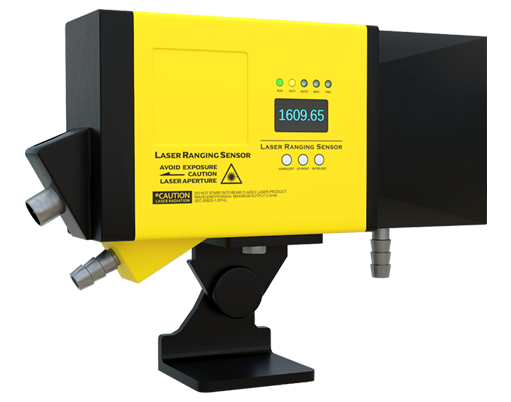
Data processing and filtering are essential steps to transform raw sensor readings into reliable information. Most modern laser sensors incorporate internal algorithms to average multiple measurements, suppress electrical noise, and compensate for known environmental effects. For example, moving average filters help smooth out data from vibrating targets. Advanced sensors can output not just distance, but also signal strength indicators. A low signal strength reading alongside a distance value immediately flags a potential issue—such as a dirty lens, a suboptimal target surface, or an object at the extreme edge of the measuring range—allowing for preemptive maintenance or process adjustment.
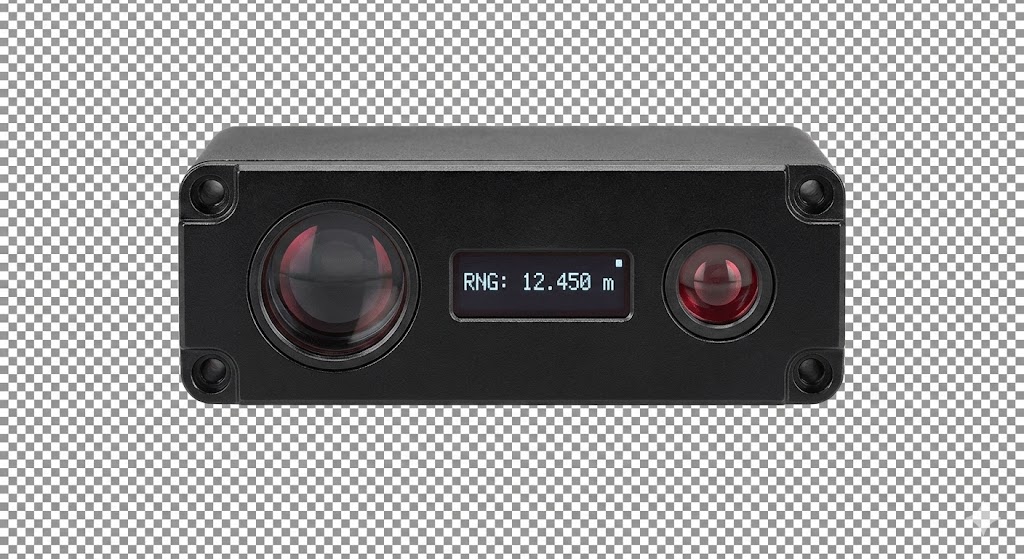
In practical applications, this processed data drives decision-making in real-time. On a conveyor belt, a laser sensor's continuous data stream can trigger a robotic arm to pick items at varying heights. In warehouse automation, arrays of sensors provide precise pallet dimensioning data for inventory management and optimal storage. In roll diameter monitoring in paper or steel mills, the sensor data is fed into control systems to maintain consistent tension and product quality. The reliability of this data directly impacts throughput, waste reduction, and overall equipment effectiveness (OEE).
Ultimately, leveraging laser distance sensor data effectively requires a holistic approach. It involves selecting the right sensor for the application, installing it correctly to minimize environmental interference, understanding its specifications and output format, and implementing appropriate data handling protocols in the control system. When these elements align, the sensor transitions from being a mere measurement device to a foundational component of intelligent, data-driven industrial operations, enabling higher levels of automation, precision, and efficiency.