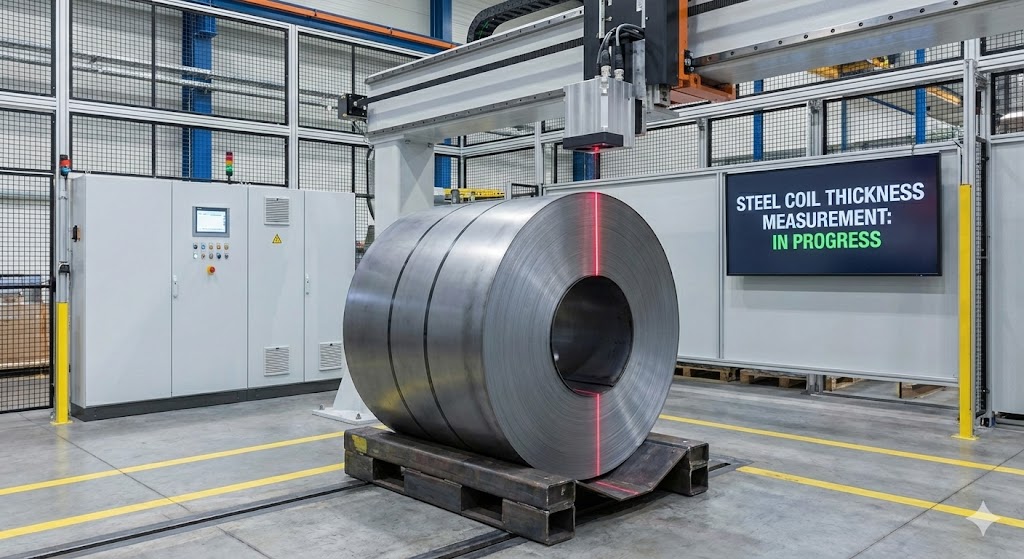
In the rapidly evolving landscape of industrial automation and quality control, ultrafine laser sensors have emerged as a cornerstone technology, enabling unprecedented levels of accuracy and reliability. These sophisticated devices operate on the principle of laser triangulation or time-of-flight measurement, projecting a concentrated beam of light onto a target surface. The reflected light is then captured by a high-resolution receiver, and through advanced signal processing algorithms, the sensor calculates minute changes in distance, position, or profile with sub-micron precision. Unlike traditional contact-based measurement tools, laser sensors offer non-invasive, high-speed inspection, making them indispensable in applications ranging from semiconductor wafer alignment and micro-electromechanical systems (MEMS) fabrication to pharmaceutical tablet coating thickness verification and precision assembly of consumer electronics.
The core advantage of ultrafine laser sensors lies in their ability to perform in challenging environments. They are engineered with robust housings, often rated IP67 or higher, to withstand dust, moisture, and mechanical vibrations common in factory settings. Furthermore, innovations in blue laser technology have significantly reduced the impact of surface color and material reflectivity on measurement accuracy. Blue lasers, with their shorter wavelength, are less susceptible to scattering on rough or dark surfaces compared to traditional red lasers, ensuring consistent performance across diverse materials like matte-finished metals, dark plastics, and even transparent glass.
Integration with Industry 4.0 frameworks is another critical facet. Modern ultrafine laser sensors are equipped with smart communication interfaces such as IO-Link, EtherCAT, and PROFINET, facilitating real-time data exchange with central control systems. This connectivity allows for predictive maintenance, where the sensor can self-monitor its operational health and signal potential calibration drifts before they impact production quality. The data stream from these sensors feeds into machine learning models, enabling adaptive process control that can autonomously adjust robotic arm trajectories or conveyor speeds to compensate for detected dimensional variances in real-time.
Looking ahead, the convergence of ultrafine laser sensing with artificial intelligence and edge computing promises to unlock even greater potential. Future iterations may feature embedded AI chips capable of on-device anomaly detection and classification, reducing latency and bandwidth requirements. As industries push the boundaries of miniaturization and quality standards, the demand for these high-precision, resilient, and intelligent sensors will only intensify, solidifying their role as the eyes of the automated factory floor. Their continuous evolution is not merely an incremental improvement but a transformative force driving the next wave of manufacturing excellence and innovation.