In the evolving landscape of industrial automation, the strategic retrofitting of sensing components is a critical task for optimizing system performance, reliability, and cost-efficiency. One common upgrade path involves replacing traditional pressure sensors with non-contact proximity switches in specific applications. This transition is not a universal solution but a targeted engineering decision driven by distinct operational requirements and environmental challenges.
Pressure sensors, whether piezoresistive, capacitive, or piezoelectric, function by converting applied force or pressure into an electrical signal. They provide continuous, analog data crucial for processes requiring precise pressure monitoring, regulation, or closed-loop control, such as in hydraulic systems, HVAC, or fluid level management. Their output is proportional to the measured variable, offering a high degree of accuracy and detail.
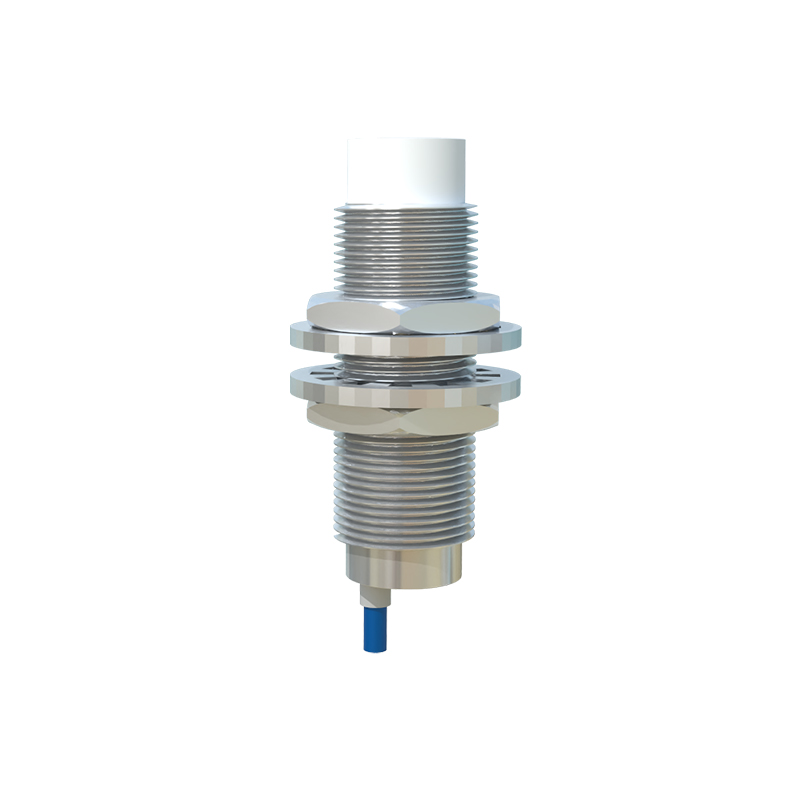
Proximity switches, on the other hand, are discrete digital devices. Typically inductive, capacitive, or photoelectric, they detect the presence or absence of a metallic or non-metallic target within a specified sensing range without physical contact. Their output is a simple on/off signal, indicating whether the target is within the detection field.
The decision to retrofit a pressure sensor with a proximity switch is often motivated by several key factors. First is enhanced durability. Pressure sensors with diaphragms or sensing elements can be vulnerable to media incompatibility, clogging, pulsation, or physical damage from particulates in harsh environments like foundries, machining lines, or outdoor applications. Sealed, solid-state proximity switches offer superior resistance to vibration, contamination, and mechanical wear. Second is simplification. In applications where the process requirement is merely a binary state—such as "tank empty/tank full," "clamp closed/clamp open," or "part present/part absent"—a proximity switch provides a more straightforward and often more reliable signal. It eliminates the need for complex analog signal conditioning, scaling, and continuous monitoring when only a threshold detection is needed. This simplification can reduce wiring complexity, lower the demands on the PLC analog input module, and decrease overall system cost. Third is improved response time. Proximity switches generally offer faster switching frequencies, which is advantageous in high-speed automation, packaging, or sorting lines where rapid detection is paramount.
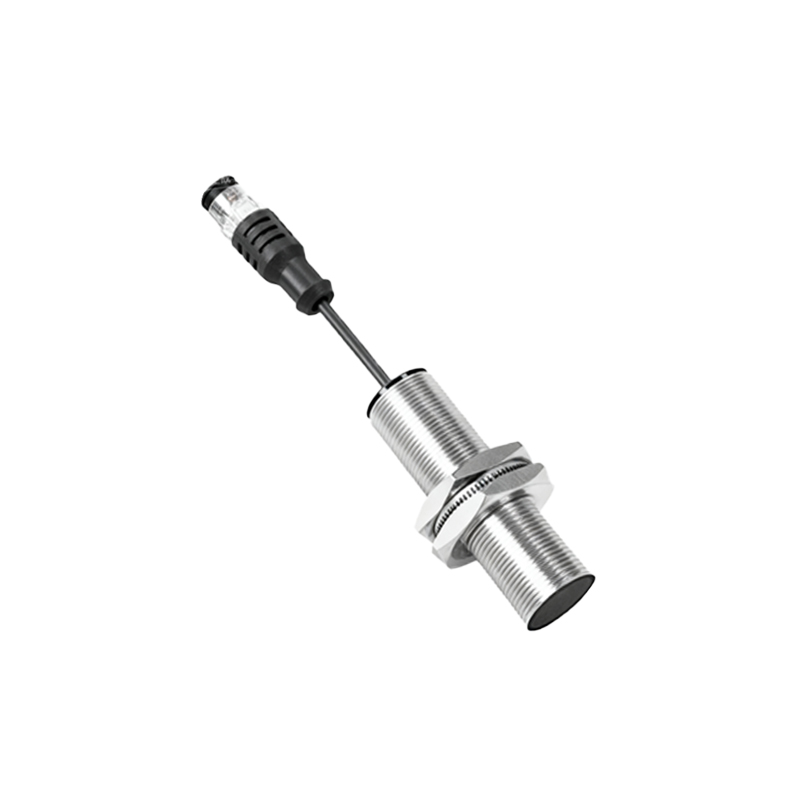
The retrofit process requires meticulous planning and execution. It begins with a thorough application audit. The engineer must define the exact parameter being monitored. For instance, instead of measuring hydraulic pressure to infer cylinder position, a proximity switch can be mounted to directly detect the piston rod or a flag on the cylinder. The mechanical integration is crucial. The mounting location for the proximity switch must provide consistent and reliable target alignment within its specified sensing distance. Environmental factors like temperature extremes, washdown conditions, or exposure to coolants must be matched to the switch's ingress protection (IP) rating and material construction.
Electrical integration presents the next critical phase. The typical 4-20mA or 0-10V analog signal from a pressure sensor connects to a PLC's analog input. A proximity switch's PNP or NPN output connects to a digital input. This necessitates changes in the PLC hardware configuration and, most importantly, a complete rewrite of the control logic. The program must be modified to interpret the discrete signal for the intended control action. For example, a ladder logic rung previously comparing an analog pressure value to a setpoint will be replaced by a contact instruction triggered by the proximity switch's state.
Potential pitfalls must be anticipated. Loss of diagnostic information is a significant trade-off. A pressure sensor trending towards failure might show drift or noise, providing early warning. A proximity switch typically fails catastrophically—either always on or always off. Redundancy or diagnostic routines using timer blocks to check for plausible signal sequences can mitigate this. Secondly, ensuring the new sensing solution addresses the core need is vital. If the process genuinely requires knowledge of the exact pressure value for safety or quality, a retrofit to a binary switch is inappropriate and potentially hazardous.
In conclusion, retrofitting a pressure sensor with a proximity switch is a valid and often beneficial engineering practice when the application shifts from requiring analog measurement to needing robust, high-speed presence detection. Success hinges on a disciplined approach: a clear understanding of the process requirement, careful selection of the proximity switch type and model, precise mechanical installation, and thorough reprogramming of the control system. This upgrade path exemplifies the principle of applying the right sensor technology for the right task, leading to gains in system resilience, simplicity, and operational efficiency.