In the realm of industrial automation and precision measurement, laser sensors have become indispensable tools. A critical aspect influencing their performance is the surface characteristic of the target object, with matte surfaces presenting a unique set of challenges and considerations. This article delves into the interaction between laser sensors and matte surfaces, exploring the underlying principles, key applications, and essential factors for optimal sensor selection and deployment.
The fundamental operation of a typical laser sensor involves emitting a focused beam of coherent light towards a target. The sensor then detects the reflected light, using principles such as triangulation, time-of-flight, or phase-shift to calculate distance, position, or presence. The nature of the target surface dramatically affects this reflection. A glossy or specular surface acts like a mirror, reflecting the laser beam at a predictable angle. In contrast, a matte surface is characterized by microscopic irregularities that cause diffuse reflection. Instead of a single, sharp reflection, the incident laser light is scattered in many directions. This scattering reduces the intensity of the light signal returning directly to the sensor's receiver.
This diffuse reflection from matte surfaces poses specific challenges. The primary issue is a potential decrease in signal strength and stability. Since the light is scattered, less optical energy returns to the detector, which can lead to a lower signal-to-noise ratio. This might result in reduced measurement accuracy, longer response times, or even detection failures at longer ranges or with very dark matte materials that absorb significant light. Furthermore, the scattered light pattern can sometimes introduce measurement noise or variability, especially if the surface texture is inconsistent.
However, matte surfaces are not merely a hindrance; in many cases, they are preferable or even necessary. Highly reflective or shiny surfaces can cause problematic specular reflections that may not reach the receiver at all, leading to a complete loss of signal—a scenario often worse than dealing with a diffuse reflection. Matte surfaces, by providing a consistent and broad scatter of light, often offer more reliable and stable detection points. They are less susceptible to errors caused by slight angular misalignments between the sensor and the target.
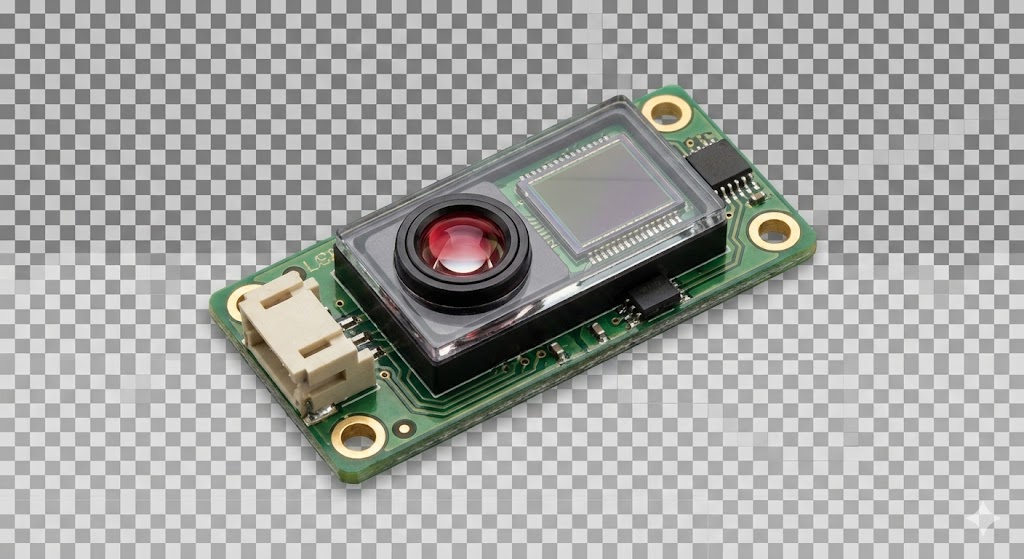
Key industries and applications heavily rely on laser sensors performing on matte surfaces. In packaging and printing, sensors detect the position of cardboard boxes, paper stacks, or labels, all typically matte. In wood processing and furniture manufacturing, sensors measure the dimensions of raw lumber or assembled parts. The textile industry uses them for fabric edge guidance and defect detection. Robotic bin-picking applications, where robots identify and grasp randomly oriented parts in a container, frequently depend on 3D laser vision systems that must handle parts with non-reflective, matte finishes. Furthermore, in automotive assembly, sensors verify the presence of components like rubber seals, textured plastics, or coated metal parts.
Selecting and applying the right laser sensor for matte surfaces requires careful consideration of several technical parameters. First, the laser type and wavelength are crucial. Red laser diodes (around 650 nm) are common, but for certain dark matte materials, sensors with a visible red beam might struggle. Lasers in the near-infrared range (e.g., 850 nm) or even blue lasers can sometimes offer better performance on specific materials due to different absorption and scattering properties. Second, sensor technology plays a role. Background suppression sensors, which evaluate the angle of the reflected light rather than just its intensity, can excel at detecting matte objects against similarly colored backgrounds. Contrast sensors are specifically designed to detect differences in surface brightness or color, making them suitable for matte surfaces. Third, optical design is paramount. Sensors with a larger receiver aperture or more sensitive photodetectors can collect more of the scattered light, improving performance on matte surfaces. Adjustable focus or a large depth of field can also compensate for signal variations.
Proper installation and setup are equally important. Ensuring the sensor is mounted perpendicularly to the target surface maximizes the amount of back-scattered light captured. Fine-tuning the sensitivity threshold is critical; it must be set high enough to reliably detect the weaker diffuse signal but low enough to avoid false triggers from ambient light or background noise. Many modern sensors feature automatic teaching functions that simplify this process by learning the signal level from the actual matte target. Environmental factors like dust, steam, or ambient light must also be managed, as they can further attenuate the already weakened signal from a matte surface.
In conclusion, matte surfaces are a common and manageable reality in industrial sensing. While they diffuse laser light and can challenge sensor performance, understanding the principles of diffuse reflection allows engineers to select and configure laser sensors effectively. By prioritizing factors such as laser wavelength, sensor technology, optical sensitivity, and precise setup, reliable and accurate detection of matte-finished objects is fully achievable. As sensor technology continues to advance, with improvements in detector sensitivity and advanced signal processing algorithms, the robustness of laser sensors against challenging surface conditions, including deep matte and dark colors, will only increase, further solidifying their role in smart manufacturing and automation.