In the realm of industrial automation, sensors serve as the critical interface between physical processes and control systems. Among the diverse sensor technologies available, photoelectric sensors and proximity switches stand out for their reliability, versatility, and precision. These devices are fundamental to modern manufacturing, logistics, and safety systems, enabling non-contact detection, measurement, and positioning of objects with high accuracy.
Photoelectric sensors operate on the principle of light emission and reception. Typically, they consist of a light source—often an LED emitting visible red, infrared, or laser light—and a photoreceiver. When an object interrupts or reflects the light beam, the sensor detects the change in light intensity and triggers an output signal. There are three primary operating modes: through-beam, retro-reflective, and diffuse reflective. Through-beam sensors, with separate emitter and receiver units, offer the longest sensing ranges and high immunity to environmental interference. Retro-reflective models use a reflector to bounce light back to the receiver, making them suitable for medium-range applications. Diffuse reflective sensors detect light reflected directly from the target object, ideal for short-range tasks where space is limited. Key advantages include long sensing distances, fast response times, and the ability to detect a wide variety of materials, including glass, plastic, and metal. However, performance can be affected by ambient light, dust, or fog, necessitating careful installation and selection of models with robust housings or specialized filters.
Proximity switches, specifically inductive and capacitive types, detect the presence of metallic or non-metallic objects without physical contact. Inductive proximity sensors generate an electromagnetic field; when a metallic object enters this field, it induces eddy currents that alter the sensor's oscillation amplitude, triggering a switch. These sensors are highly reliable for detecting ferrous and non-ferrous metals, with typical sensing ranges from a few millimeters to several centimeters. They excel in harsh environments—resistant to dirt, oil, and vibration—and are commonly used in metalworking, automotive assembly, and machinery positioning. Capacitive proximity sensors, on the other hand, detect both conductive and non-conductive materials (e.g., liquids, plastics, or wood) by measuring changes in capacitance caused by the target object. This makes them versatile for applications like level detection in tanks or packaging line monitoring. Proximity switches generally offer shorter sensing ranges than photoelectric sensors but provide consistent performance in challenging conditions, with no moving parts to wear out.
The selection between photoelectric and proximity sensors depends on application-specific factors. For long-range detection or transparent object sensing, photoelectric sensors are preferable. In environments with heavy contamination or where only metal detection is required, inductive proximity switches are often the optimal choice. Capacitive sensors fill the niche for non-metallic materials. Integration with PLCs (Programmable Logic Controllers) and industrial networks (e.g., IO-Link) enhances their functionality, allowing for real-time diagnostics, parameter adjustment, and data logging. Recent advancements include miniaturization, enhanced environmental resistance (IP67/IP69K ratings), and smart features like background suppression in photoelectric sensors to ignore distant objects.
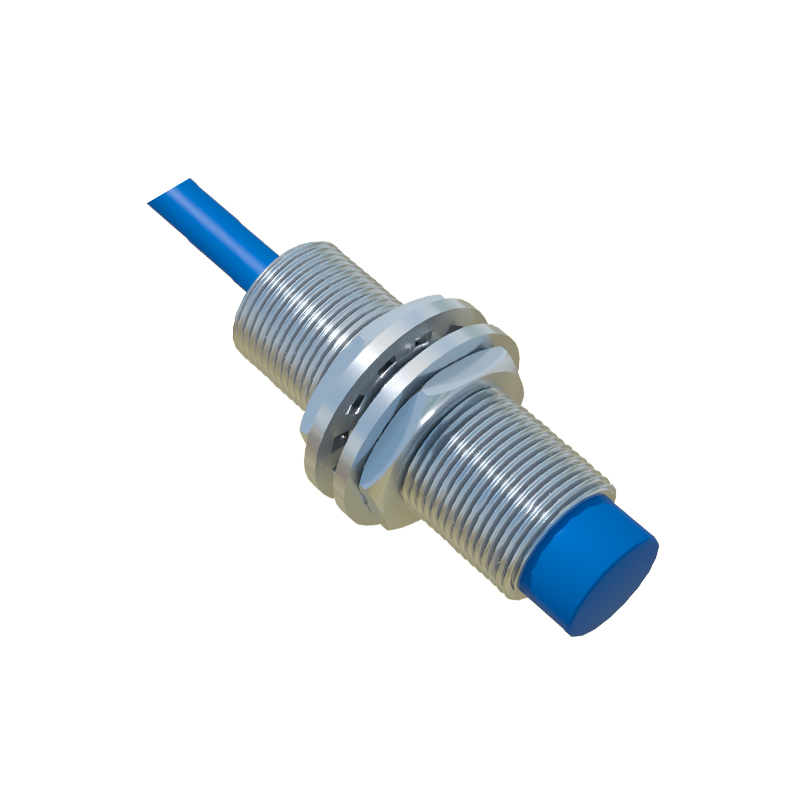
In practice, these sensors drive efficiency across industries. For instance, photoelectric sensors count products on conveyor belts, while proximity switches ensure robotic arms position accurately. Regular maintenance—such as cleaning lenses for photoelectric sensors or checking shielding for proximity models—extends operational life. As Industry 4.0 evolves, the fusion of sensor data with AI and IoT platforms promises predictive maintenance and adaptive control, further solidifying the role of photoelectric and proximity sensors in automated systems. Ultimately, understanding their principles and applications empowers engineers to design robust, responsive automation solutions that meet today's industrial demands.