In the rapidly evolving landscape of smartphone technology, laser sensing has emerged as a pivotal innovation, fundamentally transforming how devices perceive and interact with the physical world. This sophisticated sensor technology, often integrated into the rear camera module or housed within the front notch, operates on the principle of Time-of-Flight (ToF). By emitting a low-power, invisible laser beam and precisely measuring the time it takes for the light to reflect off objects and return to the sensor, the system constructs a detailed depth map of the surrounding environment. This capability extends far beyond simple proximity detection, enabling a suite of advanced features that enhance both functionality and user experience.
The primary application of laser sensors in modern smartphones is in the realm of photography and augmented reality (AR). For autofocus systems, especially in low-light conditions, laser autofocus provides a significant advantage over traditional contrast-detection methods. It calculates distance instantaneously, allowing for near-instantaneous focus lock, which is critical for capturing sharp images of moving subjects or in challenging lighting. This speed and accuracy directly translate to a higher rate of successful shots, a key metric for both casual users and photography enthusiasts.
Furthermore, the depth information gathered by laser sensors is the cornerstone of advanced computational photography. It enables the sophisticated portrait mode effects, where the subject is kept in sharp focus while the background is artistically blurred (bokeh). The sensor provides the precise depth data needed for the software to accurately separate the subject from the background, resulting in more natural and convincing effects compared to software-only solutions. In AR applications, this precise spatial mapping allows virtual objects to interact realistically with the physical environment. Furniture can be visualized in a room at correct scale, games can incorporate real-world surfaces, and measurement apps can achieve remarkable accuracy, all relying on the millimeter-level precision of laser-based depth sensing.
Beyond imaging, laser sensors play a crucial role in security and convenience features. They are integral to secure facial recognition systems, like those used for device unlocking and authentication. By projecting a grid of thousands of invisible laser dots onto a user's face, the sensor creates a precise 3D topographic map. This map is far more secure than a 2D image, as it cannot be fooled by photographs or masks, providing a robust layer of biometric security. Additionally, simple proximity sensing powered by lasers helps conserve battery life by reliably turning off the display during phone calls when the device is held to the ear.
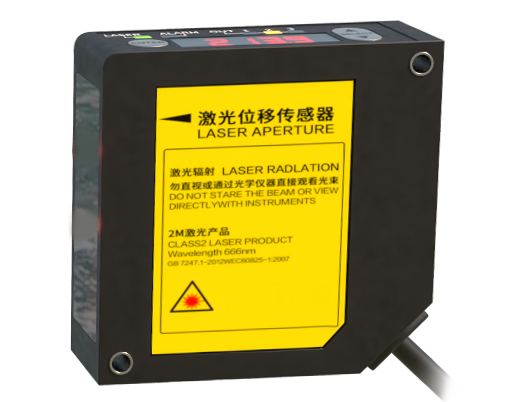
The engineering behind integrating these sensors is non-trivial. Designers must contend with challenges such as miniaturization, power consumption, and interference. The sensor module must be incredibly compact to fit within the slim confines of a smartphone chassis. Power management is critical, as the laser emitter and receiver must operate efficiently to avoid draining the battery. Engineers also implement sophisticated algorithms to filter out ambient light noise and ensure the laser signals are accurately interpreted, even in bright sunlight or other optically complex environments.
Looking forward, the trajectory for laser sensing in mobile devices points toward even greater integration and capability. We anticipate sensors with higher resolution for more detailed depth perception, lower power consumption for always-on ambient awareness, and potentially new wavelengths that could enable novel sensing applications. As 5G connectivity and edge computing advance, the rich spatial data from laser sensors will fuel next-generation applications in telepresence, advanced robotics control via smartphone, and immersive mixed-reality experiences. The laser sensor, once a niche component, is now a fundamental enabler, quietly working behind the scenes to make our smartphones more intelligent, responsive, and contextually aware tools in our daily lives.