In modern industrial automation, safety proximity sensors play a critical role in ensuring operational security, preventing accidents, and enhancing productivity. These sensors are designed to detect the presence or absence of objects without physical contact, making them ideal for hazardous environments where human interaction must be minimized. This article explores the primary types of safety proximity sensors, their working principles, and applications across various industries.
Safety proximity sensors are engineered with robust features such as high immunity to electromagnetic interference, durable housing, and compliance with international safety standards like IEC 60947-5-2 and ISO 13849. They are commonly used in machinery guarding, robotic systems, and automated production lines to monitor positions, control movements, and trigger safety shutdowns when risks are detected.
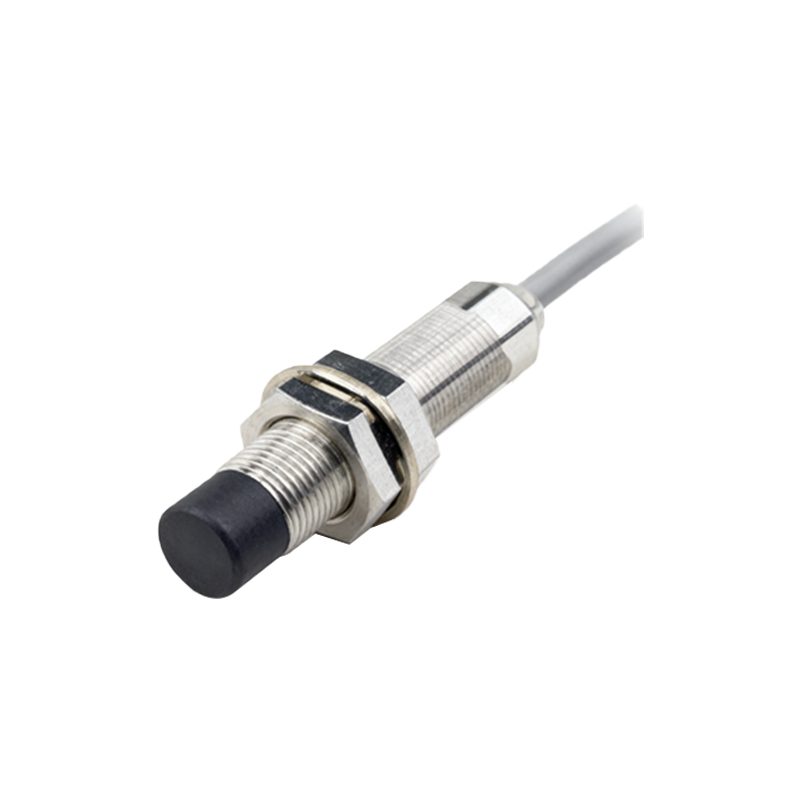
The first major category is Inductive Safety Proximity Sensors. These sensors detect metallic objects by generating an electromagnetic field. When a metal target enters the field, it induces eddy currents, causing a change in the sensor's oscillation amplitude. This change is processed to output a signal, often through a safety-rated relay or solid-state switch. Inductive sensors are highly reliable in dirty or wet conditions, making them suitable for metalworking, automotive assembly, and heavy machinery. Key variants include cylindrical, rectangular, and ring-shaped designs, with sensing ranges typically up to 40 mm.
Capacitive Safety Proximity Sensors form another essential type. They operate by detecting changes in capacitance caused by the presence of any material—metallic or non-metallic—such as liquids, plastics, or wood. A capacitive sensor generates an electrostatic field, and when an object alters this field, the sensor triggers an output. These sensors are versatile for applications like level detection in tanks, material handling, and packaging industries. Safety versions incorporate redundancy and self-monitoring to prevent failures, ensuring compliance with Safety Integrity Level (SIL) ratings.
Magnetic Safety Proximity Sensors, often based on reed switches or Hall-effect technology, are used for detecting magnetic fields. They are compact and ideal for harsh environments with extreme temperatures or vibrations. Common applications include position sensing in cylinders, door interlocks, and safety switches on movable guards. Magnetic sensors offer long operational life and are frequently integrated into safety circuits to confirm that protective covers are closed before machine activation.
Ultrasonic Safety Proximity Sensors utilize sound waves to detect objects. They emit high-frequency ultrasonic pulses and measure the time taken for echoes to return. These sensors can sense a wide range of materials, regardless of color or transparency, and are effective in challenging conditions like dust or fog. In safety systems, they are employed for collision avoidance in automated guided vehicles (AGVs), height monitoring, and presence detection in restricted zones. Advanced models feature fail-safe outputs and diagnostics to meet safety standards.
Optical Safety Proximity Sensors, including safety light curtains and laser scanners, use light beams to detect intrusions. Safety light curtains create an invisible barrier; if the beam is interrupted, the sensor sends a stop signal to machinery. Laser scanners provide area monitoring by scanning environments in two or three dimensions. These sensors are crucial for protecting workers around presses, robots, and conveyor systems. They often incorporate multiple beams or redundancy to ensure high reliability and are certified for Performance Level (PL) d or e according to ISO 13849.
Each type of safety proximity sensor has distinct advantages. Inductive sensors excel in metal detection with high precision, capacitive sensors offer material versatility, magnetic sensors provide durability, ultrasonic sensors handle complex environments, and optical sensors deliver precise area safeguarding. Selection depends on factors like target material, environmental conditions, required sensing distance, and safety certification levels.
In practice, integrating these sensors into safety systems involves careful planning. Engineers must consider wiring, interface modules, and compatibility with safety controllers. Regular testing and maintenance are vital to sustain performance, as sensors may degrade due to contamination, mechanical wear, or electrical noise.
Overall, safety proximity sensors are indispensable in modern industry, reducing risks and fostering a safer workplace. By understanding their types and applications, professionals can implement effective solutions that align with global safety regulations, ultimately protecting both personnel and assets.