In the rapidly evolving landscape of industrial automation and smart device integration, proximity sensors stand as critical components for enabling non-contact detection and precise control. Among these, the 15Pro series of proximity sensors has garnered significant attention for its robust performance and adaptability across demanding environments. This article delves into the technological underpinnings, primary applications, and the broader implications of the 15Pro proximity sensor for the electrical and automation engineering sectors.
At its core, the 15Pro is an inductive proximity sensor. This technology operates on the principle of electromagnetic induction. The sensor generates a high-frequency oscillating electromagnetic field from its active face. When a metallic target object enters this detection field, eddy currents are induced on the surface of the target. These currents absorb energy from the oscillator, causing a reduction in the oscillation amplitude. The sensor's internal circuitry detects this change and triggers a solid-state switch, typically providing a clean, bounce-free output signal. The "15Pro" designation often refers to a standard sensing range, commonly 15mm, designed for reliable mid-range detection tasks. Key to its industrial appeal is its rugged construction, typically featuring a nickel-plated brass or stainless-steel housing rated for IP67 or higher, ensuring resistance to dust, oils, and temporary immersion, which is paramount in manufacturing and processing plants.
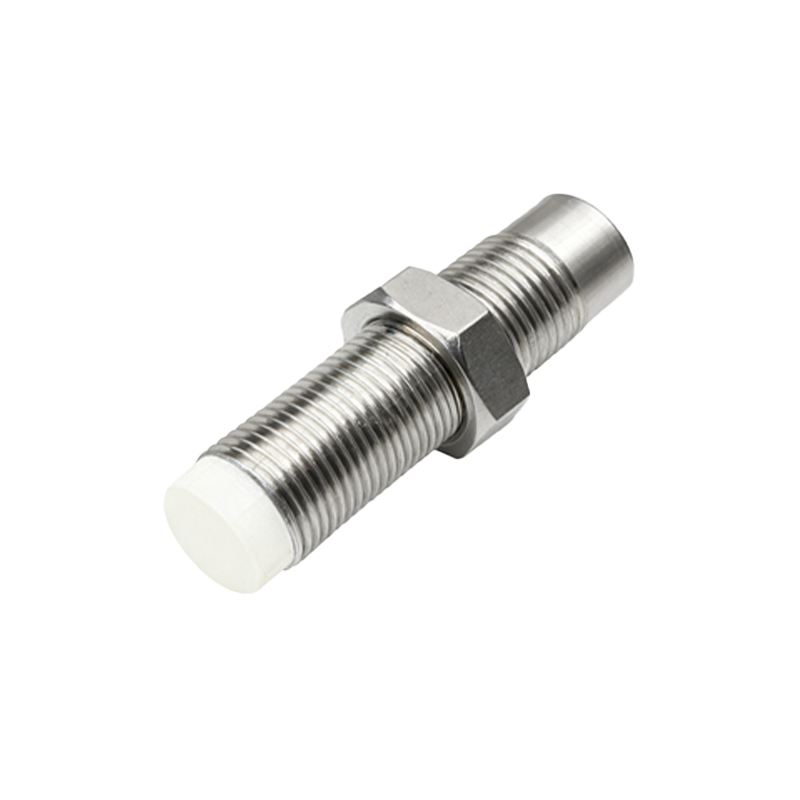
The performance specifications of the 15Pro sensor are tailored for reliability. It typically operates across a wide voltage range (e.g., 10-30V DC), making it compatible with standard industrial control voltages. Its switching frequency is sufficiently high to detect fast-moving parts on assembly lines, while its temperature rating allows operation in both chilled warehouses and near hot machinery. A notable feature is its inherent immunity to ambient light, a challenge for optical sensors, and its ability to detect only metallic objects, which reduces false triggers from non-target materials like plastic or wood. This makes it exceptionally reliable in metalworking, automotive assembly, and material handling applications.
The applications of the 15Pro proximity sensor are vast and integral to modern industrial systems. In automated production lines, they are ubiquitously used for part presence verification—ensuring a component is correctly positioned before a robotic arm performs a weld or an assembly operation. They serve as end-of-travel limit switches for cylinders and linear actuators, providing precise positional feedback without mechanical wear. In packaging machinery, these sensors count metallic items on conveyor belts or detect the position of a metallic foil seal. Within the realm of material handling, they monitor the position of crane hooks, detect the level of metal parts in a bin, or secure safety by ensuring protective guards are in place before machine start-up. Their robustness also makes them suitable for harsh environments like foundries or outdoor applications, where other sensor types might fail.
Beyond traditional manufacturing, the integration of sensors like the 15Pro is pivotal for the Industrial Internet of Things (IIoT) and Industry 4.0 initiatives. While a standard 15Pro provides a simple digital on/off signal, modern variants often include IO-Link capability. This communication protocol transforms the sensor from a simple switch into an intelligent device. It allows for remote configuration of parameters like sensing range hysteresis, enables the transmission of diagnostic data (such as operating temperature or signal strength), and facilitates predictive maintenance by alerting operators to potential failures before they cause downtime. This data-driven functionality elevates the role of the humble proximity sensor to a key node in a networked, smart factory ecosystem.
Selecting and installing a 15Pro sensor requires careful consideration. Engineers must account for the target material (steel, aluminum, brass, etc.), as different metals affect the nominal sensing range—a factor corrected by using reduction coefficients specified in datasheets. The mounting configuration (flush or non-flush) also influences the sensing field and must be planned to avoid interference from adjacent metal structures. Proper electrical wiring, including attention to polarity, load current, and the use of surge protection in inductive load circuits, is crucial for long-term reliability and noise immunity.
In conclusion, the 15Pro proximity sensor exemplifies the mature yet continuously evolving technology that forms the backbone of industrial automation. Its durability, reliability, and now, growing intelligence through digital communication, ensure its continued relevance. For electrical engineers and system integrators, a deep understanding of its operation, capabilities, and integration potential is essential for designing efficient, safe, and increasingly connected industrial systems. As automation complexity grows, the fundamental role of dependable sensing components like the 15Pro only becomes more pronounced, bridging the physical world of machinery with the digital world of control and analytics.