In industries where particulate matter and airborne contaminants are prevalent, such as mining, cement production, and power generation, traditional optical sensors often face significant operational challenges. High ash environments, characterized by elevated levels of dust, soot, and fine particulates, can severely impair sensor accuracy, reliability, and longevity. High ash laser sensors have emerged as a specialized technological solution designed to overcome these harsh conditions, ensuring precise measurement and control where it matters most.
The core principle of a high ash laser sensor involves the use of a focused laser beam to detect, measure, or analyze targets through dusty or smoky atmospheres. Unlike standard laser sensors, which may suffer from signal attenuation or false readings in dirty environments, high ash variants incorporate several key design enhancements. These typically include robust housing with high Ingress Protection (IP) ratings, often IP67 or higher, to prevent dust and moisture ingress. Furthermore, the optical components are frequently equipped with advanced air purge systems or protective windows that utilize continuous air curtains to keep lenses clean from accumulating ash and debris. The laser sources themselves are often of a specific wavelength less susceptible to scattering by fine particles, and the receiver circuitry employs sophisticated algorithms to distinguish the true target signal from background noise caused by particulate interference.
One of the primary applications of high ash laser sensors is in continuous level measurement within silos, bunkers, and hoppers containing materials like coal, fly ash, or raw meal. In coal-fired power plants, for instance, accurately monitoring coal levels in bunkers is critical for fuel management and process efficiency. A high ash laser sensor mounted at the top of a bunker can reliably measure the distance to the material surface despite the pervasive coal dust, enabling automated inventory control and preventing overfilling or emptying. Similarly, in cement plants, these sensors are indispensable for monitoring levels in preheater towers and raw material blenders, where extreme dust loads are a constant challenge.
Beyond level measurement, these sensors are vital for positioning and detection tasks on conveyor systems, in baghouse filters, and for alignment of heavy machinery in dusty mills. Their ability to provide non-contact measurement reduces maintenance needs compared to mechanical probes or capacitive sensors that can wear out or build up material coatings. The non-contact nature also minimizes the risk of spark generation, an essential safety consideration in potentially explosive atmospheres (ATEX/IECEx zones) common in these industries.
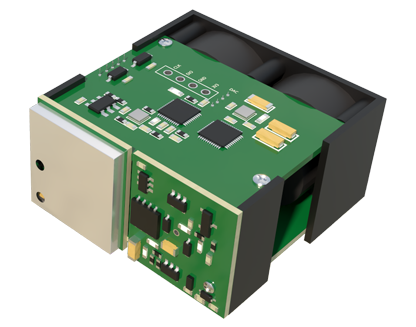
When selecting a high ash laser sensor, engineers must consider several technical parameters. The measurement range must be suitable for the application, with some sensors capable of distances over 100 meters even in dense particulate clouds. The laser class (typically Class 1 or Class 2 for safety) and the beam visibility are practical considerations for installation and alignment. The sensor's response time and output options (e.g., 4-20 mA analog, Ethernet, PROFIBUS) must integrate seamlessly with the plant's control system. Perhaps most crucially, the sensor's stated performance under specific dust densities or opacity levels should be verified against the actual operating environment. Manufacturers often provide data on maximum permissible dust concentration, often measured in grams per cubic meter or by optical opacity percentage, for which the sensor's accuracy is guaranteed.
Maintenance, while significantly reduced, is not eliminated. Regular checks of the air purge system's filters and pressure are necessary to ensure the protective air curtain remains effective. The external housing should be inspected for any seal degradation. However, the long-term cost benefits are substantial, driven by reduced downtime, fewer erroneous process interruptions, and extended service intervals compared to conventional sensors that fail prematurely in high ash conditions.
The future of high ash laser sensor technology points toward even greater integration with Industrial Internet of Things (IIoT) platforms. Smart sensors with embedded diagnostics can now predict lens contamination levels or signal degradation, triggering maintenance alerts before performance is affected. Enhanced data fusion techniques, combining laser measurement data with inputs from other sensor types, promise to deliver even more robust and comprehensive monitoring solutions for the world's most demanding industrial settings. In conclusion, high ash laser sensors represent a critical evolution in industrial sensing, transforming environmental challenges from operational obstacles into manageable variables through intelligent engineering and resilient design.