Hot melt adhesive laser sensors represent a sophisticated category of industrial measurement devices designed for precise monitoring and control in adhesive application processes. These sensors operate on the fundamental principle of laser triangulation, a non-contact measurement technique that ensures high accuracy and reliability in demanding manufacturing environments.
The core mechanism involves emitting a focused laser beam from a laser diode onto the surface of the hot melt adhesive bead or film. Upon striking the adhesive surface, the laser light is scattered and reflected. A precisely positioned receiver, typically a CMOS or CCD linear array sensor, captures this reflected light at an angle relative to the incident beam. The key to measurement lies in the triangulation geometry: the position of the reflected light spot on the receiver array shifts proportionally with changes in the distance to the target surface. As the height or thickness of the hot melt adhesive varies, the angle of reflection changes, causing the light spot to move along the sensor array. An integrated digital signal processor (DSP) or microcontroller then calculates the exact distance or profile based on this positional shift using calibrated algorithms.
This technology offers significant advantages for adhesive dispensing systems. It enables real-time, closed-loop control of adhesive bead dimensions—critical for applications in packaging, product assembly, and automotive manufacturing where consistent bond lines are essential for structural integrity and quality. By providing instantaneous feedback, the laser sensor allows for dynamic adjustments to the applicator head's speed, temperature, or pressure, compensating for substrate irregularities or process variations. Modern iterations often incorporate advanced features such as integrated temperature compensation to account for the thermal expansion of components, high-speed sampling rates for fast-moving production lines, and robust housings with IP67 ratings for resistance to dust, moisture, and adhesive splatter.
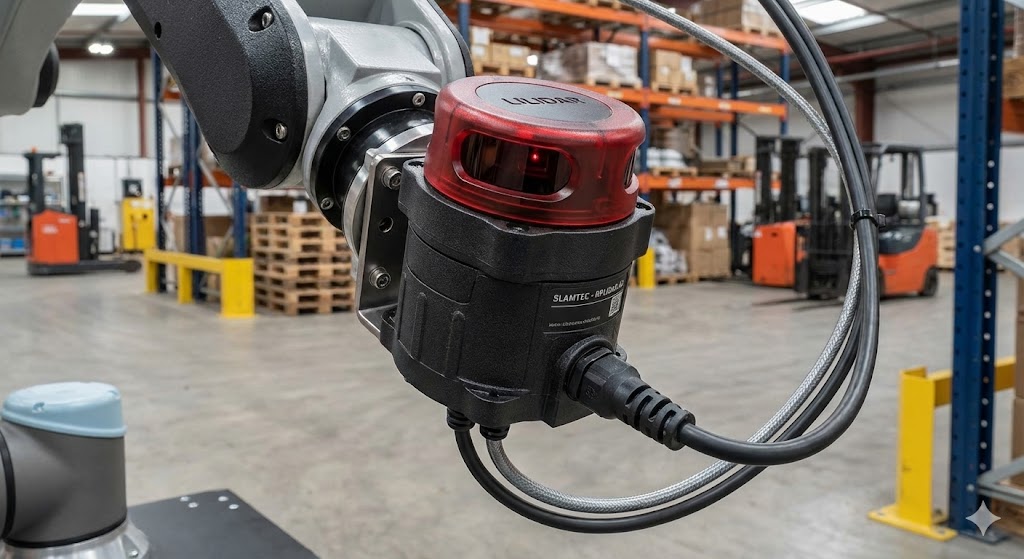
Furthermore, the selection of laser wavelength is a critical design consideration. Many hot melt adhesive laser sensors utilize red or blue laser lines. Red lasers (around 650 nm) are common and cost-effective for general purposes. However, for challenging surfaces like transparent adhesives or highly reflective substrates, blue lasers (around 405 nm) offer superior performance due to their shorter wavelength, which provides better absorption and reduces penetration or specular reflection issues, resulting in a sharper and more stable signal.
Integration into industrial automation networks is seamless via standard interfaces like IO-Link, analog voltage/current outputs (0-10V, 4-20mA), or digital protocols (EtherNet/IP, PROFINET). This connectivity facilitates data logging for quality assurance and predictive maintenance, alerting operators to trends such as nozzle wear or adhesive viscosity changes before they lead to defects.
In practice, the implementation of these sensors dramatically reduces material waste by preventing over-application of adhesive, ensures consistent product quality, and enhances overall production efficiency. Their non-contact nature eliminates the risk of contaminating the sensor or disturbing the freshly applied adhesive, a common drawback of tactile measurement methods. As Industry 4.0 advances, the role of intelligent laser sensors in creating adaptive, data-driven adhesive application systems continues to expand, solidifying their status as indispensable tools in precision manufacturing.