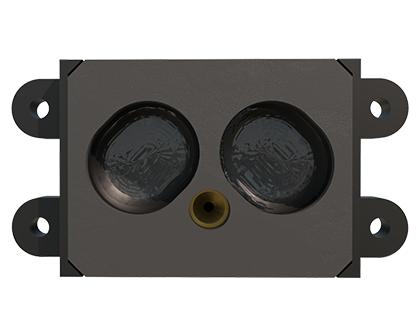
In industrial environments where extreme heat is a constant factor, accurate temperature measurement is not merely a convenience—it is a critical component of safety, process control, and product quality. Traditional contact sensors, such as thermocouples, often fall short in these demanding applications due to physical degradation, slow response times, or the impracticality of direct contact. This is where non-contact infrared (IR) pyrometry has become the standard. However, within this field, a significant advancement has emerged: the Single Laser High Temperature Sensor. This technology refines the principles of optical pyrometry by integrating a focused, visible laser for precise targeting, offering distinct advantages for monitoring superheated materials in metals processing, glass manufacturing, and power generation.
The core principle of a single laser high temperature sensor is elegantly straightforward. It operates on the fundamental law of blackbody radiation, where all objects emit infrared energy proportional to their temperature. The sensor uses a high-quality infrared detector, typically an InGaAs or silicon photodiode, sensitive to specific wavelength bands (often around 1.0 µm or 1.6 µm). These wavelengths are strategically chosen for high-temperature applications as they provide a stronger signal from hot targets and are less susceptible to interference from atmospheric gases like water vapor and carbon dioxide. The defining feature—the single laser—is a coaxial, visible red laser diode. This laser is precisely aligned with the optical path of the IR detector. When activated, it projects a bright, focused spot exactly onto the area whose temperature is being measured. This solves the perennial challenge in non-contact thermometry: knowing precisely *where* you are measuring, especially on small or distant targets.
The operational benefits of this design are substantial. First and foremost is precision targeting. In a furnace or on a moving slab of steel, smoke, flames, or background radiation can obscure the target. The visible laser spot provides unambiguous aim, ensuring the IR detector collects energy from the intended surface and not from surrounding hot walls or gases. This directly translates to improved measurement accuracy. By guaranteeing the field of view is correctly positioned, errors due to misalignment are virtually eliminated. Furthermore, these sensors offer excellent response speed. With no physical mass that needs to heat up, they can detect temperature changes in milliseconds, enabling real-time process control for tasks like rolling mill automation or crystal growth.
Application in Metals Processing: This is perhaps the most demanding arena. In continuous casting, single laser sensors monitor the temperature of the molten steel strand exiting the mold, crucial for controlling cooling rates and preventing defects. In reheating furnaces, they provide accurate slab and billet temperatures for optimal fuel efficiency and scale reduction. During hot rolling, sensors track the temperature profile along the length of the strip to ensure consistent mechanical properties.
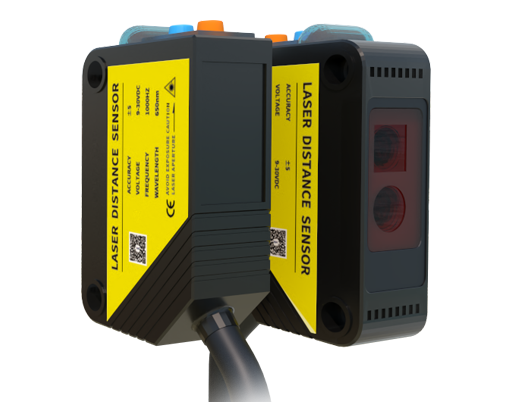
Glass Manufacturing: From the forehearth to the forming machines, temperature uniformity is paramount. Single laser sensors monitor gob temperatures, mold surfaces, and lehr entry points. The laser allows operators to target specific zones on the glass surface, avoiding reflections and ensuring the viscosity is perfect for shaping and annealing.
Power Generation: Monitoring superheater and reheater tubes in boilers, as well as gas turbine blades, is essential for efficiency and preventing catastrophic overheating. The non-contact nature of the single laser sensor is ideal for these rotating or inaccessible components.
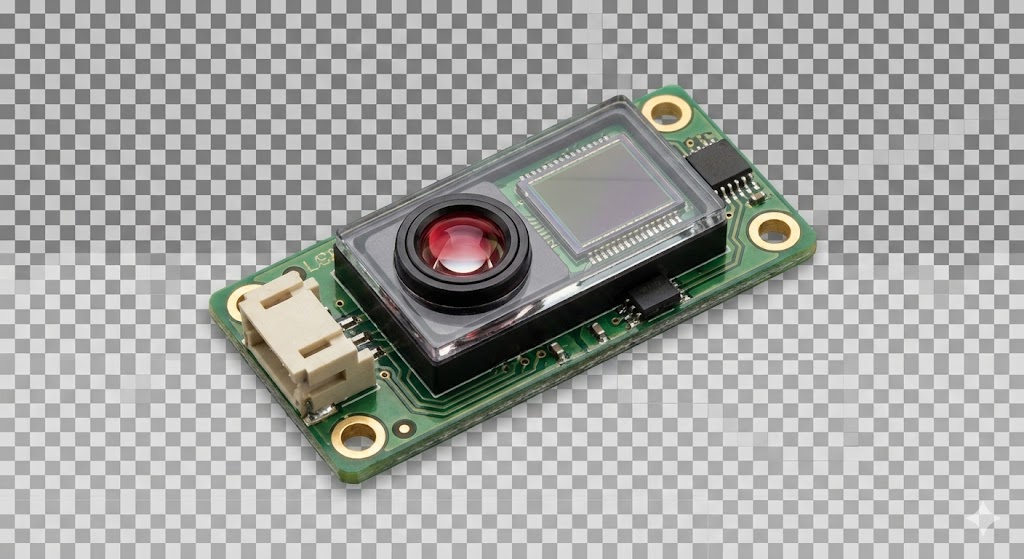
When selecting and installing a single laser high temperature sensor, several technical parameters require careful consideration. The temperature range must match the application; standard models may cover 600°C to 3000°C. The spectral response (wavelength) should be selected to avoid interference from process flames (e.g., choosing a 1.6 µm sensor for fuel-rich combustion environments). Optical resolution, defined by the distance-to-spot-size ratio (D:S), determines how small a target can be measured at a given distance. A high D:S ratio (e.g., 300:1) is needed for small or distant objects. Finally, the emissivity setting is critical. Emissivity, a measure of a surface's efficiency in emitting IR energy, must be correctly configured for the target material. While databases provide estimates, on-site verification against a contact probe is recommended for the highest accuracy.
Modern single laser sensors are increasingly intelligent. They feature digital communication protocols like Profibus, Modbus, or Ethernet/IP for seamless integration into plant networks. Advanced models include software for data logging, emissivity compensation algorithms, and even dual-wavelength (ratio) technology to compensate for partially obscured sight paths or varying emissivity.
In conclusion, the single laser high temperature sensor represents a mature yet continually evolving solution for industrial non-contact thermometry. By marrying the proven science of infrared detection with a simple, visible laser for targeting, it delivers a level of confidence, accuracy, and reliability that is indispensable in high-stakes thermal processes. For engineers tasked with optimizing furnace efficiency, ensuring product consistency, or safeguarding critical assets, this technology is not just an instrument but a fundamental tool for operational excellence in the face of extreme heat.