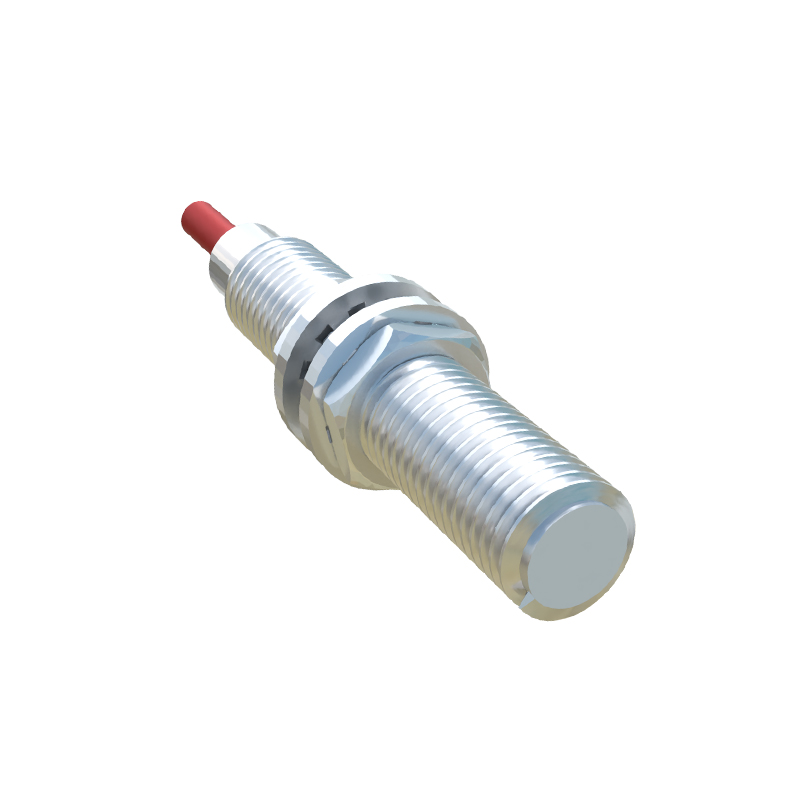
Inductive proximity sensors are fundamental components in industrial automation, particularly for non-contact metal detection. Operating on the principle of electromagnetic induction, these sensors generate an oscillating electromagnetic field from a coil within an oscillator circuit. When a metallic object enters this active field, eddy currents are induced on the surface of the target. This causes a measurable change in the oscillation amplitude or frequency within the sensor's circuit. An integrated evaluation circuit then detects this change and triggers a solid-state output switch, signaling the presence of the object.
The core advantages of inductive sensors lie in their robustness and reliability. As they have no moving parts and do not require physical contact with the target, they offer exceptional longevity and are immune to mechanical wear. Their housings are typically constructed from materials like nickel-plated brass, stainless steel, or PBT plastic, providing high resistance to vibration, shock, and harsh industrial environments including exposure to coolants, oils, and dust. This makes them ideal for applications in machine tools, material handling, automotive assembly, and packaging machinery.
A critical specification is the rated sensing distance (Sn), defined under standardized conditions using a square mild steel target. It is crucial to note that this nominal range is affected by the target material's properties. Ferrous metals like iron and steel cause the greatest reduction in oscillation, allowing detection at the full nominal distance. Non-ferrous metals such as aluminum, copper, or brass induce weaker eddy currents, resulting in a reduced effective sensing range, typically 30% to 60% of Sn. Sensor datasheets provide correction factors for various metals. Furthermore, the target's size, shape, and approach angle influence performance; a target should generally be at least equivalent to the sensor's face diameter for reliable operation.
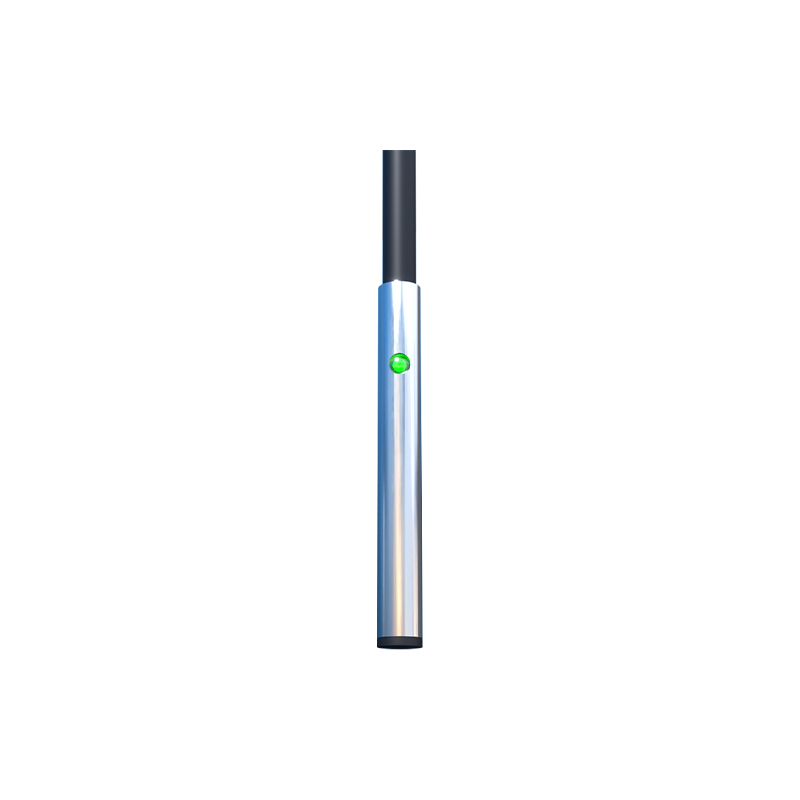
Modern inductive sensors offer diverse output configurations including DC PNP (sourcing), NPN (sinking), NO (normally open), NC (normally closed), and analog (4-20 mA or 0-10 V) versions. Two-wire AC/DC and three-wire DC models are common. Key performance parameters beyond sensing distance include switching frequency (how quickly they can detect objects per second), repeat accuracy, hysteresis (the difference between switch-on and switch-off points), and temperature range. Many feature advanced diagnostics like IO-Link communication, which enables parameter setting, process data monitoring, and condition-based maintenance alerts directly from the control system.
When selecting an inductive sensor, engineers must consider the application environment. Factors include the target metal type and size, required mounting (flush or non-flush), available power supply, necessary output type, required housing shape (barrel, rectangular, or ring-style), and required protection class (e.g., IP67/IP68/IP69K for liquid ingress). For demanding environments, weld-field immune models are available that resist strong electromagnetic interference from welding equipment. Proper installation is paramount; maintaining adequate clearance from surrounding metal (as specified in mounting diagrams) prevents false triggering from adjacent machinery or brackets.
In summary, inductive proximity sensors provide a fast, durable, and cost-effective solution for position sensing, counting, and end-position detection of metallic objects. Their continued evolution with smarter features and enhanced materials ensures they remain a cornerstone of efficient and reliable industrial automation systems.