In the realm of industrial automation and precision measurement, laser sensors stand as pivotal components, driving efficiency and accuracy across diverse sectors. These devices utilize laser technology to detect, measure, or profile objects with exceptional precision, often surpassing traditional sensing methods. This article delves into the core principles, various types, and extensive applications of laser sensors, providing a thorough understanding for engineers and industry professionals.
At its essence, a laser sensor operates by emitting a focused beam of coherent light—typically from a laser diode—towards a target. The sensor then analyzes the reflected or scattered light to gather data. The fundamental working principle can be based on several techniques, with time-of-flight (ToF), triangulation, and confocal measurement being among the most prevalent. Time-of-flight sensors calculate distance by measuring the time delay between the emission and reception of the laser pulse. This method is highly effective for long-range measurements, often used in applications like vehicle LiDAR or large-scale warehouse logistics. Triangulation sensors, on the other hand, use a geometric approach. The emitted laser beam strikes the target, and the reflected light is captured by a receiver at a known angle. By calculating the position of the light spot on the receiver, the sensor determines the distance or displacement of the object. This technique offers high resolution and is ideal for precise short to medium-range measurements, such as in quality control inspections on production lines. Confocal sensors utilize chromatic aberration to measure distance or thickness with nanometer-level accuracy, making them indispensable in semiconductor manufacturing and microscopy.
The market offers a wide array of laser sensor types, each tailored to specific needs. Common categories include distance sensors, displacement sensors, profile sensors, and contrast sensors. Laser distance sensors are versatile tools for non-contact measurement of ranges, commonly applied in robotics for obstacle avoidance or in construction for leveling and alignment. Displacement sensors excel in measuring minute changes in position or vibration, crucial for monitoring machinery health in predictive maintenance programs. Laser profile sensors, or line profilers, project a laser line onto an object and use a camera to capture the deformation of that line, thereby generating a detailed 3D profile of the target's surface. This is extensively used for inspecting component dimensions, weld seam quality, or surface defects. Contrast sensors detect differences in color, reflectivity, or material, often employed in packaging lines to verify labels or sort materials.
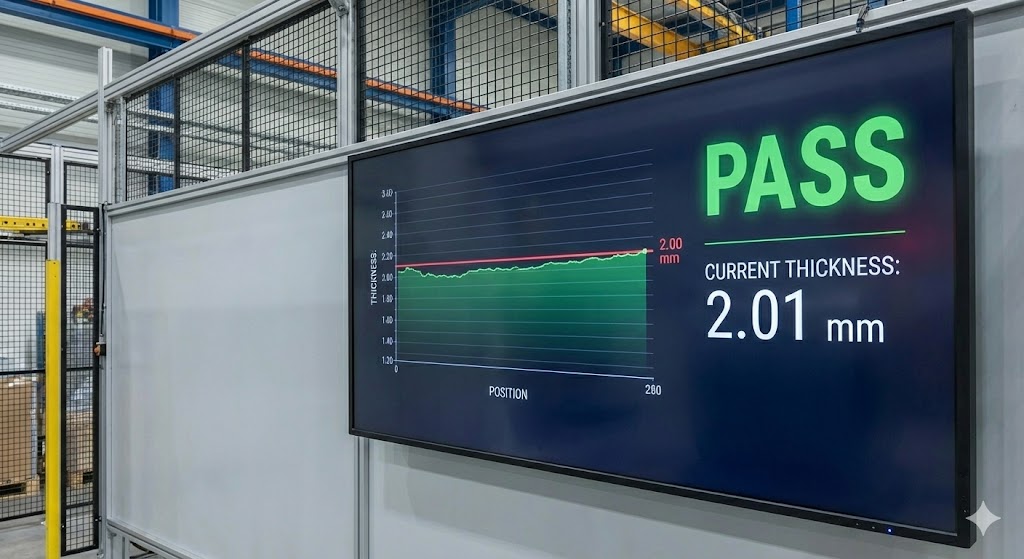
Selecting the appropriate laser sensor requires careful consideration of several technical parameters. Key specifications include measurement range, resolution, accuracy, repeatability, and response time. The operating wavelength—commonly in the visible red (650 nm) or near-infrared (800-1550 nm) spectrum—affects performance in different environments; infrared lasers, for instance, are less susceptible to ambient light interference. The type of output (analog, digital, or fieldbus protocols like IO-Link or PROFINET) must align with the control system in use. Environmental factors such as temperature fluctuations, dust, humidity, and exposure to chemicals also dictate the choice, often necessitating sensors with high Ingress Protection (IP) ratings or specialized housings.
The applications of laser sensors span virtually every industrial domain. In automotive manufacturing, they ensure precise assembly of components, measure body gaps, and inspect paint quality. In electronics, they verify solder paste height, component placement, and PCB flatness. The logistics sector relies on them for dimensioning packages, guiding autonomous mobile robots (AMRs), and managing inventory. Furthermore, in the food and pharmaceutical industries, laser sensors monitor fill levels, check seal integrity, and count pills without contact, upholding stringent hygiene standards. Emerging fields like additive manufacturing (3D printing) use them for in-process monitoring of layer thickness and defect detection.
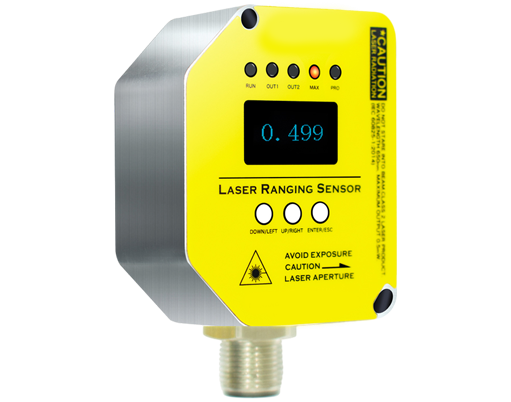
Despite their advantages, implementing laser sensors presents challenges. Highly reflective or transparent surfaces can cause measurement errors, requiring special filters or sensor settings. Ambient light, especially direct sunlight, may interfere with some models, though modern sensors often incorporate background suppression technologies. Regular calibration is essential to maintain accuracy over time. Looking ahead, trends point toward miniaturization, increased integration with AI for smarter data analysis, and the development of multi-function sensors that combine measurement with other sensing capabilities.
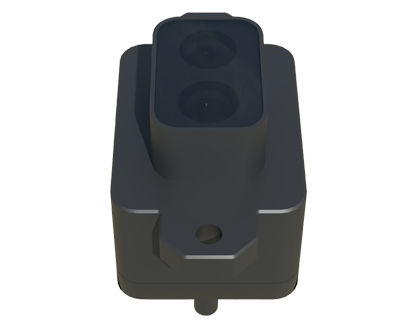
In conclusion, laser sensors are indispensable tools in modern industry, offering unmatched precision, speed, and reliability for a multitude of tasks. By understanding their operating principles, varieties, and selection criteria, engineers can effectively leverage this technology to optimize processes, enhance product quality, and drive innovation. As technology advances, the role of laser sensors is poised to expand further, solidifying their status as a cornerstone of industrial automation and measurement.