In today's rapidly advancing technological landscape, proximity sensors have become indispensable components across a multitude of industries. From automotive assembly lines and smartphone manufacturing to robotics and industrial automation, these non-contact devices detect the presence or absence of nearby objects with precision. However, the critical performance of these sensors hinges on one fundamental process: rigorous and accurate testing. This is where specialized Proximity Sensor Testing Equipment comes into play, serving as the cornerstone for quality assurance, reliability, and long-term operational success.
The primary function of proximity sensor testing equipment is to validate the key operational parameters of a sensor under controlled and repeatable conditions. Unlike simple continuity checks, comprehensive testing evaluates a sensor's real-world behavior. Core metrics include sensing distance, repeatability, hysteresis, response time, and environmental resilience. Sensing distance, or the point at which the sensor reliably detects a target, must be verified against its datasheet specifications. Testing equipment utilizes precision mechanical fixtures or robotic arms to move standardized test targets at micron-level accuracy towards and away from the sensor, plotting the exact detection point. Repeatability testing involves performing this action hundreds or thousands of times to ensure the sensor triggers consistently at the same distance, a non-negotiable requirement for high-speed production environments.
Hysteresis, the difference between the switch-on point and switch-off point, is another vital characteristic measured by this equipment. Proper hysteresis prevents output oscillation when a target is at the borderline of the sensing range, ensuring stable system operation. Furthermore, modern testing systems evaluate response time—how quickly the sensor's output changes state after detecting a target. This is crucial for applications involving fast-moving objects on conveyor belts or in high-speed packaging machinery. Advanced testers can measure response times in microseconds, providing data essential for synchronizing entire automated systems.
Environmental simulation forms a critical part of sophisticated testing regimens. Proximity sensors often operate in harsh conditions involving temperature extremes, humidity, vibration, and exposure to contaminants like oil or coolant. Dedicated testing chambers integrated with measurement systems subject sensor samples to these conditions while continuously monitoring their performance. Does the sensing distance drift at 85°C? Does condensation affect its function? Testing equipment provides empirical answers, enabling manufacturers to design robust products and end-users to select the right sensor for their specific environment.
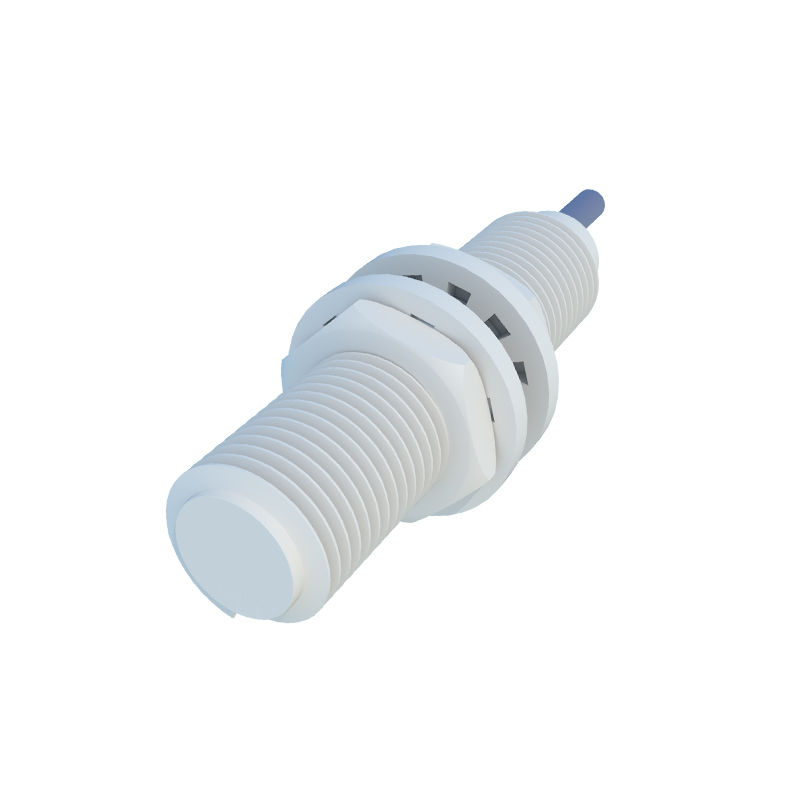
The architecture of modern proximity sensor testing equipment typically involves a modular design. A central control unit, often PC-based with intuitive software, manages the test sequences and data logging. This unit connects to high-precision motion controllers, signal conditioning modules, and environmental chambers. The software allows engineers to create custom test profiles, defining target materials (e.g., steel, aluminum, plastic), approach angles, speeds, and the specific pass/fail criteria for output signals (PNP/NPN, NO/NC). The result is a complete digital record for every unit tested, enabling traceability, statistical process control (SPC), and easy generation of compliance certificates.
For manufacturers, investing in automated testing equipment translates directly into reduced warranty costs, enhanced brand reputation, and streamlined production. It allows for 100% testing of high-reliability batches or intelligent sampling for quality control. For system integrators and end-users, having access to or utilizing such test equipment means verifying sensor performance before integration, thereby minimizing costly machine downtime and debugging efforts post-installation. It bridges the gap between theoretical datasheet values and practical, in-situ performance.
As sensor technology evolves with the advent of IO-Link, smarter analog outputs, and miniaturization, testing equipment must keep pace. The next generation of testers is incorporating features for digital communication protocol validation, power consumption analysis under load, and even testing for electromagnetic compatibility (EMC). The goal remains constant: to deliver unambiguous, quantitative data that confirms a proximity sensor will perform its intended function flawlessly throughout its operational life. In essence, proximity sensor testing equipment is not merely a quality check tool; it is an enabling technology that builds trust in the invisible interactions that drive modern automation forward.