The field of laser sensor technology represents a dynamic and rapidly evolving sector within the broader landscape of engineering and applied physics. For professionals and graduates considering a career path, this domain offers a compelling blend of innovation, practical application, and strong market demand. Laser sensors, which utilize focused light beams to detect, measure, and analyze objects or environmental conditions, are fundamental components in a vast array of industries. From autonomous vehicles and advanced manufacturing to biomedical devices and environmental monitoring, the applications are both diverse and critical to modern technological progress.
Professionals entering this field typically come from educational backgrounds in electrical engineering, mechanical engineering, physics, optics, or mechatronics. A solid foundation in core principles such as photonics, signal processing, control systems, and materials science is highly advantageous. Beyond formal education, hands-on experience with sensor calibration, system integration, and data interpretation is invaluable. Many roles require the ability to translate theoretical optical principles into reliable, real-world systems that can operate under varying conditions.
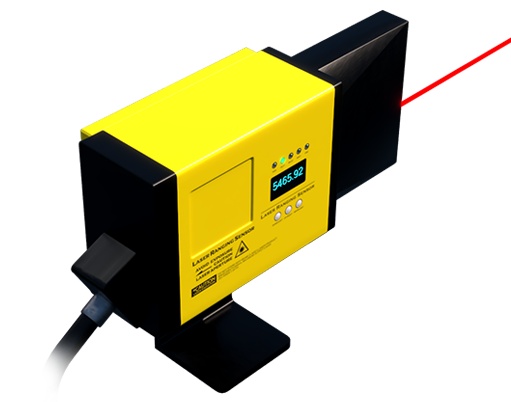
The job market for laser sensor specialists is robust and geographically widespread. Major employers include leading automotive companies developing LiDAR (Light Detection and Ranging) systems for self-driving cars. These roles involve designing sensors that can accurately perceive a vehicle's surroundings in all weather and lighting conditions. Similarly, the aerospace and defense sectors are significant employers, utilizing laser sensors for navigation, targeting, terrain mapping, and structural health monitoring of aircraft and spacecraft.
Industrial automation and robotics present another major avenue for employment. In smart factories and Industry 4.0 environments, laser sensors are indispensable for precision measurement, quality control, object recognition, and guiding robotic arms. Professionals in this area work on ensuring manufacturing processes are efficient, accurate, and safe. Furthermore, the biomedical field offers niche but growing opportunities. Laser sensors are used in diagnostic equipment, surgical tools, and research instruments for analyzing biological tissues at a microscopic level.
Research and development (R&D) positions, often found in corporate labs, government institutions, or universities, form the backbone of innovation in this field. These roles focus on pushing the boundaries of what is possible—increasing sensor sensitivity, reducing size and cost, developing new wavelengths for specific applications, or integrating sensors with artificial intelligence for smarter data analysis. An R&D career is ideal for those with a deep curiosity and a desire to solve fundamental technical challenges.

On the commercial and applications side, there is steady demand for sales engineers, field application engineers, and technical support specialists. These professionals act as crucial bridges between complex laser sensor technology and the clients who use it. They must possess not only technical expertise to understand product specifications and limitations but also strong communication skills to advise customers on integration and troubleshooting. This career path combines technical knowledge with client interaction and business acumen.
The skill set for a successful career in laser sensors is continually expanding. Proficiency in software tools for simulation and design (like Zemax or COMSOL) is increasingly important. Programming skills, particularly in Python, C++, or MATLAB for data analysis and algorithm development, are highly sought after. As systems become more interconnected, knowledge of the Internet of Things (IoT) protocols and cybersecurity considerations for sensor networks is also becoming relevant.

Compensation in this field is generally competitive, reflecting the specialized knowledge required. Salaries vary based on factors such as education level, years of experience, specific industry, and geographic location. Entry-level positions provide a solid foundation, with significant growth potential for those who develop expertise in high-demand areas like automotive LiDAR or quantum sensing technologies.
Looking ahead, the career trajectory in laser sensor technology appears promising. Emerging trends such as quantum sensing, which promises unprecedented measurement precision, and the integration of photonic integrated circuits (PICs) to make sensors smaller and more efficient, are creating new specialties. The global push towards automation, renewable energy, and advanced healthcare ensures that the demand for professionals who can design, build, and maintain these sophisticated sensing systems will remain strong for the foreseeable future. For individuals with a passion for technology that has a tangible impact on the world, a career focused on laser sensors offers a challenging, rewarding, and future-proof pathway.