In the rapidly evolving field of electrical engineering and industrial automation, precise terminology is paramount. One term that frequently arises in discussions concerning measurement, detection, and control systems is "laser sensor." Understanding its correct English usage, variations, and contextual application is essential for clear technical communication, accurate documentation, and effective international collaboration.
The most fundamental and universally accepted term is Laser Sensor. This compound noun directly describes a device that utilizes laser technology for sensing purposes. The word "laser" itself is an acronym for "Light Amplification by Stimulated Emission of Radiation," but in modern technical English, it is used as a standard noun. When writing, it is typically not capitalized unless it begins a sentence or is part of a specific product name (e.g., the Omron E3Z-LS Laser Sensor).
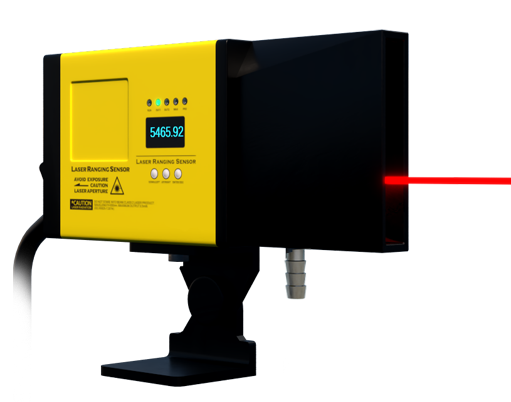
In technical datasheets, research papers, and system diagrams, you will often encounter more specific classifications. These specify the sensor's operating principle or primary function. Common variants include:
* Laser Distance Sensor: Used for precisely measuring the distance to a target.
* Laser Displacement Sensor: A subtype of distance sensors, often implying high-precision measurement of small changes in position or thickness.
* Laser Photoelectric Sensor: Emphasizes the use of a laser as the light source for a photoelectric detection system, used for presence/absence detection, object counting, or edge detection.
* Laser Triangulation Sensor: Describes the specific geometric method (triangulation) used for high-accuracy distance and profile measurement.
* Laser Micrometer: A sensor system designed for ultra-precise measurement of dimensions like diameter, thickness, or gap.
The grammatical treatment of "laser sensor" follows standard English rules for compound nouns. It can be used in its singular or plural form ("laser sensors"). It commonly functions as a noun phrase modified by adjectives: "a high-speed laser sensor," "a compact laser displacement sensor," "fiber-optic laser photoelectric sensors." When used attributively to describe another noun, it is often hyphenated for clarity: "laser-sensor technology," "laser-sensor accuracy," "laser-sensor installation guidelines."
In verbal and written communication within projects, engineers use the term in various contexts. For instance:
* Specification: "The assembly station requires a laser displacement sensor with a resolution of 0.1 µm and a measuring range of 10 mm."
* Troubleshooting: "Check the alignment of the laser photoelectric sensor on conveyor belt B; it is missing objects."
* Procurement: "Please source three units of the KEYENCE IL-300 laser sensor for the new inspection jig."
* Design Discussion: "We compared laser triangulation and confocal chromatography methods for this surface inspection task."
It is crucial to distinguish "laser sensor" from related terms. A "fiber optic sensor" uses optical fibers to transmit light, which may or may not be laser light. An "optical sensor" is a broader category encompassing any sensor using light, including LEDs, which are far more common than lasers for basic photoelectric tasks. The key differentiator for a laser sensor is its coherent, monochromatic, and highly collimated light source, which enables exceptional precision, long sensing ranges, and minute spot sizes.
The consistent and correct application of this terminology prevents ambiguity in system integration manuals, research publications, and technical proposals. Whether you are documenting a PLC ladder logic routine that reads from a laser sensor, writing a calibration procedure, or presenting a design review, using the precise term reinforces professionalism. Remember, in global engineering, clear language is as critical as clear schematics. Mastering terms like "laser sensor," along with its specific variants, ensures that your technical intent is communicated accurately and efficiently across borders and disciplines.