In the realm of industrial automation and machine control, proximity sensors are indispensable components. They detect the presence or absence of an object without physical contact, enabling precise, reliable, and wear-free operation in countless applications. This guide delves into the primary types of proximity sensors—inductive, capacitive, and photoelectric—exploring their operating principles, key characteristics, and typical use cases.
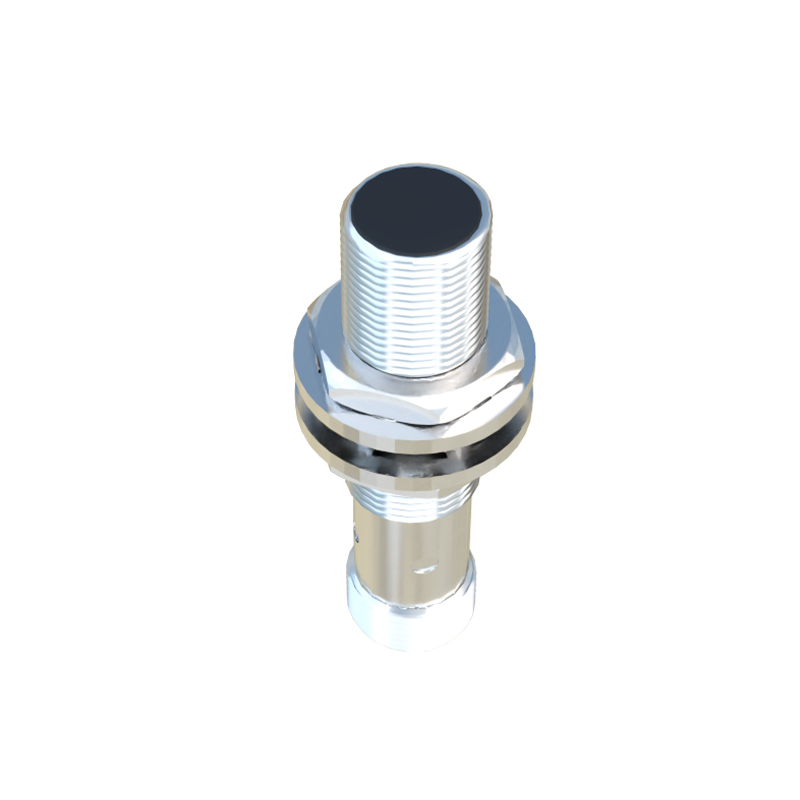
Inductive proximity sensors are the workhorses for detecting metallic objects. They operate on the principle of electromagnetic induction. The sensor contains a coil that generates a high-frequency oscillating electromagnetic field. When a metallic target enters this field, eddy currents are induced on the surface of the metal. This causes a change in the oscillation amplitude within the sensor, which is detected by a threshold circuit, triggering a solid-state output switch. Key advantages include high switching frequency, robustness against environmental factors like dust or oil, and exceptional longevity. They are predominantly used for position sensing of metal parts, such as in conveyor systems, machine tools, and robotic arms. Their sensing range is typically limited to a fraction of their nominal diameter and is influenced by the target metal type, with steel offering the standard range.
Capacitive proximity sensors, in contrast, can detect both metallic and non-metallic materials, including liquids, powders, plastics, and wood. Their operation is based on changes in capacitance. The sensor face and the target act as two plates of a capacitor. As a target approaches, it alters the dielectric constant of the space between the plates, changing the capacitance of the oscillator circuit. When this change reaches a predetermined threshold, the output state switches. These sensors are ideal for applications like level detection in tanks (liquid or granular materials), material handling of non-metallic goods, and presence detection of glass or plastic containers. They can be sensitive to environmental changes like humidity or temperature, which may require careful calibration.
Photoelectric sensors utilize light beams to detect objects. They consist of a light emitter (usually an LED) and a receiver. There are three main operating modes: through-beam, retro-reflective, and diffuse reflective. Through-beam models have separate emitter and receiver units; an object is detected when it interrupts the light beam, offering the longest sensing ranges and highest reliability. Retro-reflective types use a single housing with both emitter and receiver, relying on a reflector to bounce the light back; detection occurs when the beam is blocked. Diffuse reflective sensors detect objects by receiving light reflected directly off the target's surface, making them suitable for detecting objects at close range without a separate reflector. Photoelectric sensors are versatile for detecting objects of virtually any material, color, or surface finish, and are widely used in packaging, material handling, and assembly line automation.
Selecting the right proximity sensor depends on several critical factors: the target material, required sensing distance, environmental conditions (presence of contaminants, temperature extremes), switching frequency, output type (PNP/NPN, analog), and electrical requirements. For instance, an inductive sensor is unsuitable for detecting a plastic bottle, just as a capacitive sensor might be over-triggered by a fluctuating humidity level when a simple through-beam photoelectric sensor would be more stable.
In summary, inductive sensors excel with metals in harsh industrial settings, capacitive sensors offer material versatility for level and presence control, and photoelectric sensors provide flexible, long-range detection for diverse objects. Understanding these core technologies empowers engineers and technicians to design more efficient, reliable, and intelligent automated systems, forming the foundational sensory layer for modern industrial processes.