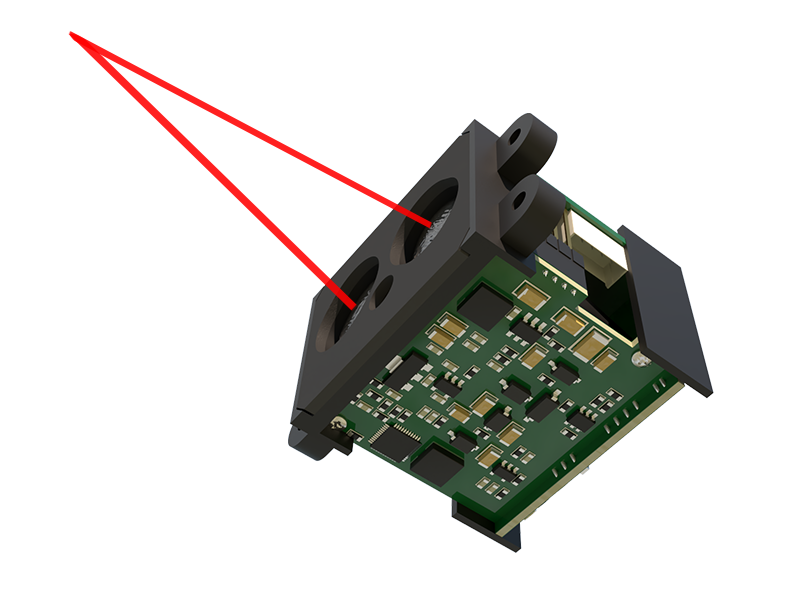
In the realm of industrial automation and precision measurement, laser sensors have become indispensable tools. Their ability to deliver high-accuracy, non-contact measurements is critical across applications from semiconductor manufacturing to automotive assembly. However, a persistent challenge that engineers and system integrators face is managing the thermal load generated during laser sensor operation. Excessive heat can degrade sensor performance, leading to measurement drift, reduced lifespan, and even catastrophic failure. This article delves into the critical importance of effective cooling for laser sensors and explores the advanced techniques employed to maintain optimal operating temperatures.
The core of the issue lies in the physics of laser generation. Whether utilizing solid-state, diode, or fiber laser sources, the process is inherently inefficient, converting a significant portion of electrical input into waste heat. This heat must be dissipated effectively to ensure the stability of the laser's wavelength and output power, which are directly tied to measurement accuracy. For high-power laser sensors used in material processing or long-range LiDAR, the thermal management challenge is exponentially greater. Without proper cooling, the sensor's internal components, including the laser diode, photodetectors, and associated electronics, experience thermal stress. This stress can cause physical expansion, altering optical alignments and electronic characteristics, ultimately manifesting as inconsistent or erroneous readings.
Traditional cooling methods, such as passive heat sinks, remain effective for low-to-mid power applications. These aluminum or copper fins increase the surface area for natural convection, allowing heat to dissipate into the surrounding air. For more demanding environments, forced air cooling using integrated fans provides a step up in thermal transfer capacity. This method is cost-effective and relatively simple to implement. However, in compact systems with high power density or in environments with high ambient temperatures, air cooling often reaches its limits. Dust and contaminants can also clog fins and fans, reducing efficiency over time.
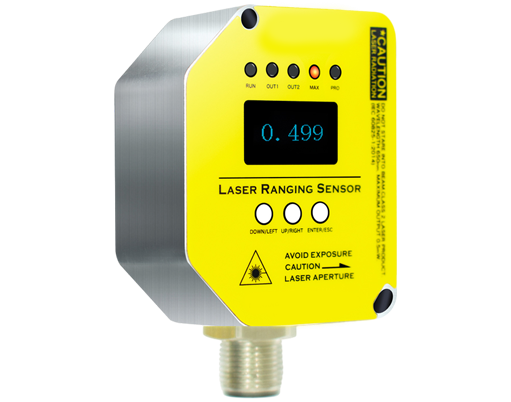
This is where advanced liquid cooling systems come to the forefront. Liquid cooling offers a quantum leap in thermal conductivity compared to air. A typical closed-loop system consists of a cold plate in direct contact with the laser sensor's heat-generating components, a pump to circulate coolant (often a water-glycol mixture or specialized dielectric fluid), a radiator to reject the heat, and a reservoir. The cold plate, often made with micro-channel designs, maximizes the contact area with the coolant, enabling extremely efficient heat extraction. For the most critical applications, such as in photolithography steppers or scientific research, thermoelectric (Peltier) coolers or even chilled water systems are employed. These systems can actively cool components below ambient temperature, providing unparalleled thermal stability. The precision temperature control afforded by these systems can stabilize laser output to within fractions of a nanometer in wavelength, a non-negotiable requirement in spectroscopy and interferometry.
Selecting the appropriate cooling strategy is a systems engineering task. Key factors include the sensor's power dissipation (in watts), the required operating temperature range, available space (form factor), environmental conditions (dust, humidity, vibration), maintenance accessibility, and total system cost. Engineers must perform detailed thermal analysis, often using computational fluid dynamics (CFD) software, to model heat flows and predict temperature hotspots before finalizing a design. Furthermore, the integration of the cooling system must be considered from the outset of sensor housing design. Proper thermal interface materials (TIMs), such as thermal greases, pads, or phase-change materials, are crucial for ensuring minimal thermal resistance between the component and the heat sink or cold plate.
Looking ahead, the trend toward miniaturization and higher power output in laser sensors continues to push the boundaries of thermal management. Innovations in materials science, such as the use of synthetic diamond substrates for high-power laser diodes, offer exceptional thermal conductivity in very small packages. Two-phase cooling, which utilizes the latent heat of vaporization of a fluid, is another emerging technology promising even higher heat flux handling in compact spaces. Ultimately, a robust and well-engineered cooling solution is not merely an accessory but a foundational component for reliable laser sensor operation. It ensures data integrity, maximizes uptime, and protects significant capital investment, solidifying its role as a critical discipline within precision electro-optical engineering.