In the realm of industrial automation and control systems, proximity sensors are indispensable components. They detect the presence or absence of an object without physical contact, offering reliability, longevity, and precision. Among the various technologies available, two primary types dominate most applications: Inductive Proximity Sensors and Capacitive Proximity Sensors. Understanding their distinct operating principles, typical applications, and selection criteria is crucial for engineers and system designers.
Inductive proximity sensors are specifically designed to detect metallic objects. Their operation is based on the principle of electromagnetic induction. The sensor generates an oscillating electromagnetic field from its coil and oscillator circuit. When a metallic target enters this field, eddy currents are induced on the surface of the metal. These eddy currents draw energy from the sensor's oscillator, causing a reduction in the amplitude of oscillation. This change is detected by the sensor's threshold circuit, which subsequently triggers a solid-state output switch. A key characteristic of inductive sensors is their sensing range, which is relatively short and highly dependent on the type of metal. For instance, ferrous metals like steel can be detected at a greater distance than non-ferrous metals like aluminum or copper, often requiring a correction factor. These sensors are renowned for their robustness, high switching frequency, and immunity to environmental factors like dust, oil, and non-metallic debris. Common applications include position sensing of machine parts (e.g., cylinder piston position), counting metal objects on a conveyor, and detecting the presence of tools in CNC machines.
In contrast, capacitive proximity sensors possess a broader detection capability. They can detect both metallic and non-metallic materials, including liquids, plastics, glass, wood, and granular substances. The working principle involves changes in capacitance. The sensor's active face forms one plate of a capacitor, with the target object acting as the other plate, and the intervening space as the dielectric. An internal oscillator circuit measures the capacitance of this system. When a target object approaches, it alters the dielectric constant and thus the capacitance. Once the change exceeds a preset threshold, the sensor activates its output. This makes capacitive sensors highly versatile but also more susceptible to environmental influences. Factors like humidity, temperature, and the presence of dust or condensation can affect the dielectric constant and potentially cause false triggering. Therefore, they often feature sensitivity adjustment potentiometers to fine-tune the detection level for specific materials and conditions. Typical uses include liquid level detection in tanks, monitoring the fill level of non-metallic containers (e.g., plastic bottles), and detecting the presence of paper, wood, or textiles in processing equipment.
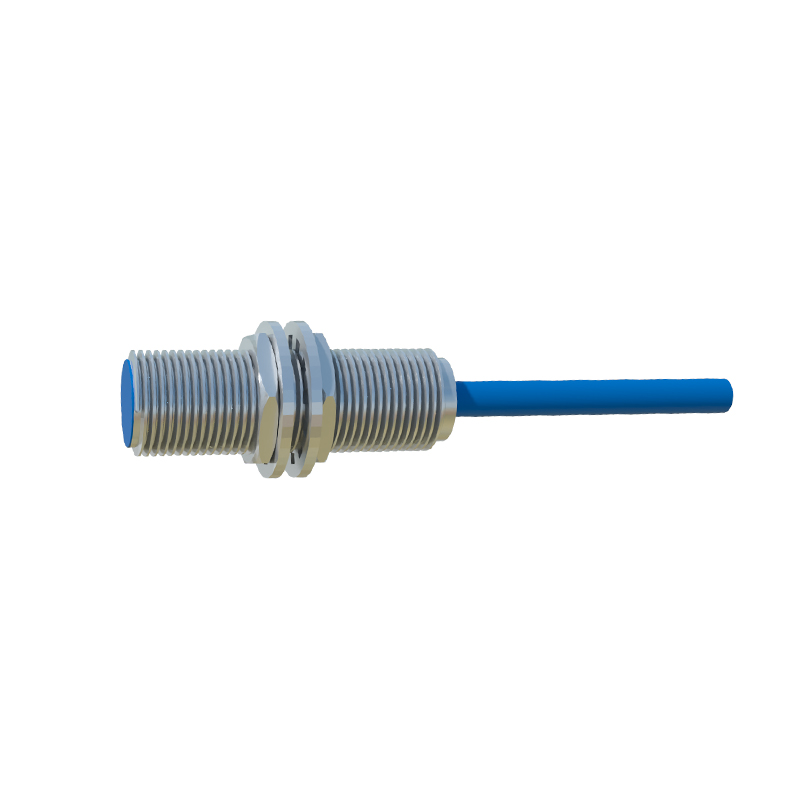
The choice between inductive and capacitive sensors hinges on the application's specific requirements. For environments where only metals need to be detected, especially in harsh industrial settings with contaminants, the inductive sensor is the default, reliable choice. Its stable performance and material-specific detection are significant advantages. When the application involves non-conductive materials or requires detection through a non-metallic container wall (like detecting liquid inside a plastic tank), the capacitive sensor is the only viable option. Engineers must also consider factors such as the required sensing distance, output type (PNP/NPN, NO/NC), housing material (often nickel-plated brass or stainless steel for inductive, plastic for some capacitive), and environmental ratings (IP67, IP69K).
In summary, inductive and capacitive proximity sensors serve as the two foundational pillars of non-contact object detection. The inductive sensor, with its targeted electromagnetic field, is the specialist for metallic targets, offering ruggedness and speed. The capacitive sensor, with its sensitivity to dielectric changes, is the generalist, capable of interacting with a vast array of materials. A clear understanding of their core technologies enables optimal sensor selection, ensuring system efficiency, reliability, and cost-effectiveness in diverse automation scenarios.