In the realm of industrial automation, robotics, and advanced manufacturing, the demand for high-precision, reliable, and non-contact measurement solutions has never been greater. Laser sensor technology stands at the forefront of this demand, offering unparalleled accuracy and versatility. As a seasoned electrical engineer specializing in industrial sensing systems, I aim to delve into the engineering principles, key performance parameters, and application-specific considerations that define precision in modern laser sensors.
At its core, a laser sensor operates by emitting a focused beam of coherent light—typically from a laser diode—towards a target. The sensor then detects the reflected or scattered light using a photodetector, such as a CCD (Charge-Coupled Device) or PSD (Position Sensitive Device). The fundamental measurement principles can be categorized into several types, each with its own precision characteristics. Triangulation sensors, for instance, calculate distance or displacement based on the angle of the reflected beam on a detector. Time-of-Flight (ToF) sensors measure the round-trip time for a laser pulse to travel to the target and back. Confocal chromatic sensors use white light and spectral analysis for nanometer-level resolution on reflective surfaces. The choice of principle is the first critical engineering decision, directly impacting the achievable precision, measurement range, and suitability for different surface types.
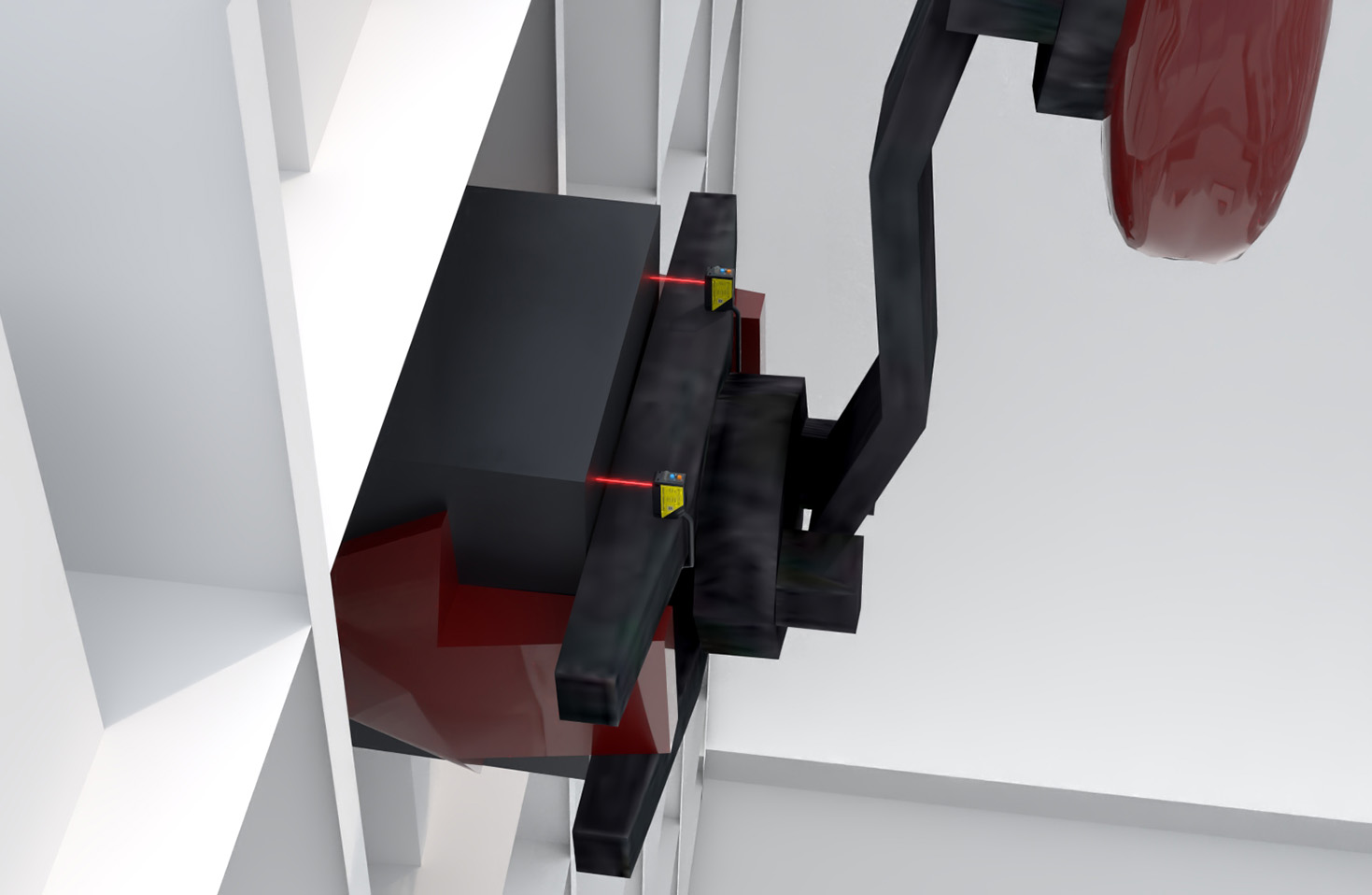
Precision in laser sensing is not a single metric but a combination of several interdependent parameters. Resolution, often specified in micrometers or even nanometers, refers to the smallest detectable change in the measured quantity. Repeatability defines the sensor's ability to consistently return the same measurement value under unchanged conditions. Linearity error indicates the maximum deviation of the sensor's output from a best-fit straight line across its entire measurement range. Environmental factors such as ambient light, temperature fluctuations, and airborne contaminants (dust, oil mist) can significantly degrade precision if not properly mitigated. High-quality laser sensors incorporate sophisticated compensation algorithms, robust housings (often with IP67 or higher ratings), and optical filters to ensure stable operation in harsh industrial environments.
The pursuit of precision extends to the optical design and signal processing electronics. The quality of the laser source itself—its wavelength, beam shape (spot size), and stability—is paramount. A smaller, more focused spot allows for higher lateral resolution, crucial for measuring small features or edges. Advanced signal processing techniques, including digital filtering, averaging, and real-time error correction, are embedded in the sensor's onboard microprocessor. These algorithms filter out electrical noise and compensate for non-ideal target surfaces, such as varying colors, materials, or textures, which can absorb or scatter light differently.
From an application engineering perspective, precision is meaningless without context. In semiconductor manufacturing, laser displacement sensors with sub-micron resolution are used for wafer warpage measurement and chip lead inspection. In automotive assembly, laser profile scanners perform precise 3D contouring of body panels and gap measurements. In logistics, laser distance sensors enable high-speed dimensioning of packages. Each application presents unique challenges: vibration, target speed, required sampling rate, and integration with PLCs (Programmable Logic Controllers) or industrial networks like EtherCAT or PROFINET. A truly precise system requires not just a high-performance sensor, but also correct mechanical mounting, calibration against known standards, and seamless integration into the broader control architecture.
Looking forward, the engineering evolution of laser sensors continues to push the boundaries of precision. Emerging trends include the integration of AI for adaptive sensing, where the sensor can learn and compensate for complex environmental patterns. The miniaturization of components is enabling new, compact form factors for integration into collaborative robots (cobots). Furthermore, the development of novel laser sources and detector arrays promises even higher speeds and resolutions.
In conclusion, precision in laser sensor technology is a multifaceted achievement of optical engineering, electronic design, and robust software algorithms. It is the result of meticulous attention to detail at every stage, from the emission of a coherent photon to the final digital output. For engineers designing next-generation automated systems, a deep understanding of these principles is not merely academic; it is essential for selecting, deploying, and maintaining sensing solutions that deliver reliable, accurate data—the fundamental currency of modern industrial intelligence.